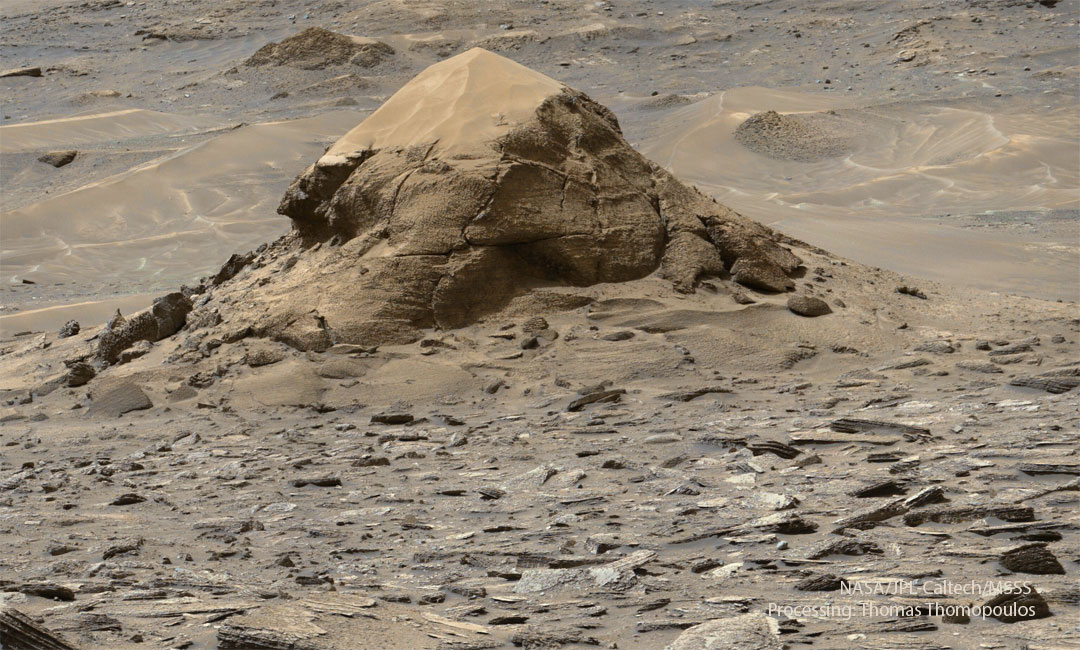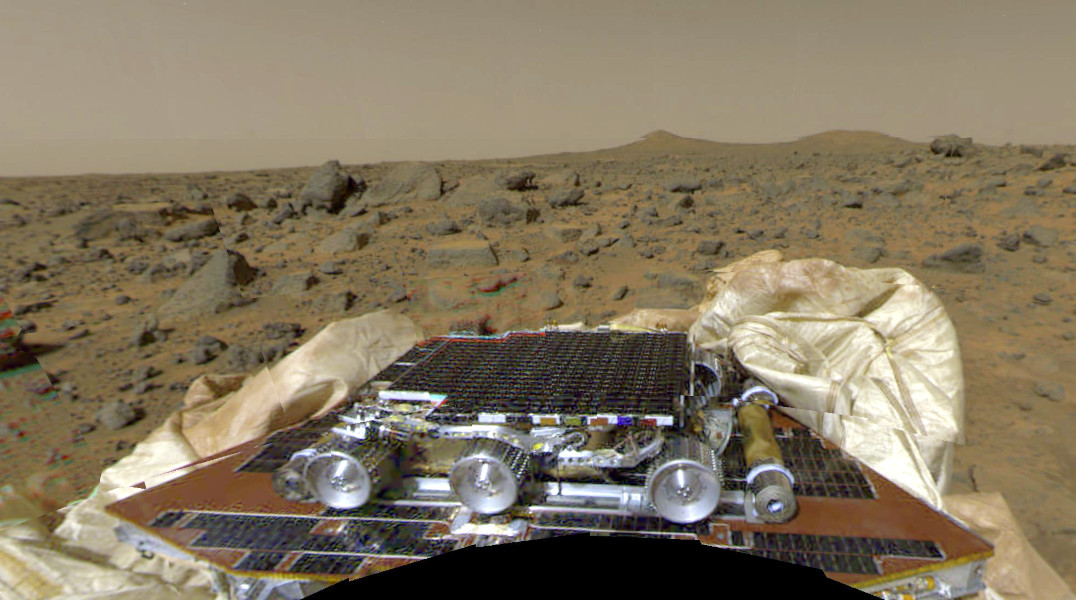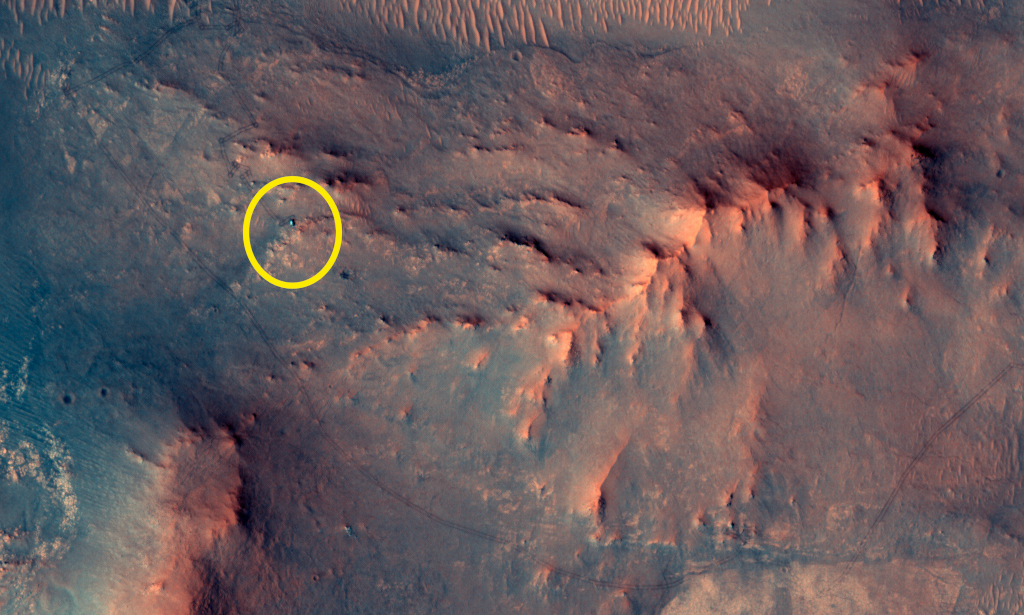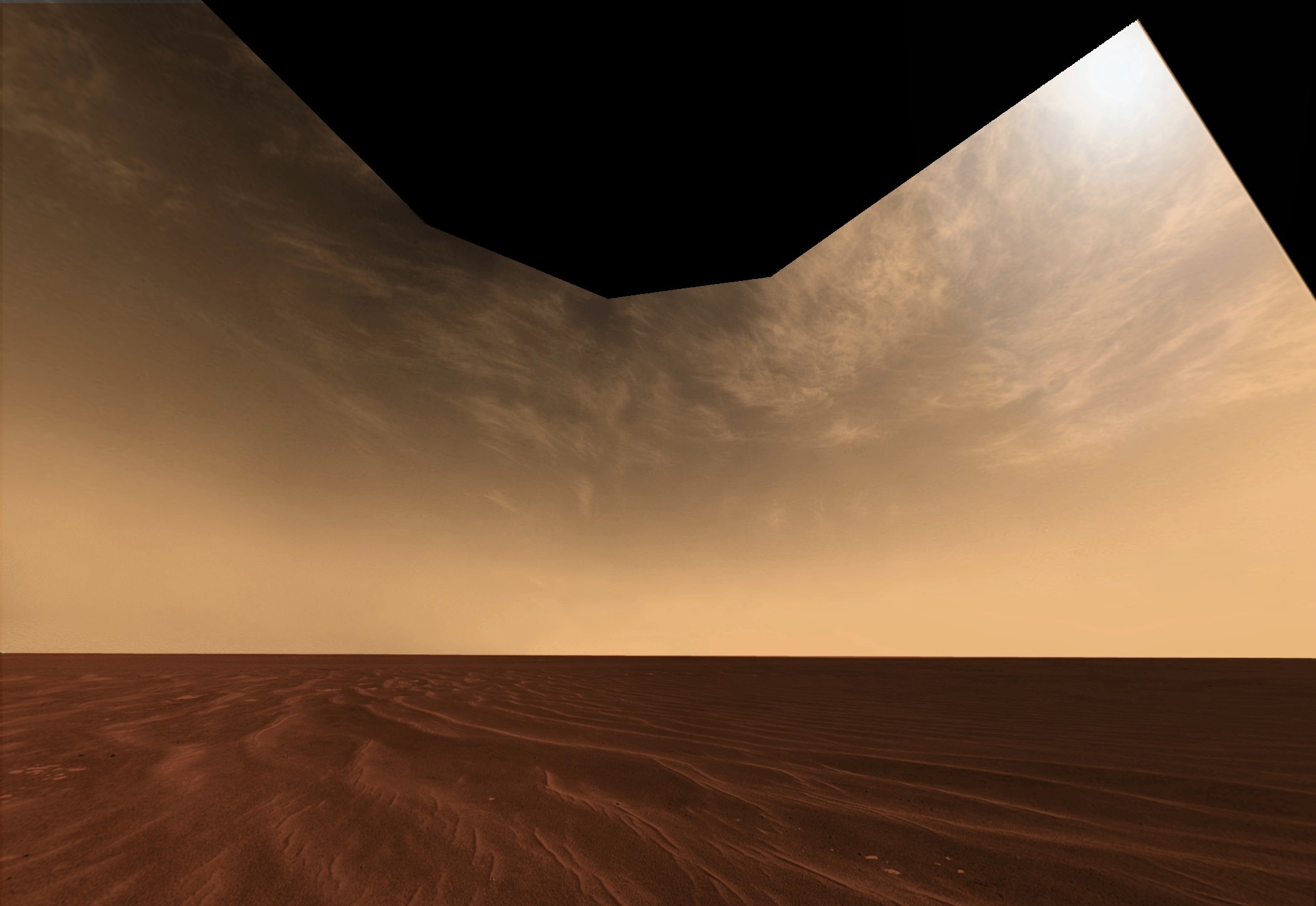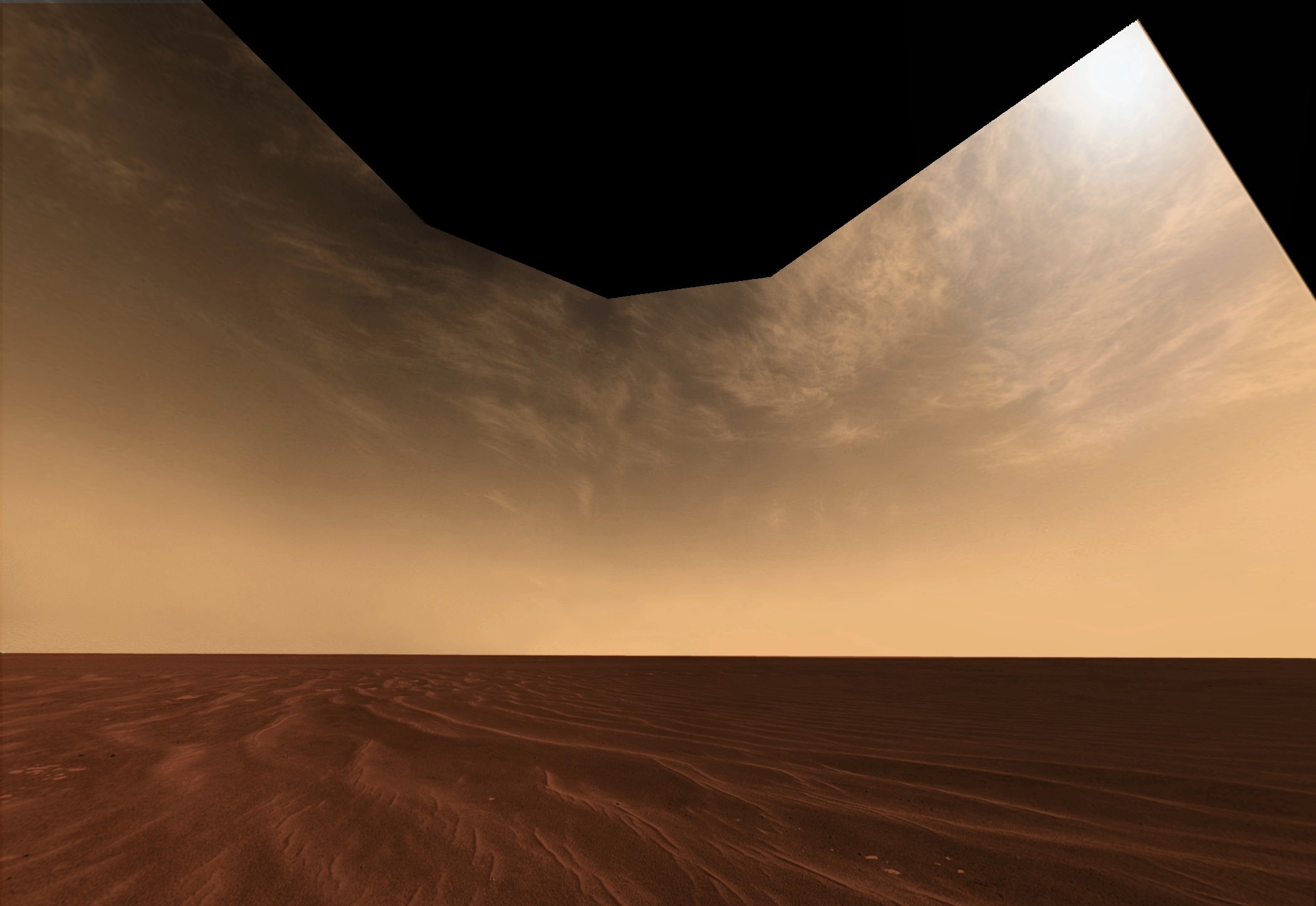
If you could stand on Mars -- what might you see? Like the robotic Opportunity rover rolling across the red planet, you might well see vast plains of red sand, an orange tinted sky, and wispy light clouds. The Opportunity rover captured just such a vista after arriving at Victoria Crater earlier this month, albeit in a completely different direction from the large crater. Unlike other Martian vistas, few rocks are visible in this exaggerated color image mosaic. The distant red horizon is so flat and featureless that it appears similar to the horizon toward a calm blue ocean on Earth. Clouds on Mars can be composed of either carbon dioxide ice or water ice, and can move quickly, like clouds move on Earth. The red dust in the Martian air can change the sky color above Mars from the blue that occurs above Earth toward the red, with the exact color depending on the density and particle size of the floating dust particles.
Si pudieras estar de pie en Marte, ¿qué verías? Al igual que el rover robótico Opportunity rodando por el planeta rojo, podrías ver amplias llanuras de arena roja, un cielo teñido de naranja y nubes ligeras y esponjosas. El rover Opportunity capturó precisamente tal paisaje después de llegar al Cráter Victoria a principios de este mes, aunque en una dirección completamente diferente del gran cráter. A diferencia de otros paisajes marcianos, pocos rocas son visibles en esta imagen mosaico con colores exagerados. El horizonte rojo distante es tan plano y sin características que parece similar al horizonte hacia un océano azul tranquilo en la Tierra. Las nubes en Marte pueden estar compuestas por hielo de dióxido de carbono o hielo de agua, y pueden moverse rápidamente, al igual que las nubes en la Tierra. El polvo rojo en la atmósfera marciana puede cambiar el color del cielo sobre Marte del azul que se observa sobre la Tierra hacia el rojo, con el color exacto dependiendo de la densidad y el tamaño de partícula del polvo que flota.