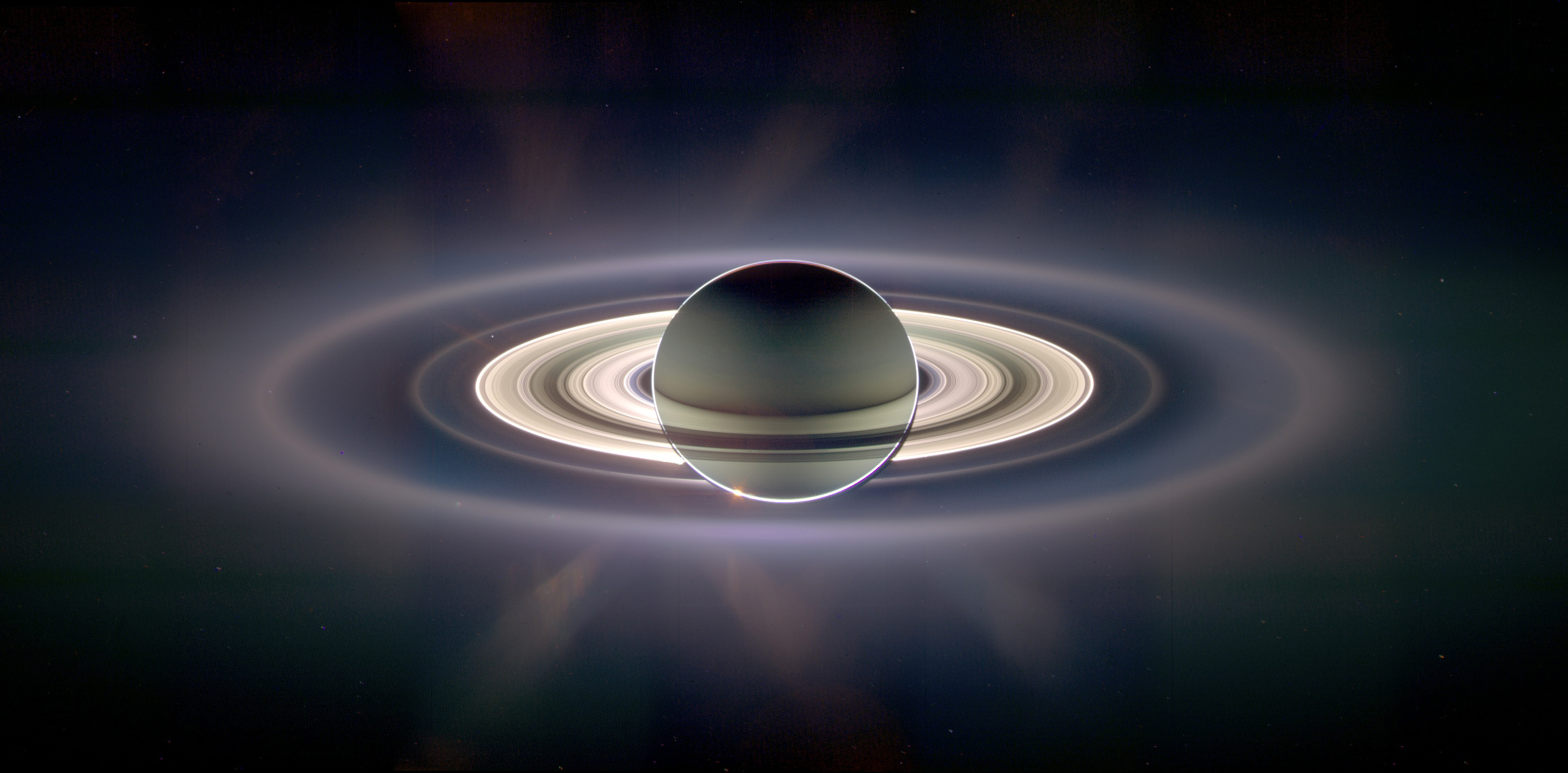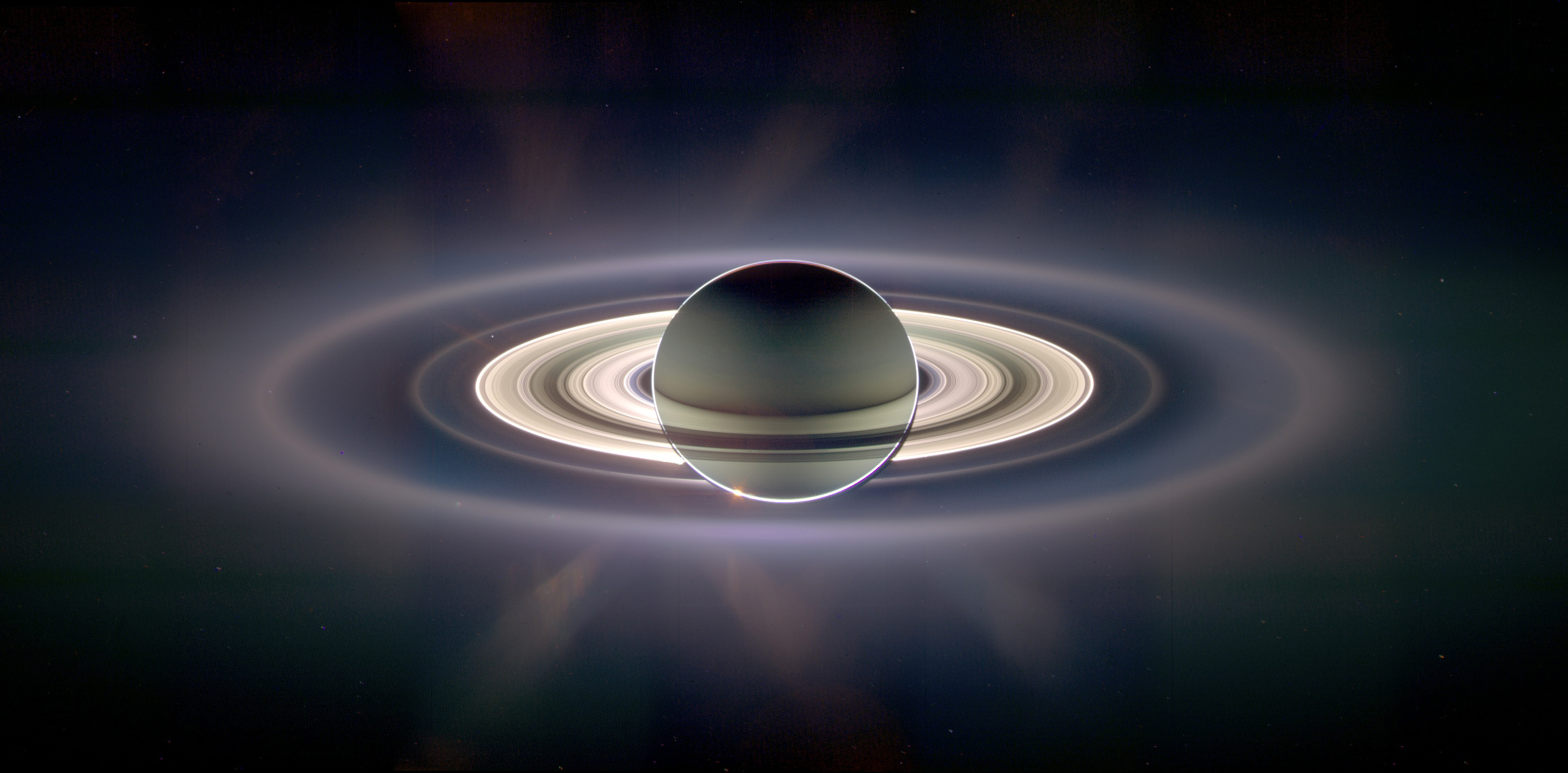
In the shadow of Saturn, unexpected wonders appear. The robotic Cassini spacecraft now orbiting Saturn recently drifted in giant planet's shadow for about 12 hours and looked back toward the eclipsed Sun. Cassini saw a view unlike any other. First, the night side of Saturn is seen to be partly lit by light reflected from its own majestic ring system. Next, the rings themselves appear dark when silhouetted against Saturn, but quite bright when viewed away from Saturn and slightly scattering sunlight, in the above exaggerated color image. Saturn's rings light up so much that new rings were discovered, although they are hard to see in the above image. Visible in spectacular detail, however, is Saturn's E ring, the ring created by the newly discovered ice-fountains of the moon Enceladus, and the outermost ring visible above. Far in the distance, visible on the image left just above the bright main rings, is the almost ignorable pale blue dot of Earth.
En la sombra de Saturno, aparecen maravillas inesperadas. La nave espacial robótica Cassini, que actualmente orbita Saturno, recientemente pasó aproximadamente 12 horas en la sombra del planeta gigante y miró hacia el Sol eclipsado. Cassini observó una vista sin precedentes. Primero, se ve que el lado nocturno de Saturno está parcialmente iluminado por la luz reflejada desde su propio majestuoso sistema de anillos. A continuación, los anillos mismos aparecen oscuros cuando se siluetean contra Saturno, pero bastante brillantes cuando se observan lejos de Saturno y dispersan ligeramente la luz solar, en la imagen de arriba con colores exagerados. Los anillos de Saturno se iluminan tanto que se descubrieron nuevos anillos, aunque son difíciles de ver en la imagen anterior. Sin embargo, con un detalle espectacular, se ve el anillo E de Saturno, el anillo creado por las nuevas fuentes de hielo descubiertas en la luna Encelado, y el anillo más externo visible en la imagen. En la distancia, visible en la parte izquierda de la imagen justo por encima de los anillos principales brillantes, se encuentra el casi insignificante punto azul pálido de la Tierra.