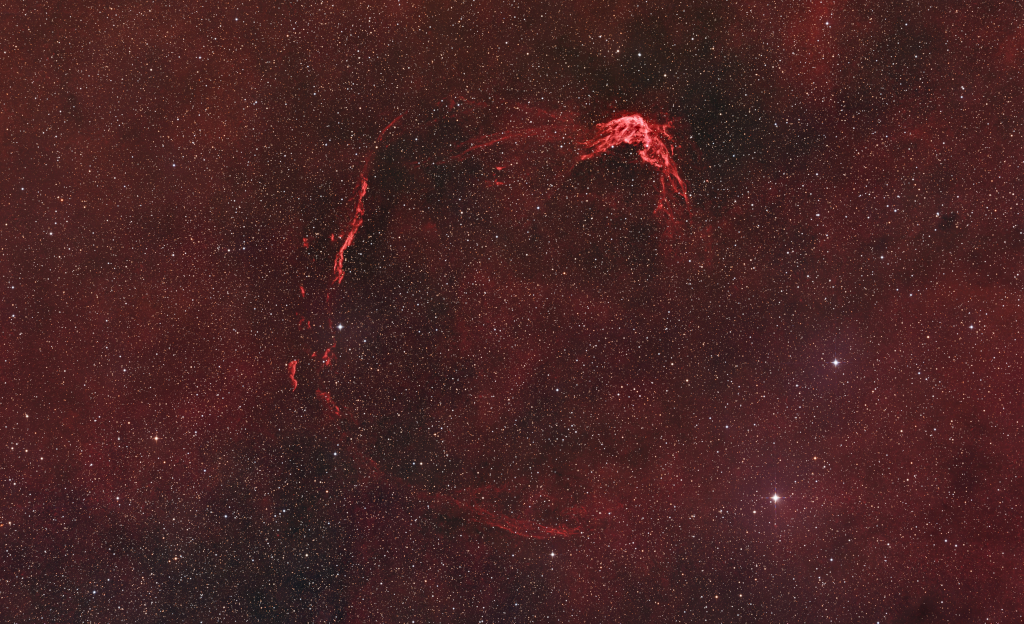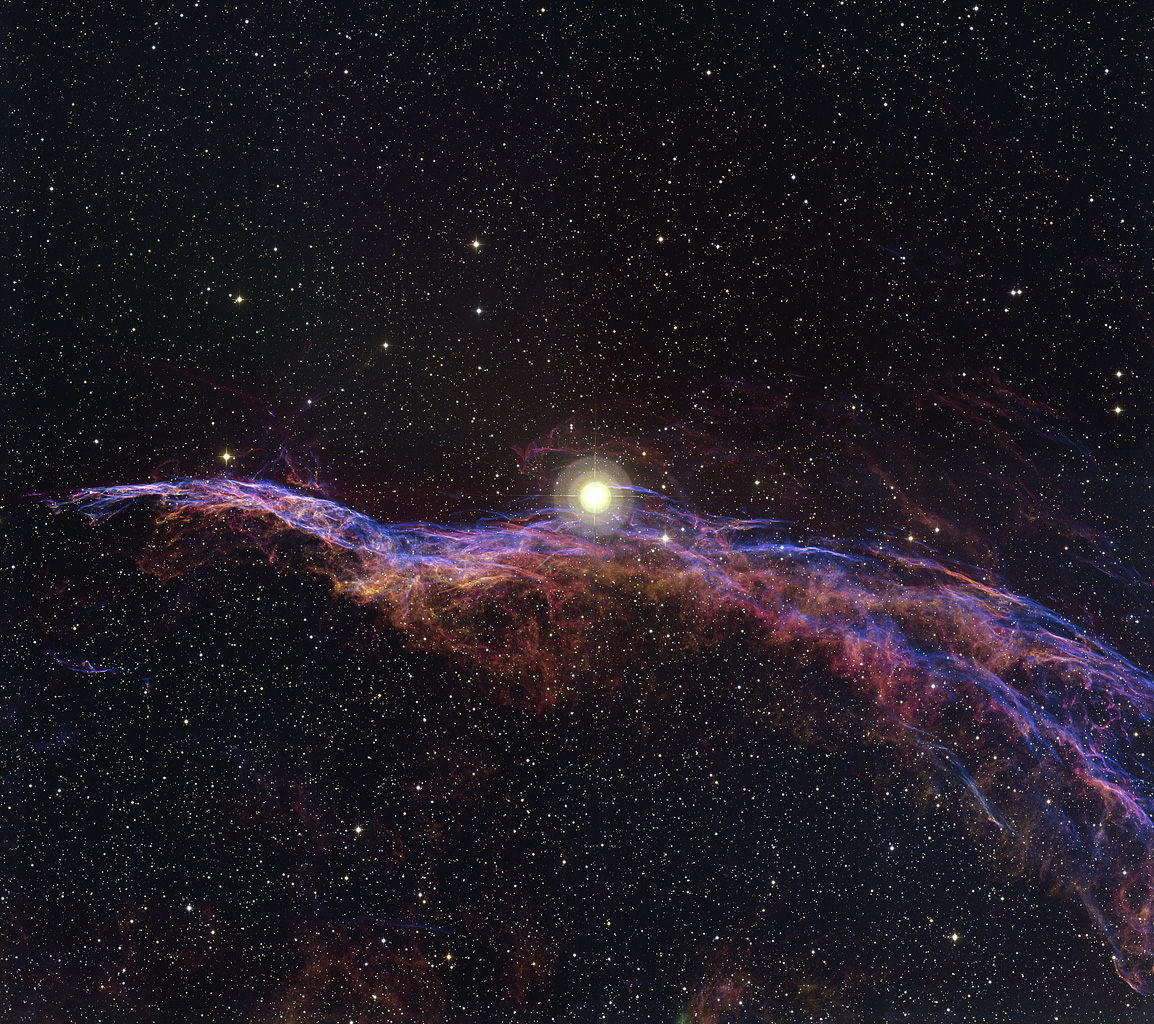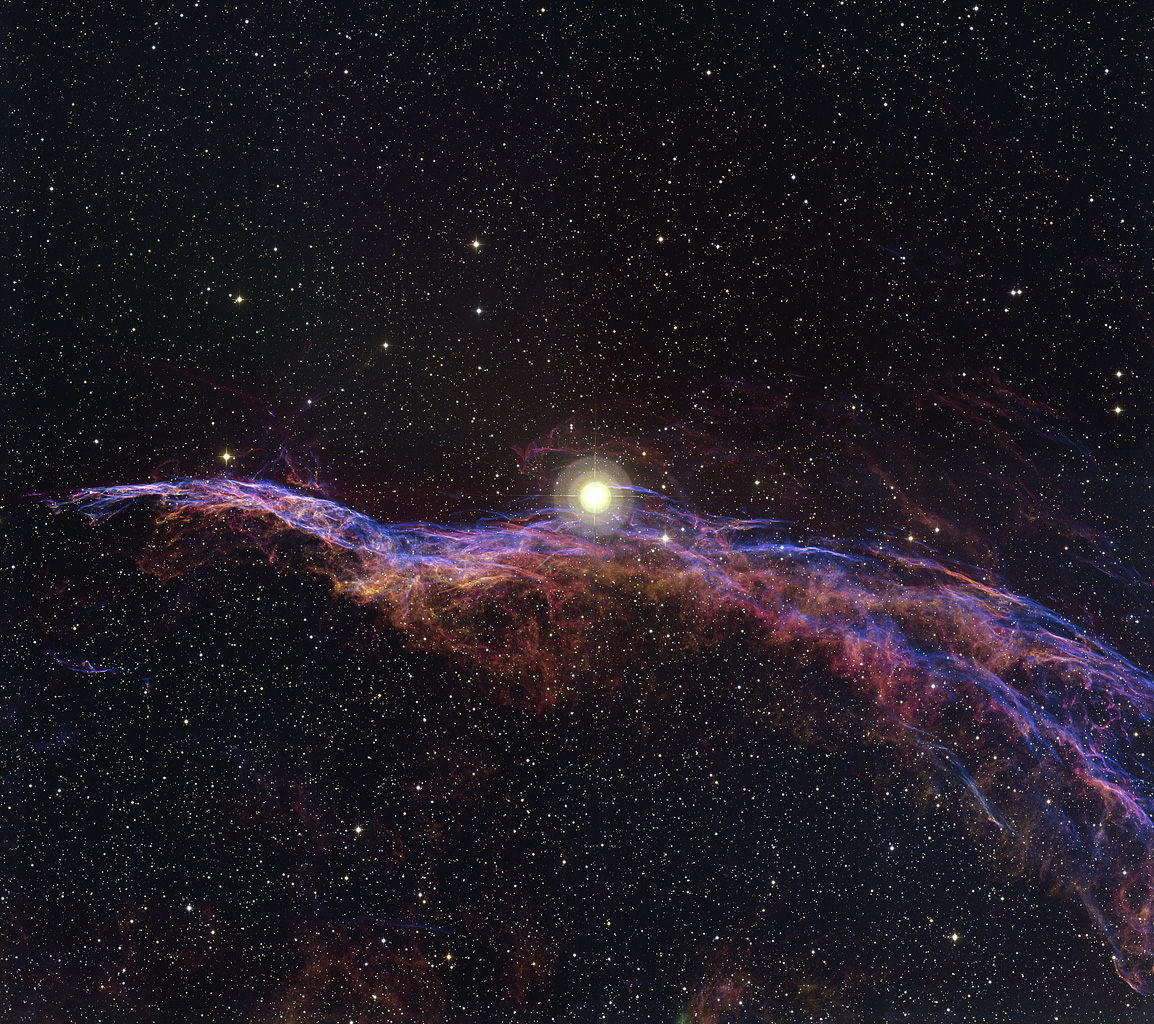
Ten thousand years ago, before the dawn of recorded human history, a new light must suddenly have appeared in the night sky and faded after a few weeks. Today we know this light was an exploding star and record the colorful expanding cloud as the Veil Nebula. Pictured above is the west end of the Veil Nebula known technically as NGC 6960 but less formally as the Witch's Broom Nebula. The rampaging gas gains its colors by impacting and exciting existing nearby gas. The supernova remnant lies about 1400 light-years away towards the constellation of Cygnus. This Witch's Broom actually spans over three times the angular size of the full Moon. The bright star 52 Cygnus is visible with the unaided eye from a dark location but unrelated to the ancient supernova.
Hace diez mil años, antes del comienzo de la historia humana registrada, una nueva luz debe haber aparecido repentinamente en el cielo nocturno y desaparecido después de algunas semanas. Hoy sabemos que esta luz era una estrella en explosión y registramos la nube expansiva colorida como la Nebulosa del Velo. Lo que se muestra arriba es el extremo occidental de la Nebulosa del Velo, conocida técnicamente como NGC 6960 pero informalmente como la Nebulosa de la Escoba de la Bruja. El gas desenfrenado adquiere sus colores al impactar y excitar el gas cercano existente. El remanente de supernova se encuentra a aproximadamente 1400 años luz de distancia hacia la constelación de Cisne. Esta Escoba de la Bruja en realidad abarca más de tres veces el tamaño angular de la Luna llena. La estrella brillante 52 Cygni es visible a simple vista desde una ubicación oscura, pero no tiene relación con la antigua supernova.