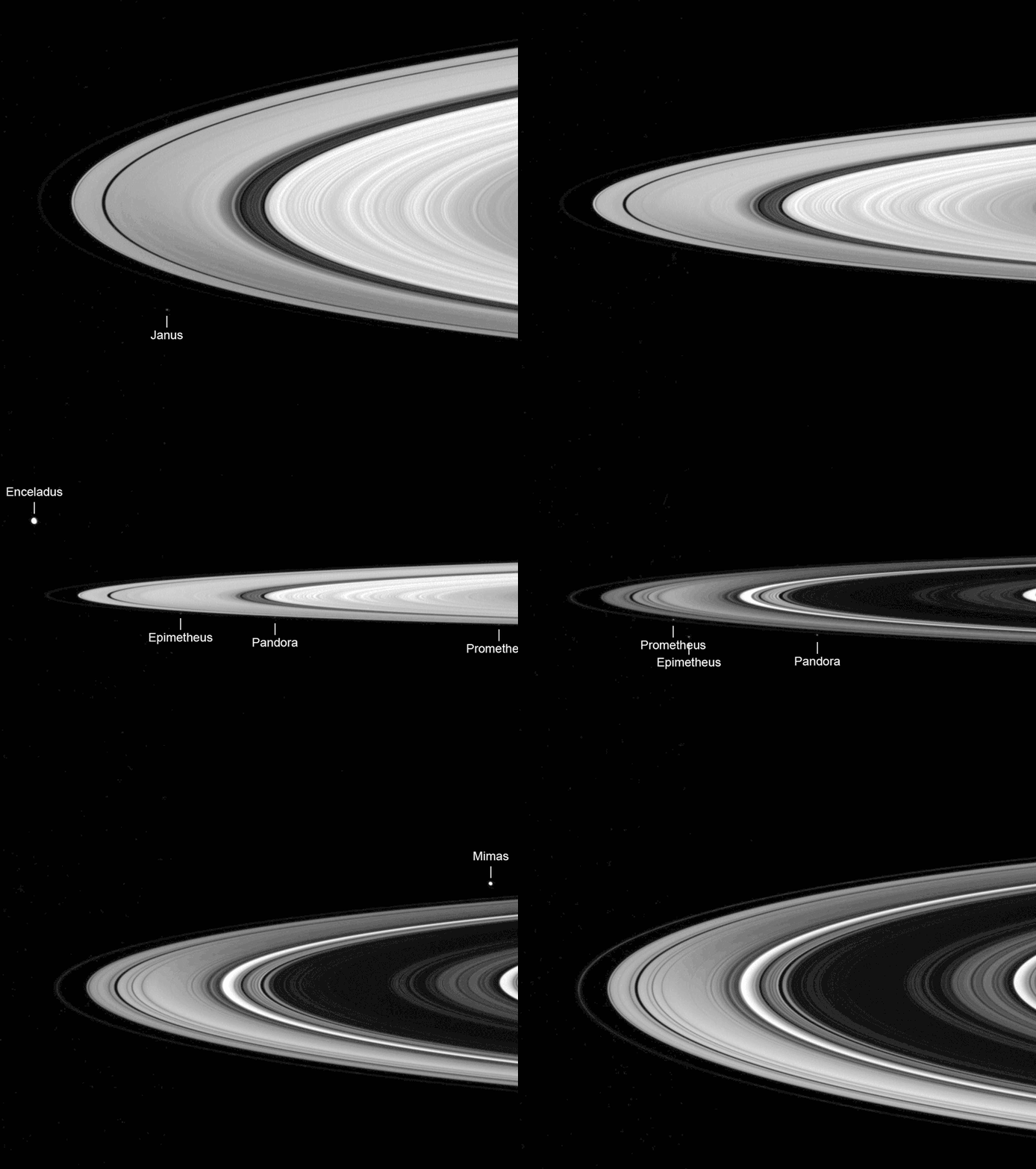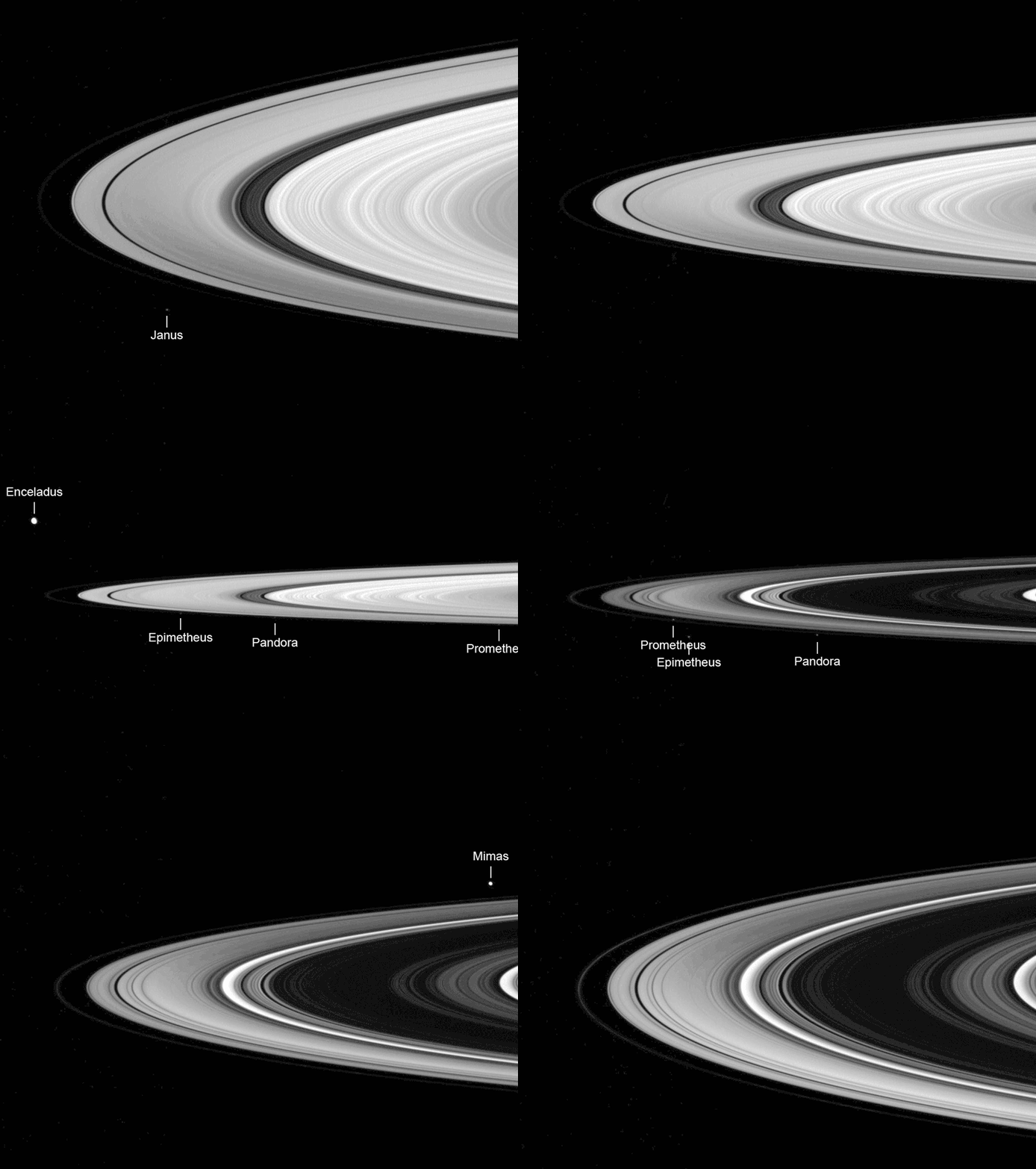
What would the rings of Saturn look like if you passed right through the ring plane? To find out, NASA aimed cameras from the Cassini spacecraft right at Saturn's rings as the robotic explorer passed from the sunlit side of the rings to the shadowed side. Resulting images from a vantage point outside the rings and most moons, but inside the orbit of Titan, have been gathered together in the above time-lapse movie. The dramatic movie demonstrates that ring particle density and reflectivity makes some parts of the shadowed side nearly the photographic negative of the sunlit side, but nearly empty regions remain continually dark. Visible also are Saturn-orbiting moons Enceladus, Mimas, Janus, Epimetheus, Prometheus, and Pandora. The extreme thinness of Saturn's rings can be appreciated from frames taken near the crossing time.
¿Cómo se verían los anillos de Saturno si pasaras directamente a través del plano de los anillos? Para averiguarlo, la NASA apuntó las cámaras de la nave espacial Cassini directamente hacia los anillos de Saturno mientras la sonda robótica pasaba del lado iluminado de los anillos al lado en sombra. Las imágenes resultantes, desde un punto de vista fuera de los anillos y la mayoría de las lunas, pero dentro de la órbita de Titán, se han reunido en la película en tiempo acelerado anterior. La película dramática demuestra que la densidad y la reflectividad de las partículas de los anillos hacen que algunas partes del lado sombreado sean casi el negativo fotográfico del lado iluminado, pero las regiones casi vacías permanecen continuamente oscuras. También son visibles las lunas que orbitan Saturno: Encélado, Mimas, Jano, Epimeteo, Prometeo y Pandora. La extrema delgadez de los anillos de Saturno puede apreciarse en los fotogramas tomados cerca del momento del cruce.