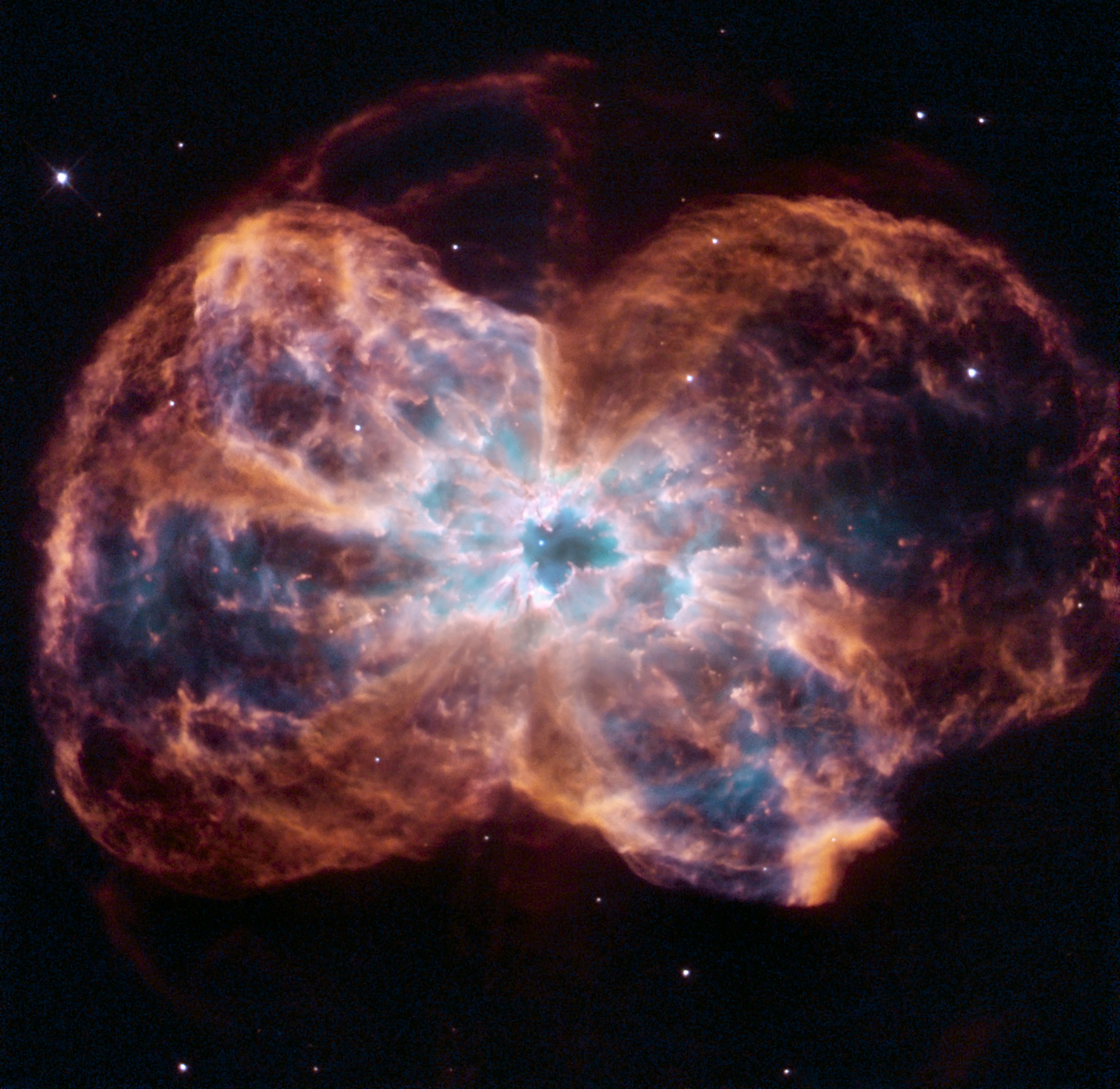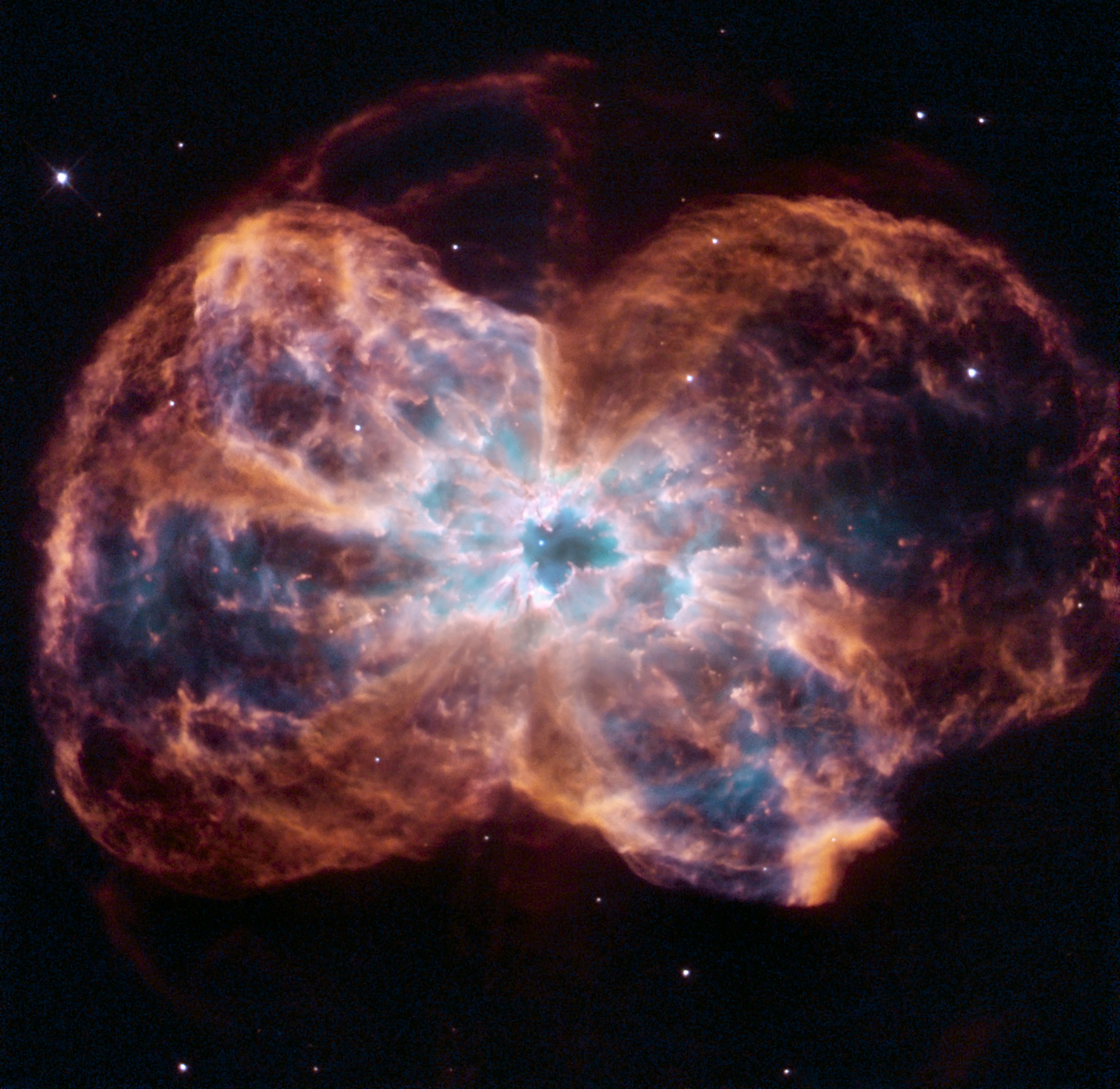
Planetary nebula NGC 2440 has an intriguing bow-tie shape in this stunning view from space. The nebula is composed of material cast off by a dying sun-like star as it enters its white dwarf phase of evolution. Details of remarkably complex structures are revealed within NGC 2440, including dense ridges of material swept back from the nebula's central star. Near the center of the view, the star itself is one of the hottest known, with a surface temperature of about 200,000 kelvins. About 4,000 light-years from planet Earth toward the nautical constellation Puppis, the nebula spans over a light-year and is energized by ultraviolet light from the central star. The false-color image was recorded earlier this month using the Hubble's Wide-Field Planetary Camera 2(WFPC2), demonstrating still impressive imaging capabilities following the failure of the Advanced Camera for Surveys.
La nebulosa planetaria NGC 2440 presenta una intrigante forma de pajarita en esta espectacular vista desde el espacio. La nebulosa está compuesta por material expulsado por una estrella moribunda similar al Sol cuando entra en su fase de enana blanca de evolución. NGC 2440 revela detalles de estructuras notablemente complejas, incluidas crestas densas de material barridas hacia atrás desde la estrella central de la nebulosa. Cerca del centro de la imagen, la estrella misma es una de las más calientes conocidas, con una temperatura superficial de aproximadamente 200,000 kelvines. A unos 4,000 años luz del planeta Tierra hacia la constelación náutica de Puppis, la nebulosa abarca más de un año luz y está energizada por luz ultravioleta emitida por la estrella central. La imagen en falso color fue registrada a principios de este mes utilizando la Cámara Planetaria de Gran Angular 2 (WFPC2) del Hubble, demostrando aún impresionantes capacidades de obtención de imágenes tras el fallo de la Cámara Avanzada para Sondeos.