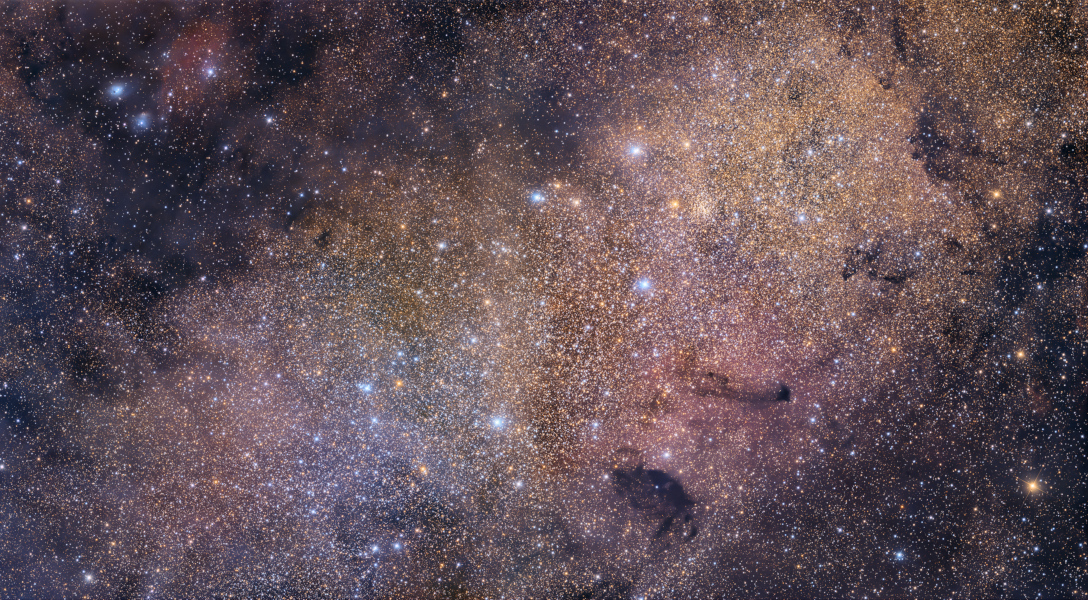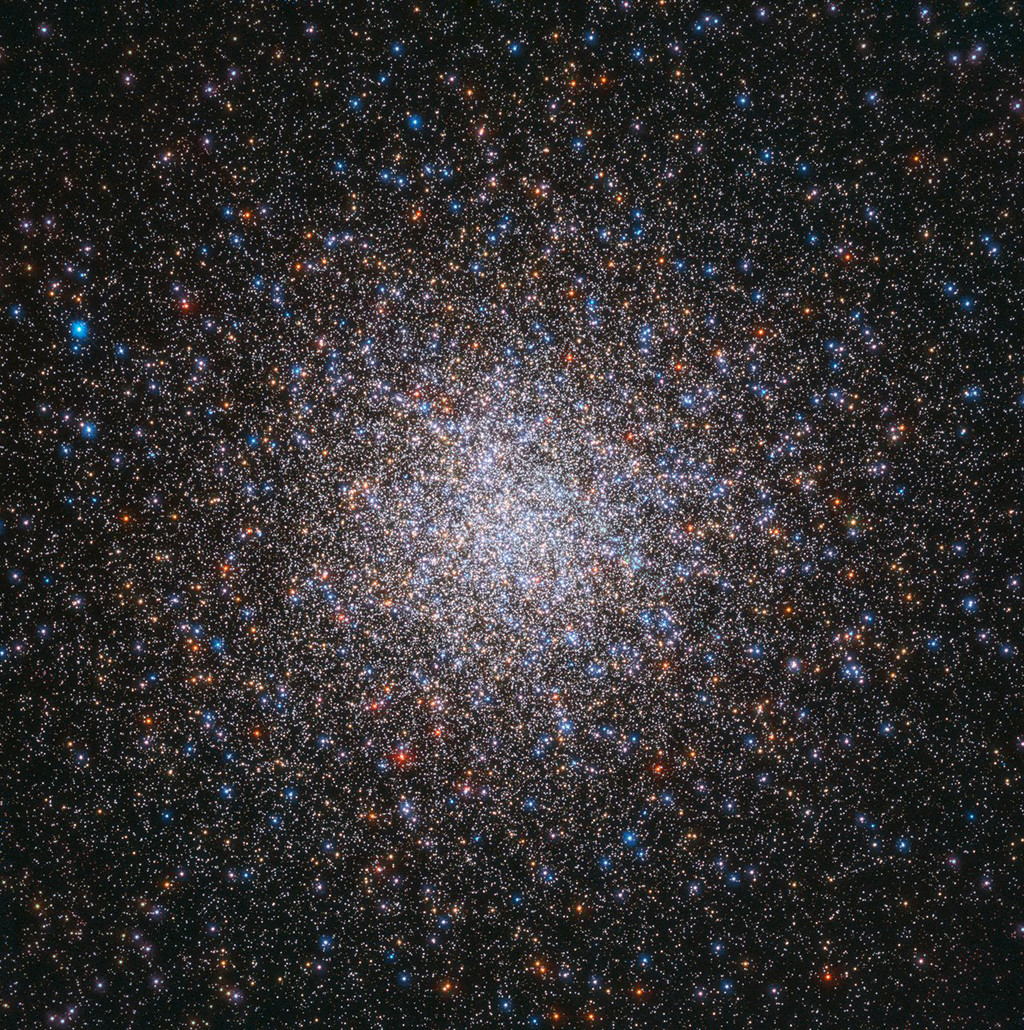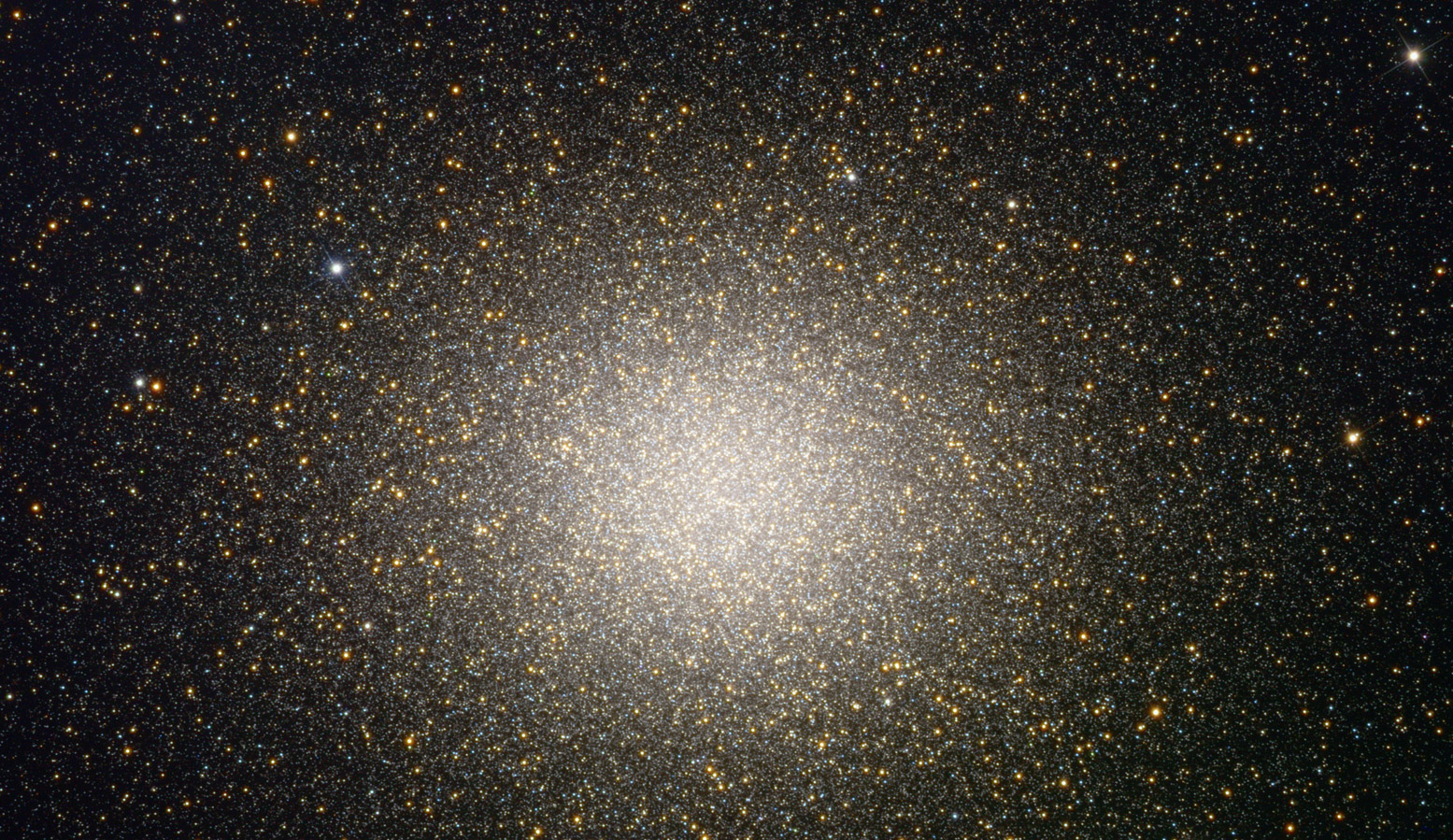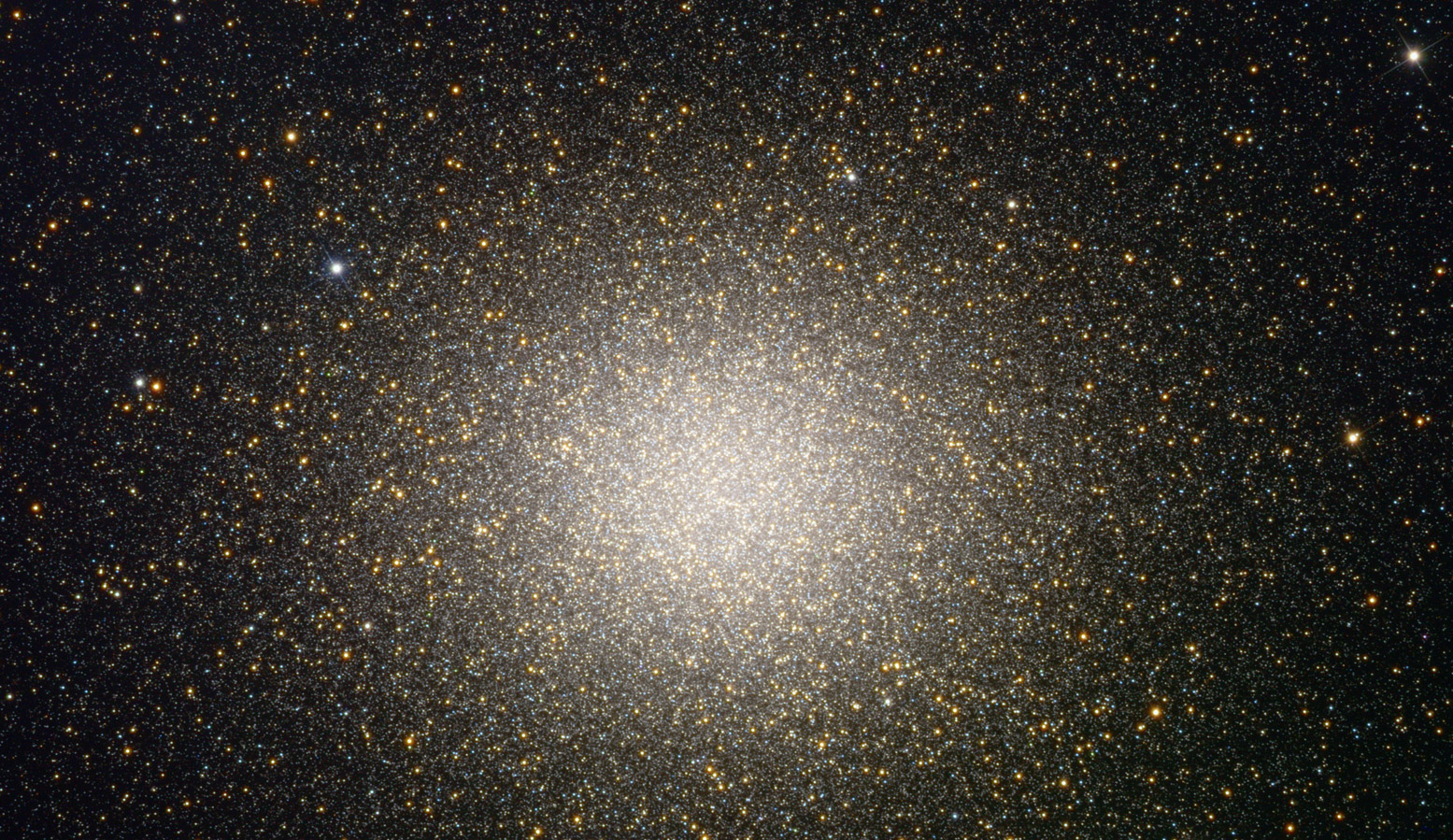
Centaurus is one of the most striking constellations in the southern sky. The Milky Way flows through this celestial expanse whose wonders also include the closest star system to the Sun, Alpha Centauri, and the largest globular star cluster in our galaxy, Omega Centauri (aka NGC 5139). This sharp telescopic view of Omega Centauri shows off the central regions of the cluster of about 10 million stars. Omega Cen itself is about 15,000 light-years away and 150 light-years in diameter - the largest of 150 or so known globular star clusters that roam the halo of our galaxy. Though most star clusters consist of stars with the same age and composition, the enigmatic Omega Cen exhibits the presence of different stellar populations with a spread of ages and chemical abundances. In fact, Omega Cen may be the remnant core of a small galaxy merging with the Milky Way.
Centauro es una de las constelaciones más llamativas del cielo austral. La Vía Láctea discurre a través de esta región celestial, cuyas maravillas incluyen también el sistema estelar más cercano al Sol, Alfa Centauri, y el cúmulo globular más grande de nuestra galaxia, Omega Centauri (también conocido como NGC 5139). Esta imagen telescópica de alta resolución de Omega Centauri muestra las regiones centrales del cúmulo, que contiene aproximadamente 10 millones de estrellas. Omega Centauri se encuentra a unos 15.000 años luz de distancia y tiene un diámetro de 150 años luz, siendo el mayor de los 150 o más cúmulos globulares conocidos que deambulan por el halo de nuestra galaxia. Aunque la mayoría de los cúmulos estelares están formados por estrellas de la misma edad y composición, el enigmático Omega Centauri presenta diferentes poblaciones estelares con un rango de edades y abundancias químicas distintas. De hecho, Omega Centauri podría ser el núcleo remanente de una pequeña galaxia que se fusionó con la Vía Láctea.