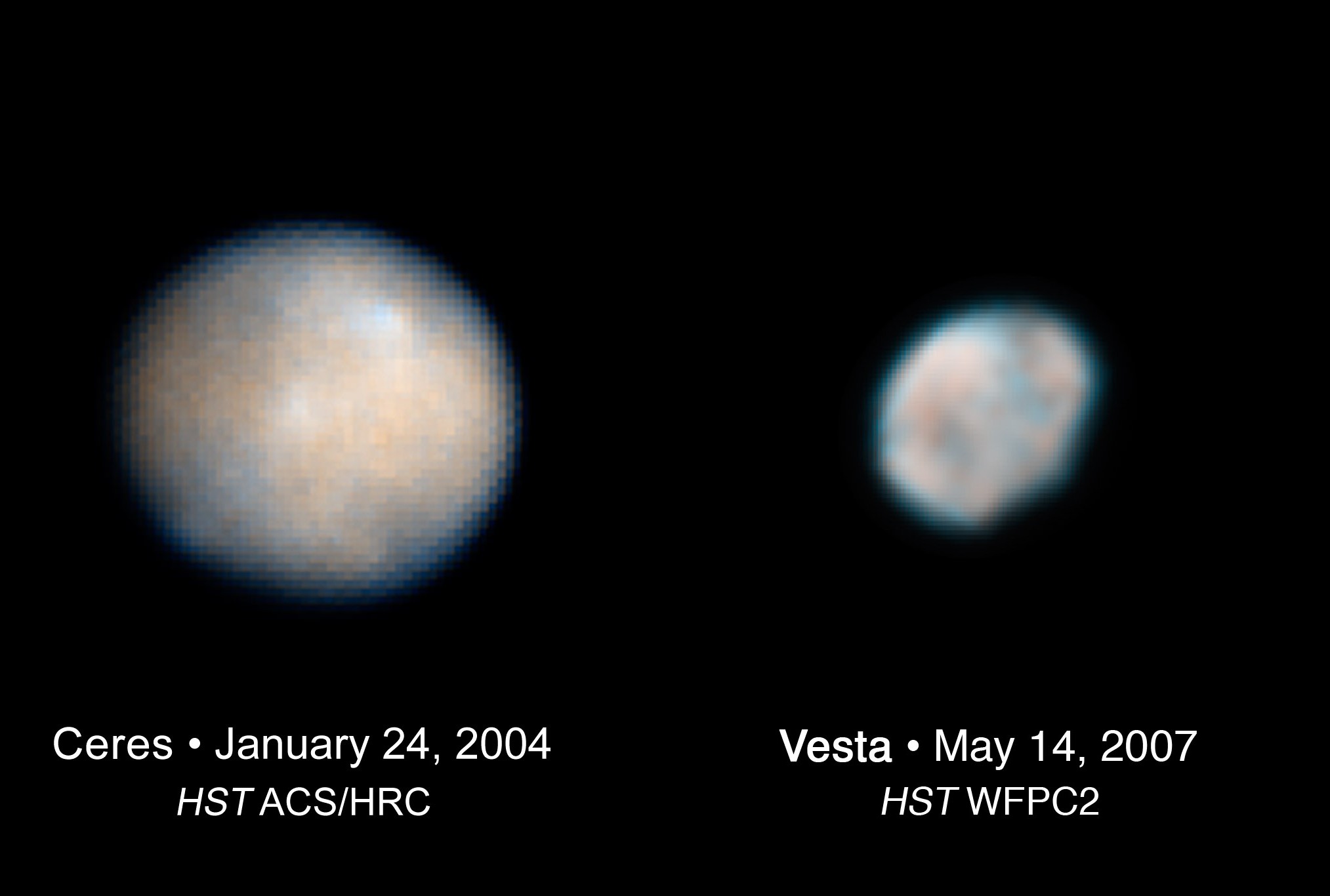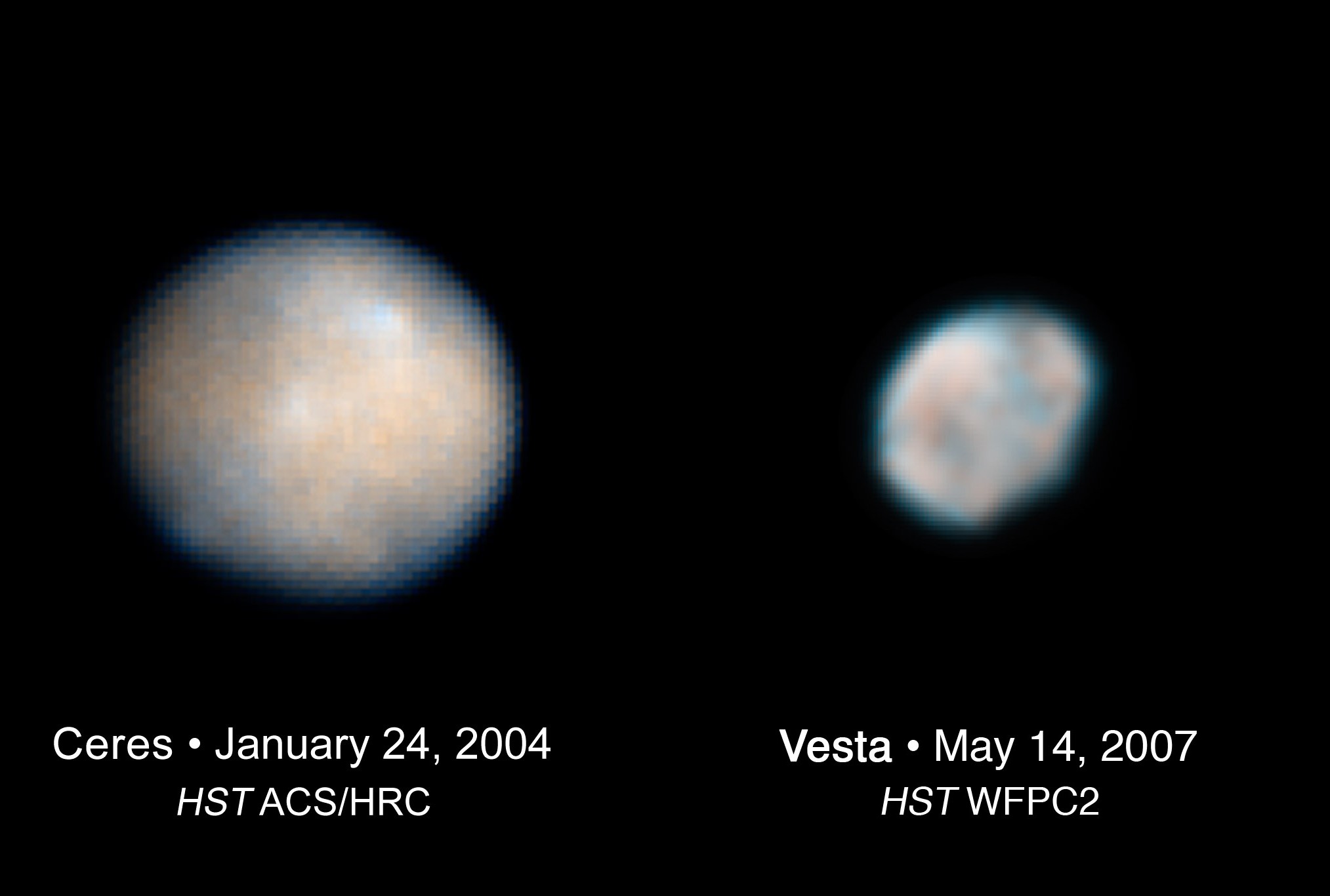
Ceres and Vesta are, respectively, only around 950 kilometers and 530 kilometers in diameter - about the size of Texas and Arizona. But they are two of the largest of over 100,000 minor bodies orbiting in the main asteroid belt between Mars and Jupiter. These remarkably detailed Hubble Space Telescope images show brightness and color variations across the surface of the two small worlds. The variations could represent large scale surface features or areas of different compositon. The Hubble image data will help astronomers plan for a visit by the asteroid-hopping Dawn spacecraft, scheduled for launch on July 7 and intended to orbit first Vesta and then Ceres after a four year interplanetary cruise. Though Shakespeare might not have been impressed, nomenclature introduced by the International Astronomical Union in 2006 classifies nearly spherical Ceres as a dwarf planet.
Ceres y Vesta tienen un diámetro de aproximadamente 950 y 530 kilómetros respectivamente, aproximadamente el tamaño de Texas y Arizona. Sin embargo, son dos de los mayores de más de 100,000 cuerpos menores que orbitan en el cinturón principal de asteroides entre Marte y Júpiter. Estas imágenes notablemente detalladas del Telescopio Espacial Hubble muestran variaciones de brillo y color en la superficie de estos dos mundos pequeños. Las variaciones podrían representar características de gran escala en la superficie o áreas de diferente composición. Los datos de imagen del Hubble ayudarán a los astrónomos a planificar una visita de la nave Dawn, que salta asteroides, con lanzamiento programado para el 7 de julio, y que se prevé que orbite primero a Vesta y luego a Ceres después de un viaje interplanetario de cuatro años. Aunque Shakespeare tal vez no hubiera estado impresionado, la nomenclatura introducida por la Unión Astronómica Internacional en 2006 clasifica a Ceres, de forma casi esférica, como un planeta enano.