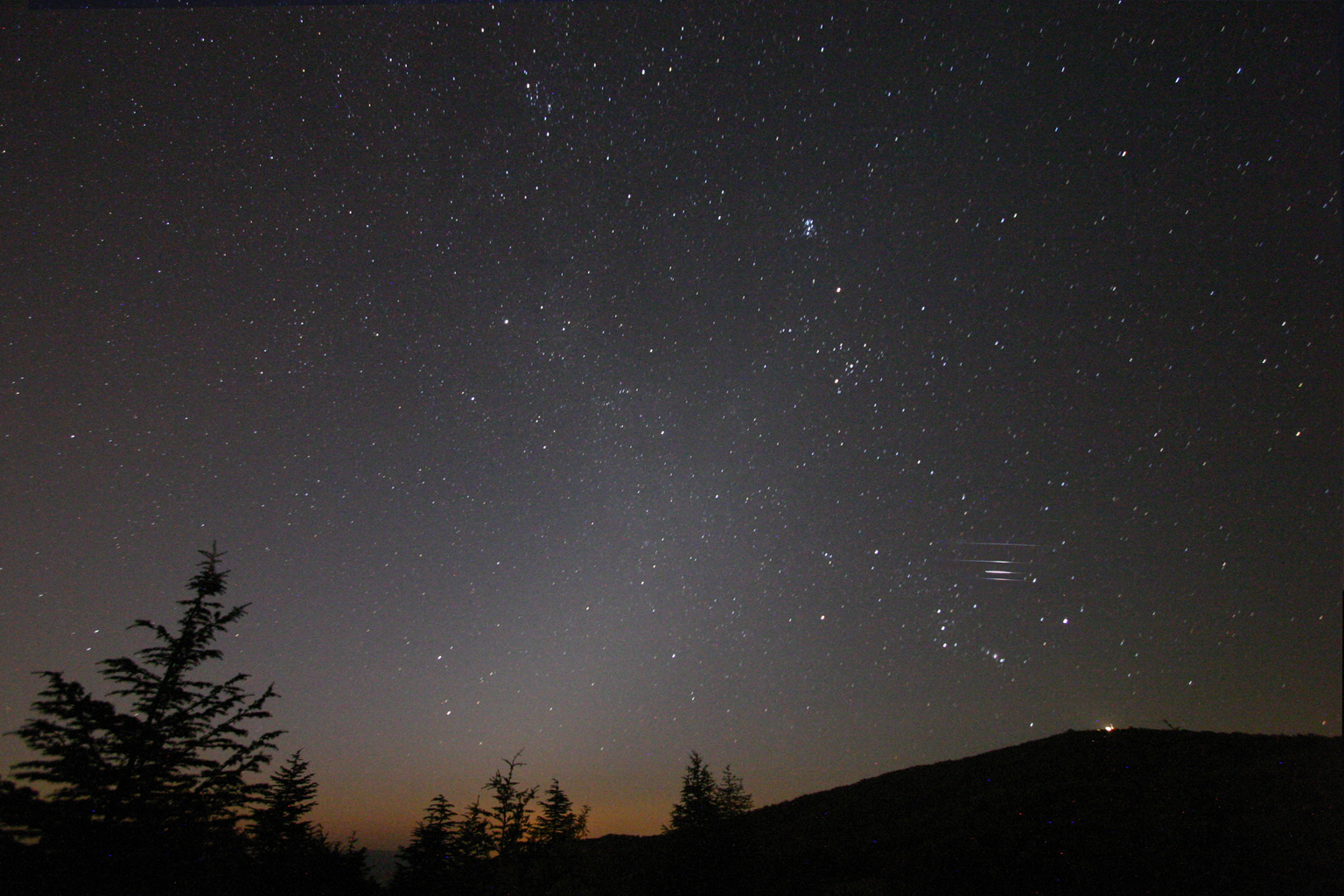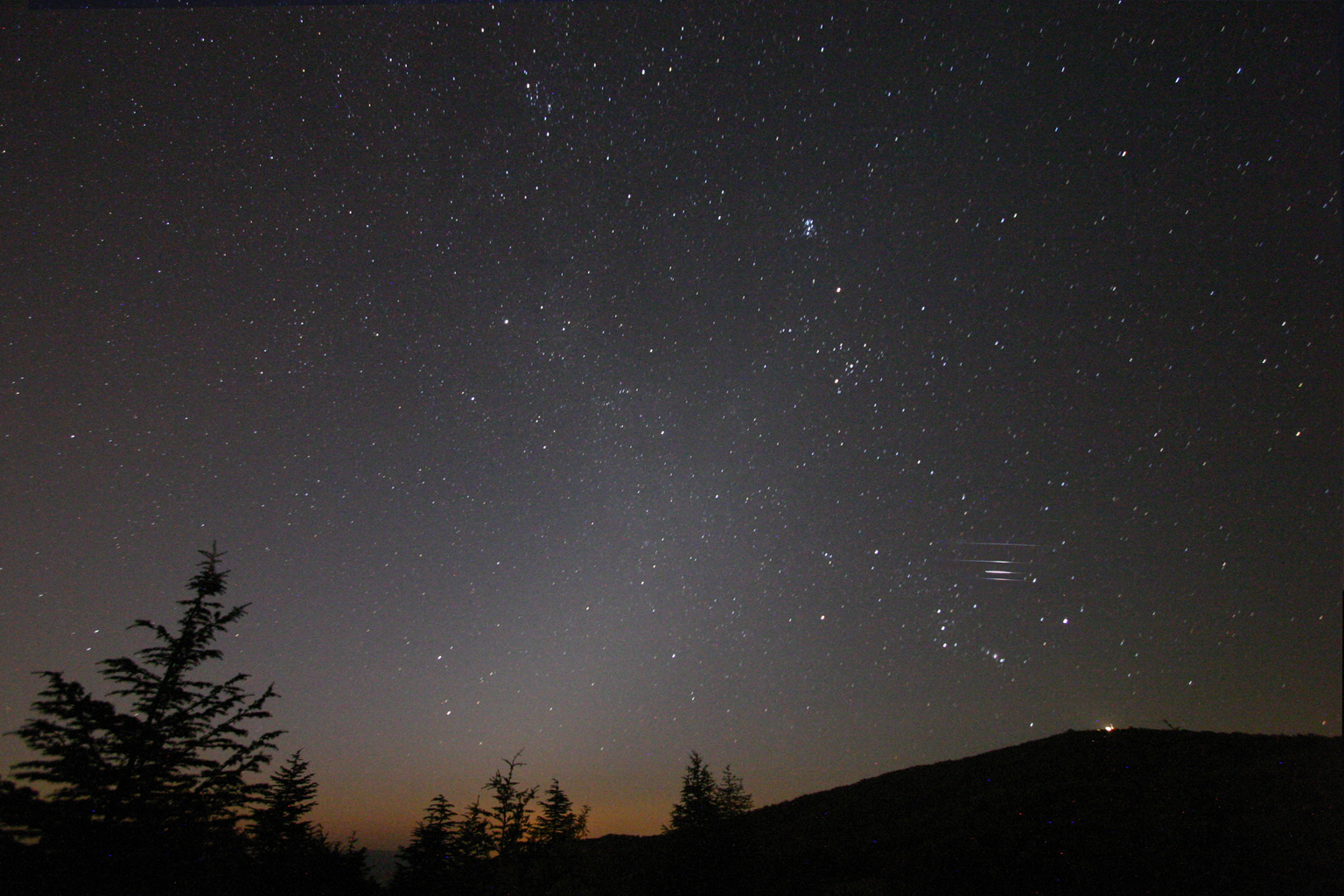
What are they? Five streaks near the bottom of the above image taken near Ankara, Turkey on Sunday would be identified at first glance as meteors from the Perseids meteor shower peaking just that night. Unexpectedly, however, these streaks do not point back to the Perseids radiant in Perseus. Their origin is therefore somewhat unclear. The above image was captured over the time span of 40 minutes. Other visible celestial icons include the constellation Orion and the Pleiades star cluster. One hypothesis is that the streaks are part of a microburst from a much less active meteor shower known as the Alpha Ursae Majorids. Another possibility is that they are parts of a satellite that broke up as it re-entered the Earth's atmosphere. A discussion of these possibilities can be found here. This year's Perseids meteor shower was a good one, as it was particularly active and corresponded with the dark skies that come with a new moon.
¿Qué son? Cinco rayas cerca de la parte inferior de la imagen anterior capturada cerca de Ankara, Turquía el domingo serían identificadas a primera vista como meteoros de la lluvia de meteoros de las Perseidas que alcanzaba su máximo precisamente esa noche. Sin embargo, inesperadamente, estas rayas no apuntan hacia el radiante de las Perseidas en Perseo. Por lo tanto, su origen es algo incierto. La imagen anterior fue capturada durante un período de 40 minutos. Otros iconos celestiales visibles incluyen la constelación de Orión y el cúmulo de estrellas de las Pléyades. Una hipótesis es que las rayas son parte de una ráfaga micro de una lluvia de meteoros mucho menos activa conocida como las Ursidas Alfa de la Osa Mayor. Otra posibilidad es que sean partes de un satélite que se desintegró al reingresar a la atmósfera terrestre. En este enlace se puede encontrar una discusión de estas posibilidades. La lluvia de meteoros de las Perseidas de este año fue excelente, ya que fue particularmente activa y coincidió con los cielos oscuros que acompañan a la luna nueva.