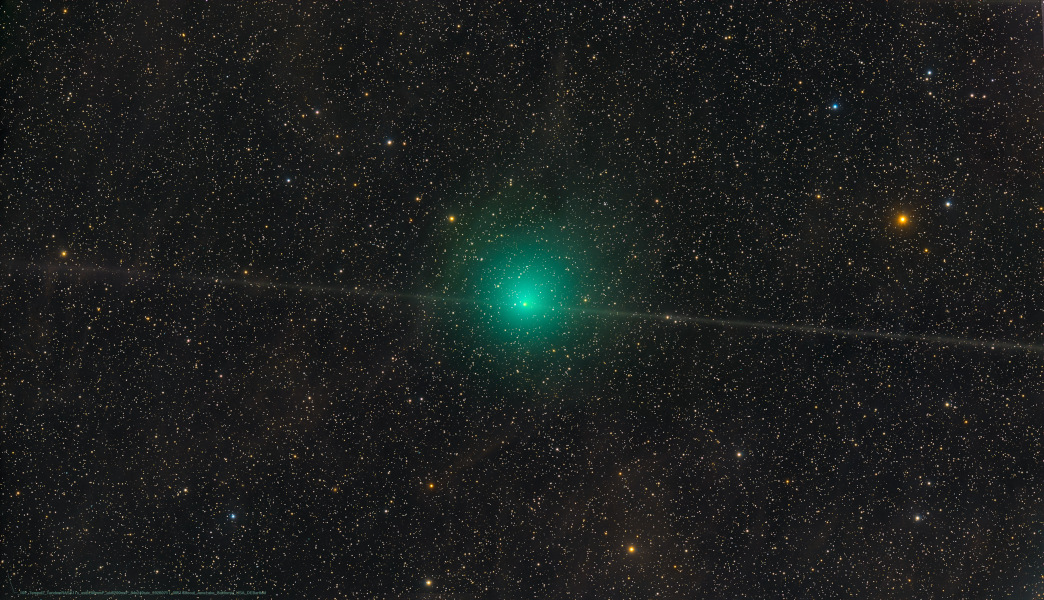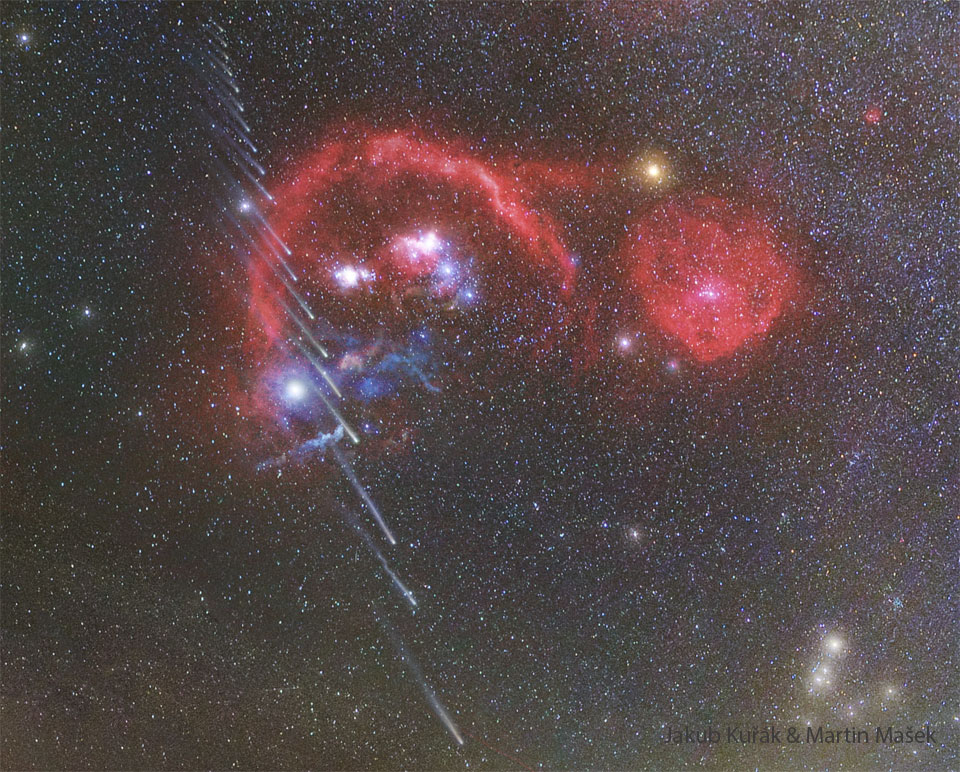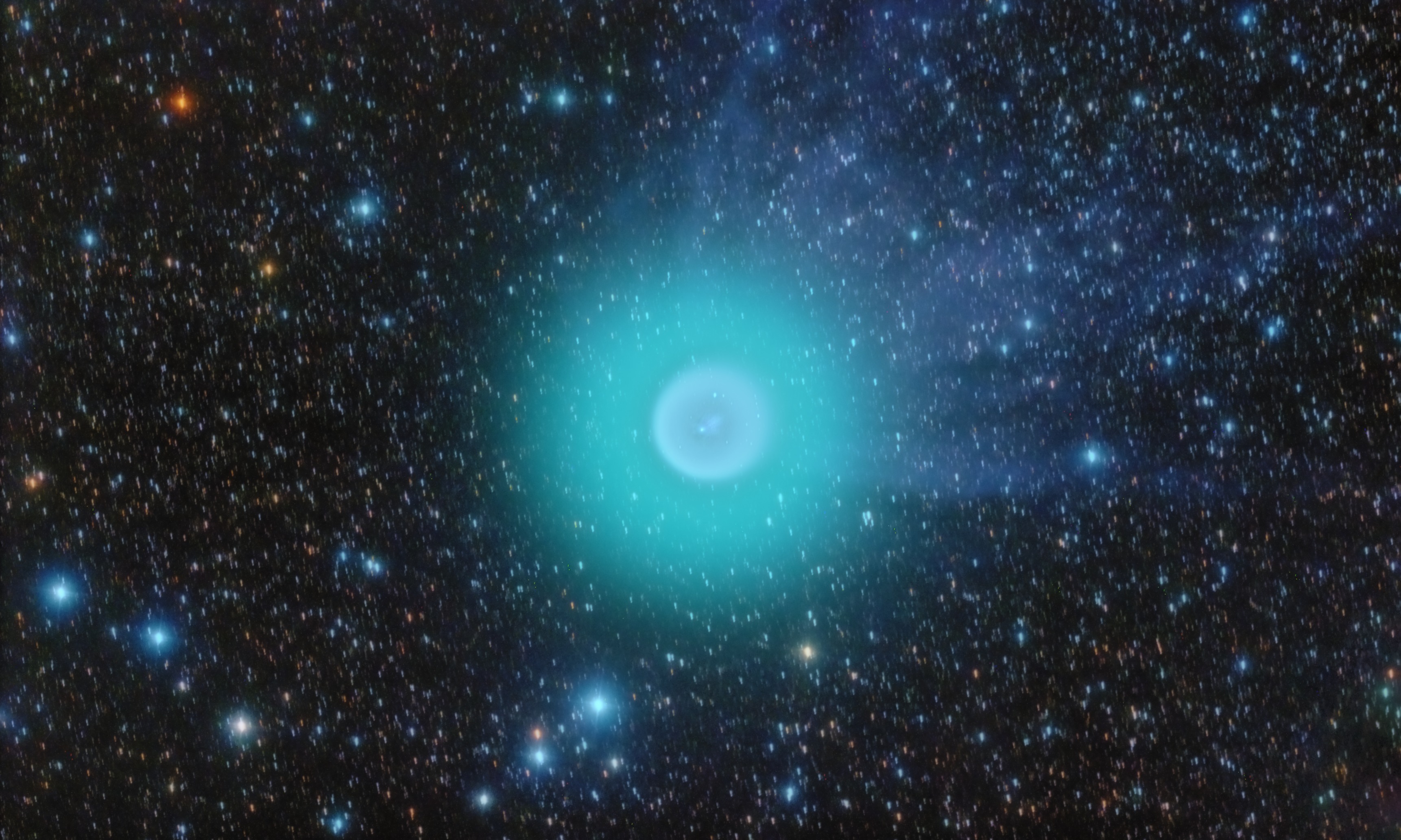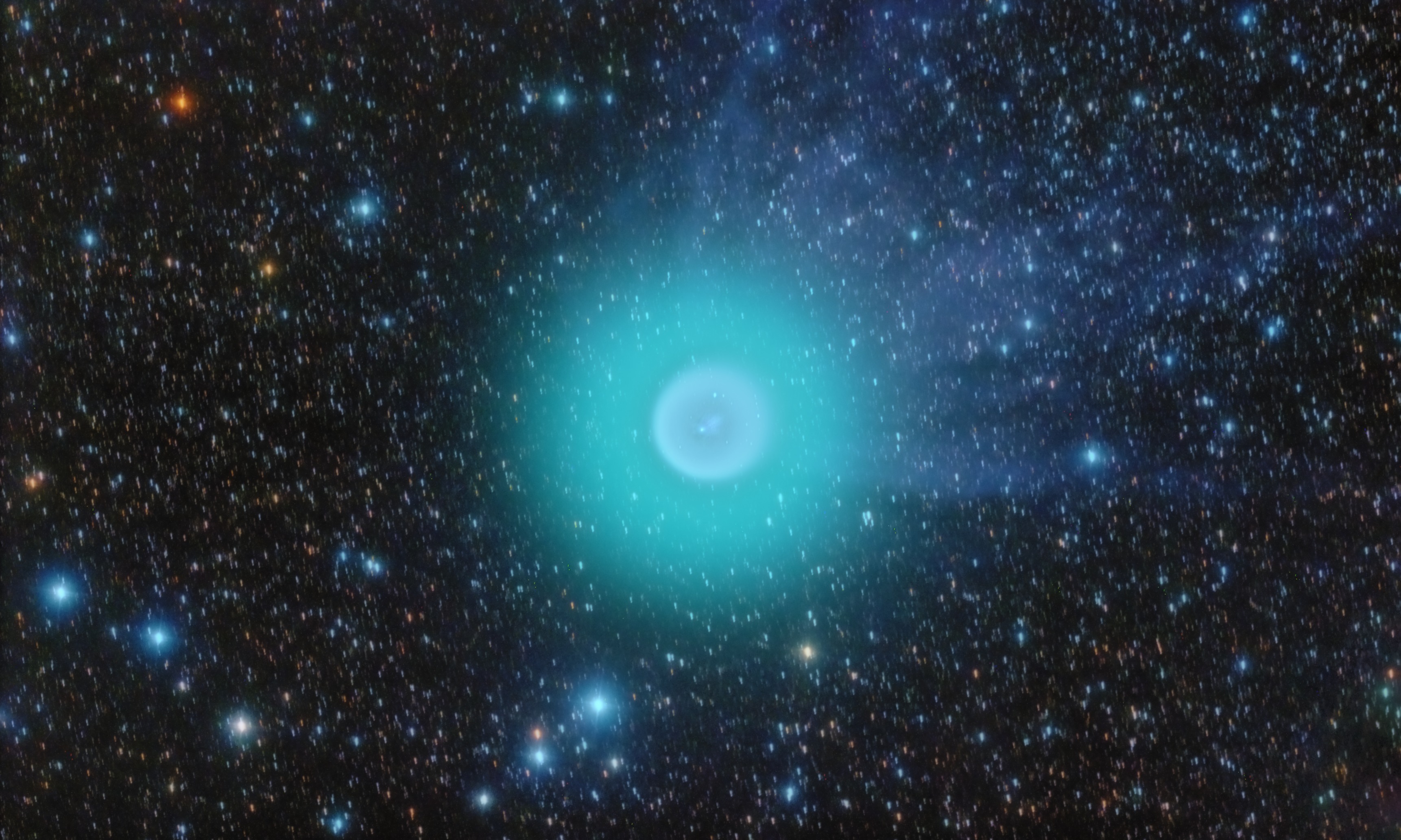
Comet Holmes continues to be an impressive sight to the unaided eye. The comet has diminished in brightness only slightly, and now clearly appears to have a larger angular extent than stars and planets. Astrophotographers have also noted a distinctly green appearance to the comet's coma over the past week. Pictured above over Spain in three digitally combined exposures, Comet 17P/Holmes now clearly sports a tail. The blue ion tail is created by the solar wind impacting ions in the coma of Comet Holmes and pushing them away from the Sun. Comet Holmes underwent an unexpected and dramatic increase in brightness starting only two weeks ago. The detail visible in Comet Holmes' tail indicates that the explosion of dust and gas that created this dramatic brightness increase is in an ongoing and complex event. Comet Holmes will move only slightly on the sky over during the next month.
El Cometa Holmes sigue siendo un espectáculo impresionante para el ojo desarmado. El cometa ha disminuido su brillo solo ligeramente y ahora claramente aparece con una extensión angular mayor que la de estrellas y planetas. Los astrofotógrafos también han observado una apariencia distintamente verde en la coma del cometa durante la pasada semana. Fotografiado arriba sobre España en tres exposiciones digitalmente combinadas, el Cometa 17P/Holmes ahora claramente exhibe una cola. La cola iónica azul es creada por el viento solar impactando iones en la coma del Cometa Holmes y empujándolos lejos del Sol. El Cometa Holmes experimentó un aumento inesperado y dramático de brillo comenzando hace solo dos semanas. Los detalles visibles en la cola del Cometa Holmes indican que la explosión de polvo y gas que creó este aumento dramático de brillo es un evento continuo y complejo. El Cometa Holmes se moverá solo ligeramente en el cielo durante el próximo mes.