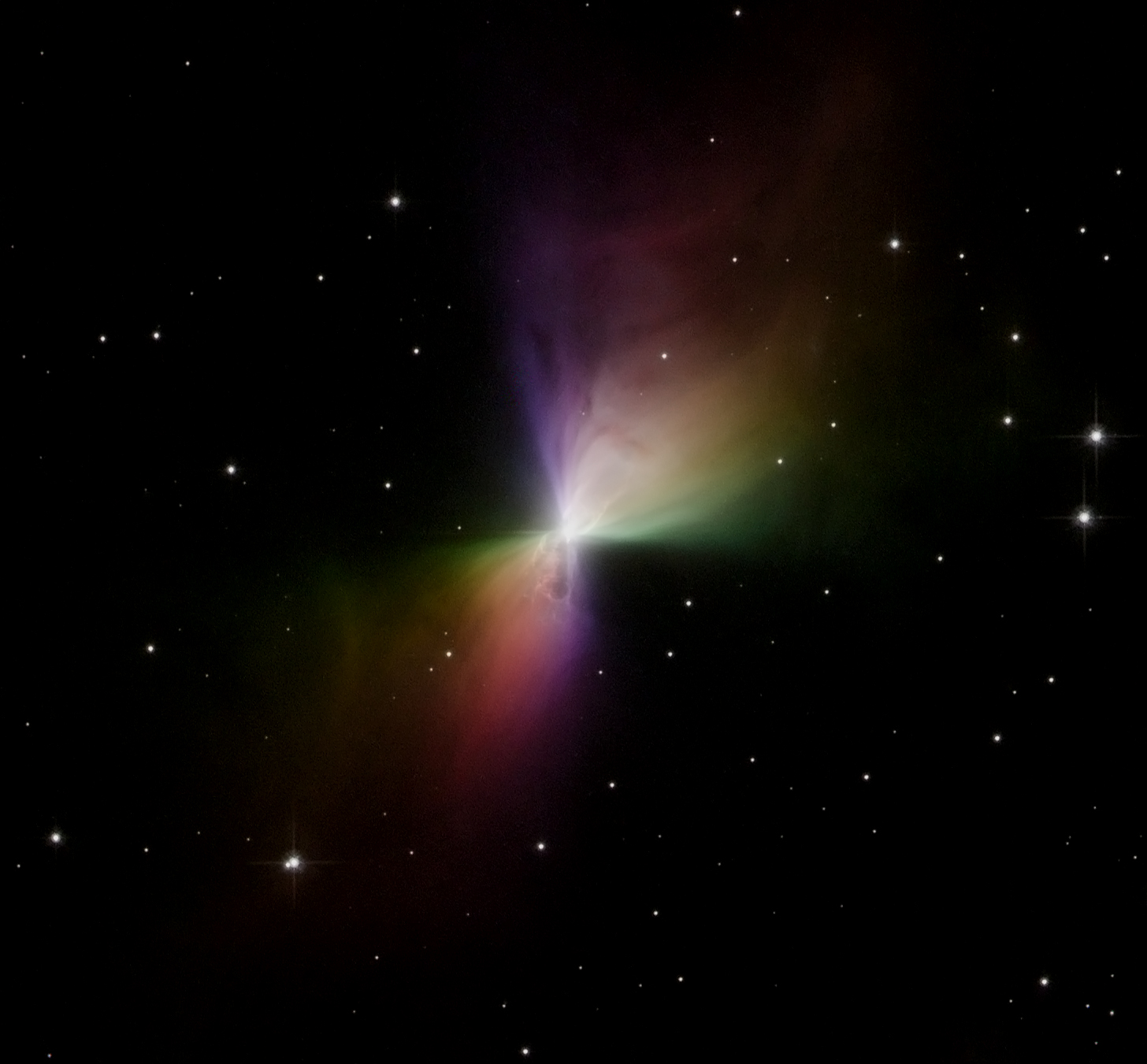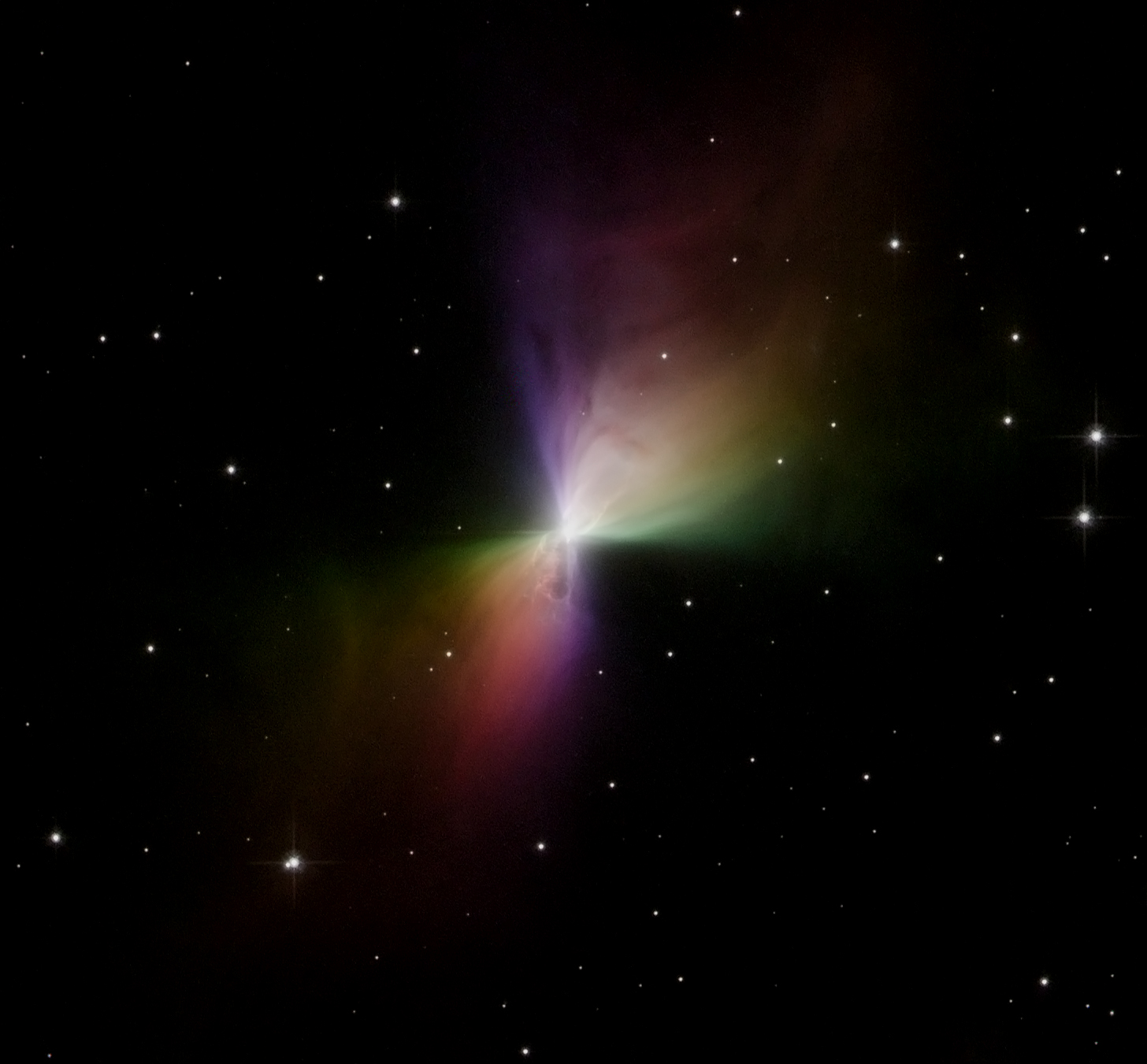
This symmetric cloud dubbed the Boomerang Nebula was created by a high-speed wind of gas and dust blowing from an aging central star at speeds of nearly 600,000 kilometers per hour. The rapid expansion has cooled molecules in the nebular gas to about one degree above absolute zero - colder than even the cosmic background radiation - making it the coldest known region in the distant Universe. Shining with light from the central star reflected by dust, the frigid Boomerang Nebula is believed to be a star or stellar system evolving toward the planetary nebula phase. This Hubble image was recorded using polarizing filters (analogous to polaroid sunglasses) and color coded by the angle associated with the polarized light. The gorgeous result traces the small dust particles responsible for polarizing and scattering the light. The Boomerang Nebula spans about one light year and lies about 5,000 light years away toward the constellation Centaurus. APOD presents: Astronomy Pictures of the Year for 2007
Esta nube simétrica conocida como la Nebulosa Boomerang fue creada por un viento de alta velocidad de gas y polvo expulsado desde una estrella central envejecida a velocidades de casi 600.000 kilómetros por hora. La rápida expansión ha enfriado las moléculas del gas nebular a aproximadamente un grado por encima del cero absoluto, más frío incluso que la radiación de fondo cósmico, lo que la convierte en la región más fría conocida en el Universo distante. Brillando con la luz de la estrella central reflejada por el polvo, la gélida Nebulosa Boomerang se cree que es una estrella o un sistema estelar en evolución hacia la fase de nebulosa planetaria. Esta imagen del Hubble fue captada utilizando filtros polarizadores (análogos a las gafas de sol polarizadas) y codificada por colores según el ángulo asociado con la luz polarizada. El hermoso resultado pone de manifiesto las pequeñas partículas de polvo responsables de polarizar y dispersar la luz. La Nebulosa Boomerang abarca aproximadamente un año luz y se encuentra a unos 5.000 años luz de distancia hacia la constelación de Centauro.