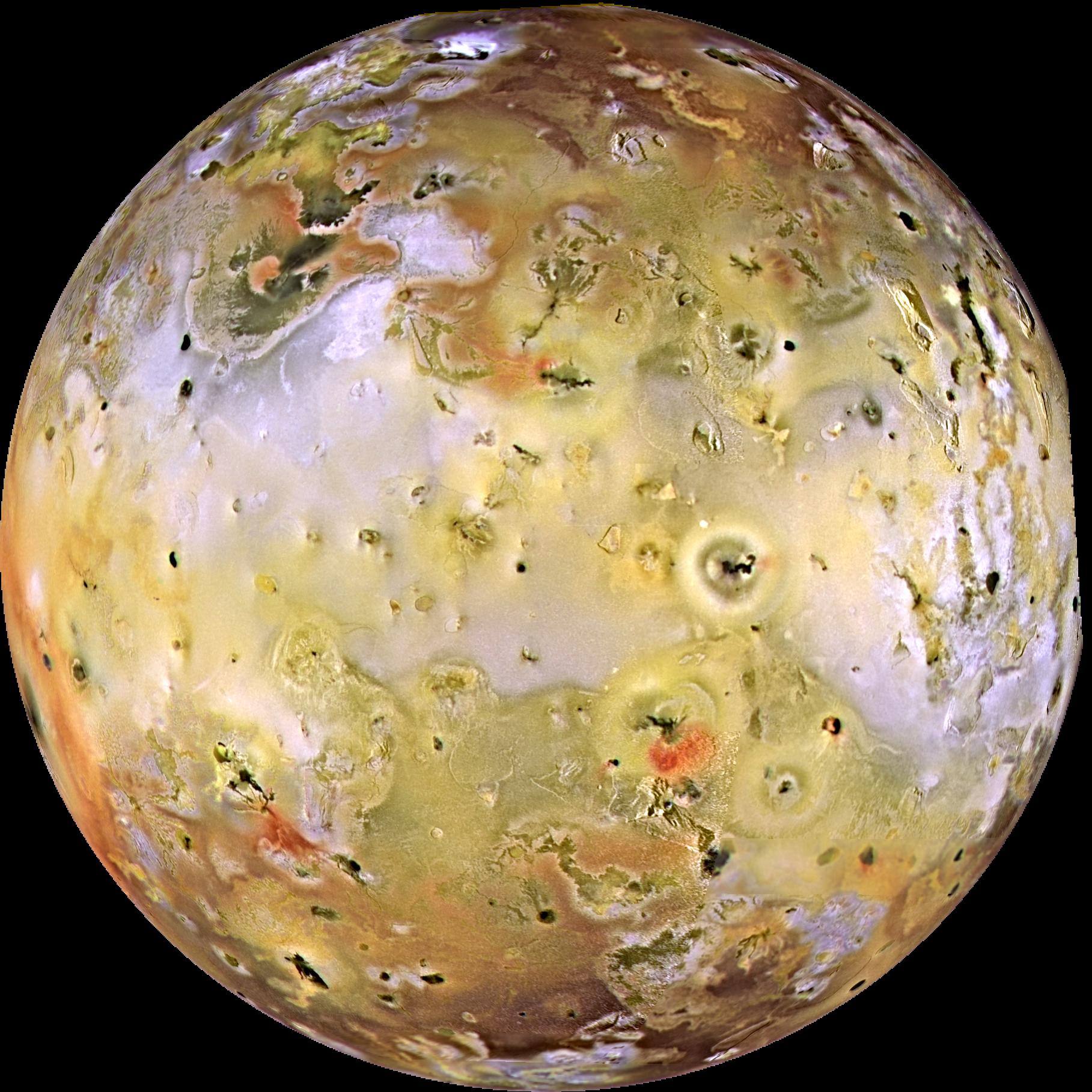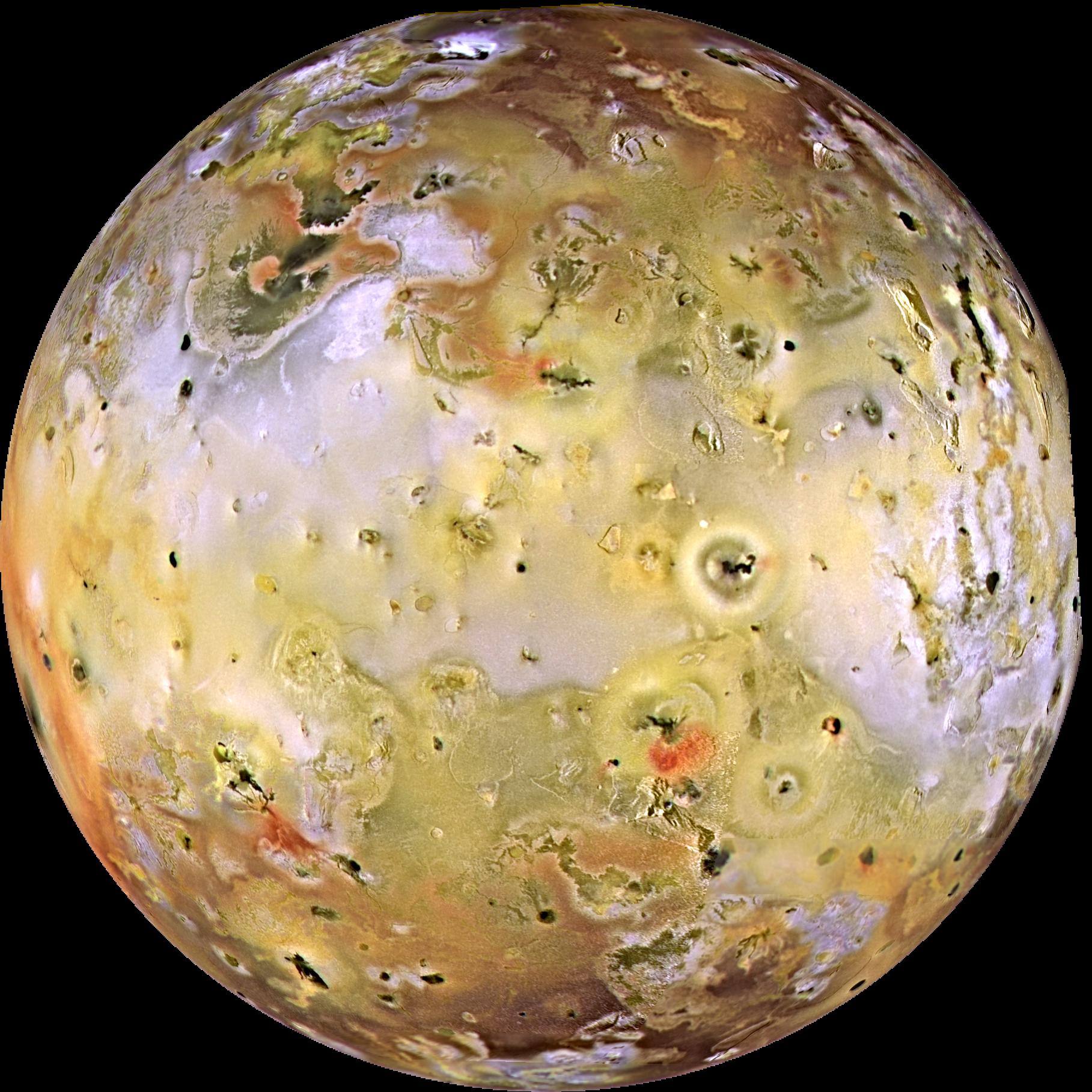
Like the downtown area of your favorite city, the roads you drive to work on, and any self-respecting web site ... Io's surface is constantly under construction. This moon of Jupiter holds the distinction of being the Solar System's most volcanically active body -- its bizarre looking surface continuously formed and reformed by lava flows. Generated using 1996 data from NASA's Galileo spacecraft, this high resolution composite image is centered on the side of Io that always faces away from Jupiter. It has been enhanced to emphasize Io's surface brightness and color variations, revealing features as small as 1.5 miles across. The notable absence of impact craters suggests that the entire surface is covered with new volcanic deposits much more rapidly than craters are created. What drives this volcanic powerhouse? A likely energy source is the changing gravitational tides caused by Jupiter and the other Galilean moons as Io orbits the massive gas giant planet. Heating Io's interior, the pumping tides would generate the sulfurous volcanic activity.
Como el centro de tu ciudad favorita, las carreteras por las que conduces hacia el trabajo y cualquier sitio web que se precie... la superficie de Ío está en construcción constante. Esta luna de Júpiter tiene la distinción de ser el cuerpo más volcánicamente activo del Sistema Solar, su superficie de aspecto bizarro continuamente formada y reformada por flujos de lava. Generada utilizando datos de 1996 de la sonda Galileo de la NASA, esta imagen compuesta de alta resolución está centrada en el lado de Ío que siempre da la espalda a Júpiter. Ha sido mejorada para enfatizar las variaciones de brillo y color de la superficie de Ío, revelando características tan pequeñas como 1,5 millas de ancho. La ausencia notable de cráteres de impacto sugiere que toda la superficie está cubierta con nuevos depósitos volcánicos mucho más rápidamente de lo que se crean cráteres. ¿Qué impulsa esta potencia volcánica? Una probable fuente de energía es el cambio de mareas gravitacionales causadas por Júpiter y las otras lunas galileanas conforme Ío orbita alrededor del masivo planeta gigante gaseoso. Al calentar el interior de Ío, las mareas oscilantes generarían la actividad volcánica sulfurosa.