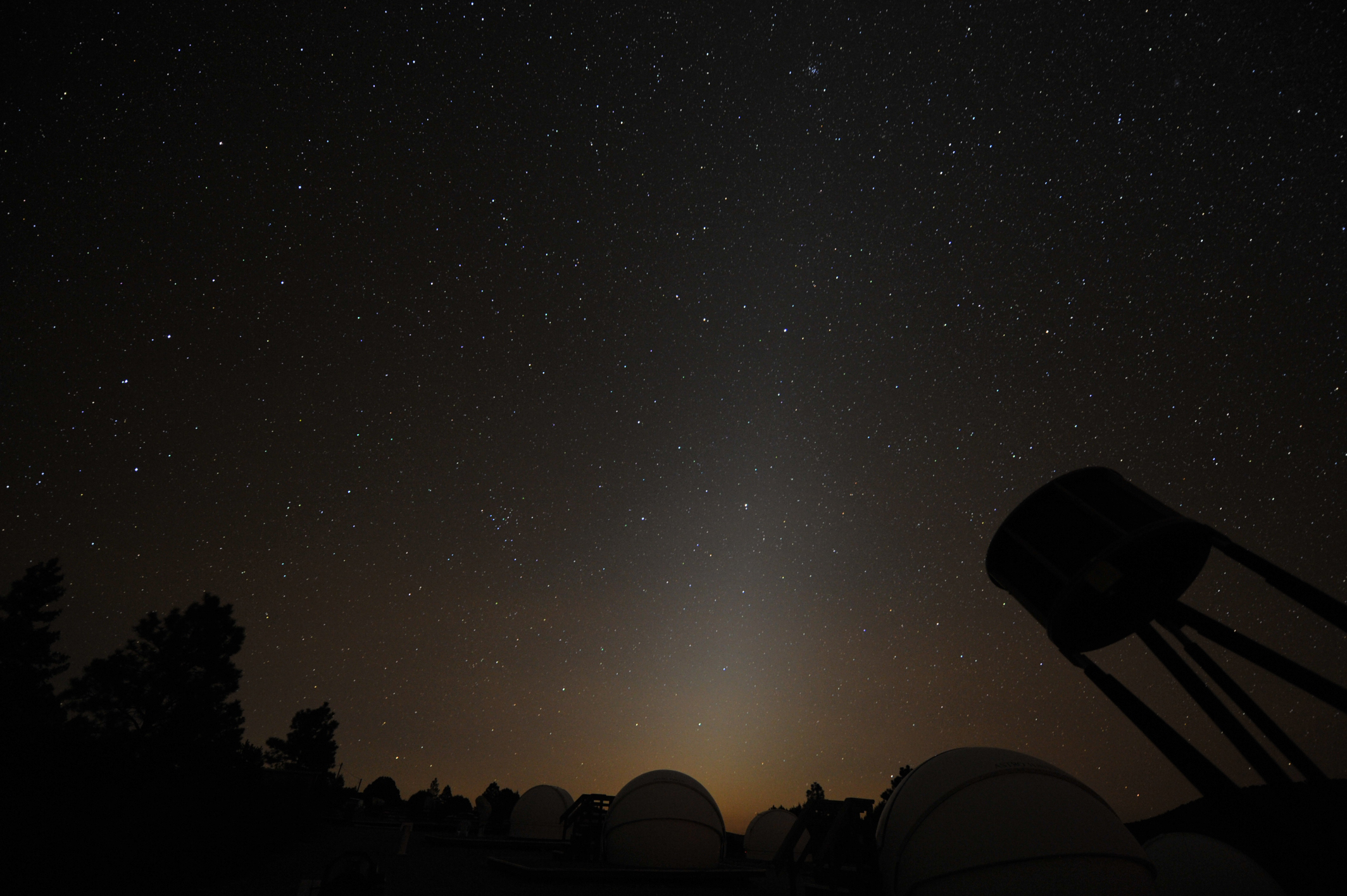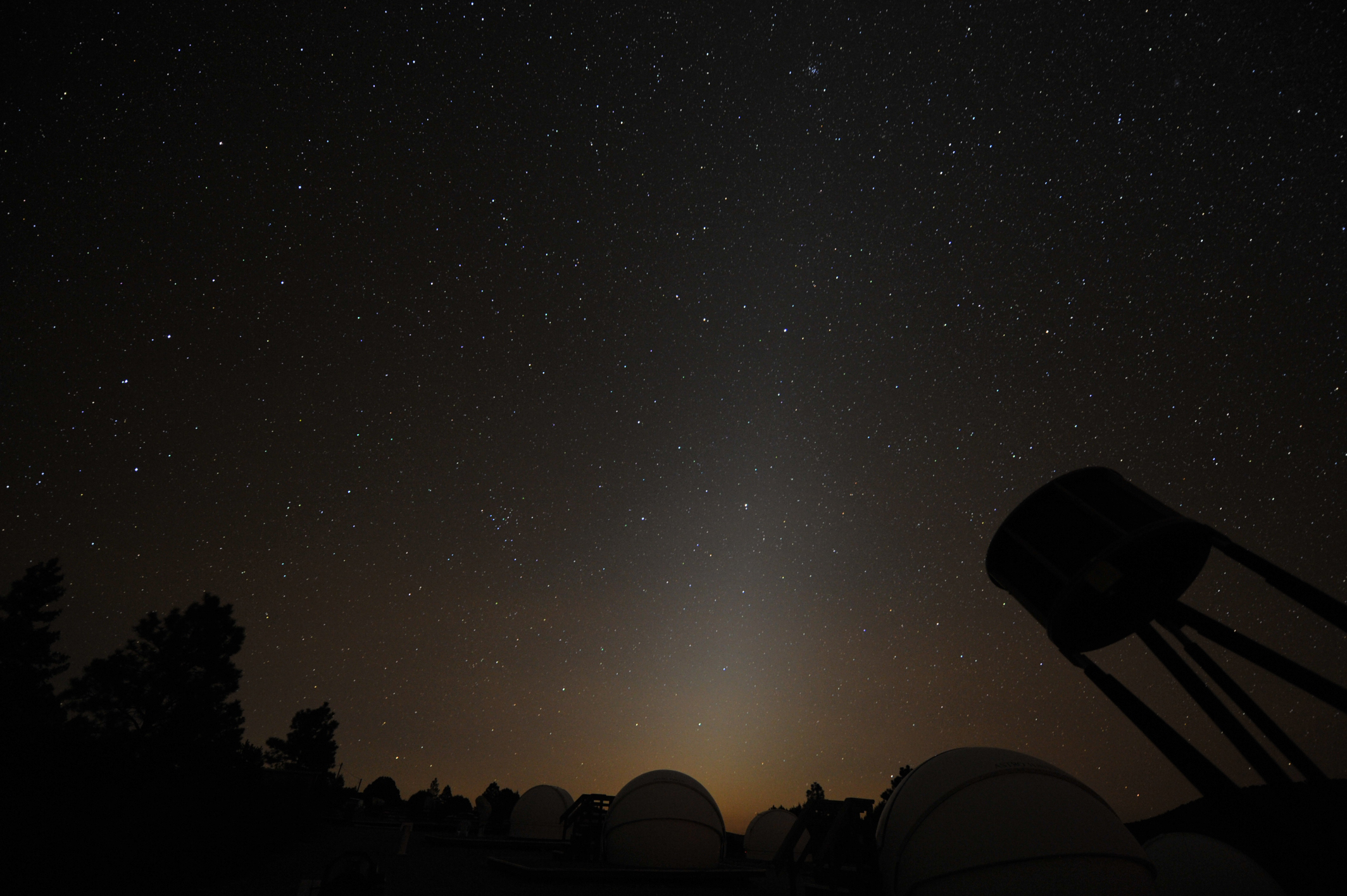
An unusual triangle of light is visible this time of year just before dawn. Once considered a false dawn, this triangle of light is actually Zodiacal Light, light reflected from interplanetary dust particles. The triangle is clearly visible in the above image taken from New Mexico, USA, in October. A telescope truss tube assembly and observatory domes of New Mexico Skies fill the foreground of the early morning skyscape. Zodiacal dust orbits the Sun predominantly in the same plane as the planets: the ecliptic. Zodiacal light is so bright this time of year because the dust band is oriented nearly vertical at sunrise, so that the thick air near the horizon does not block out relatively bright reflecting dust. Zodiacal light is also bright for people in Earth's northern hemisphere in March and April just after sunset. Note: APOD Editor to Speak in New York on Jan. 2
Un triángulo de luz inusual es visible en esta época del año poco antes del amanecer. Antaño considerada como un falso amanecer, este triángulo de luz es en realidad Luz Zodiacal, luz reflejada por partículas de polvo interplanetario. El triángulo es claramente visible en la imagen anterior tomada desde Nuevo México, EE.UU., en octubre. Un conjunto de tubo de armadura de telescopio y las cúpulas del observatorio de New Mexico Skies llenan el primer plano del paisaje celeste de la madrugada. El polvo zodiacal orbita alrededor del Sol predominantemente en el mismo plano que los planetas: la eclíptica. La luz zodiacal es tan brillante en esta época del año porque la banda de polvo está orientada casi verticalmente en el amanecer, de manera que el aire denso cerca del horizonte no bloquea el polvo reflectante relativamente brillante. La luz zodiacal también es brillante para las personas en el hemisferio norte de la Tierra en marzo y abril poco después del atardecer.