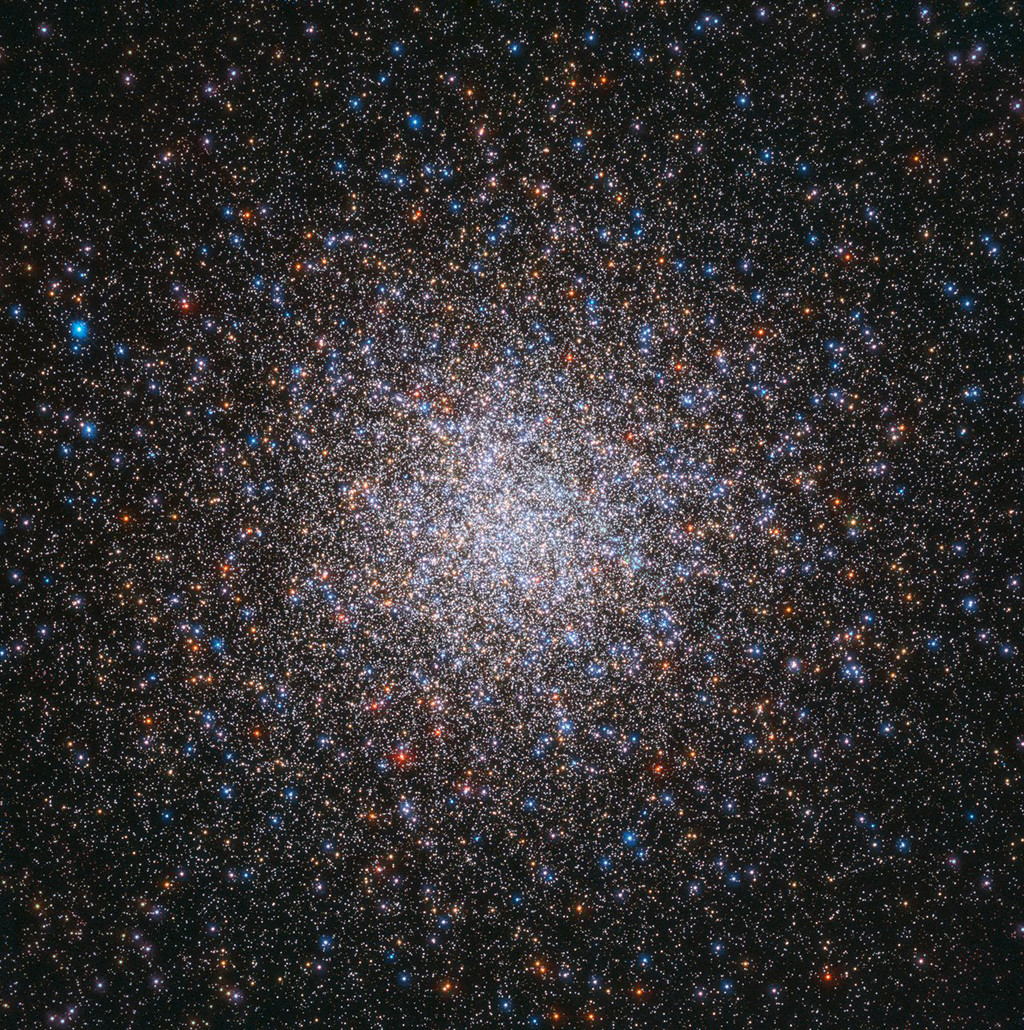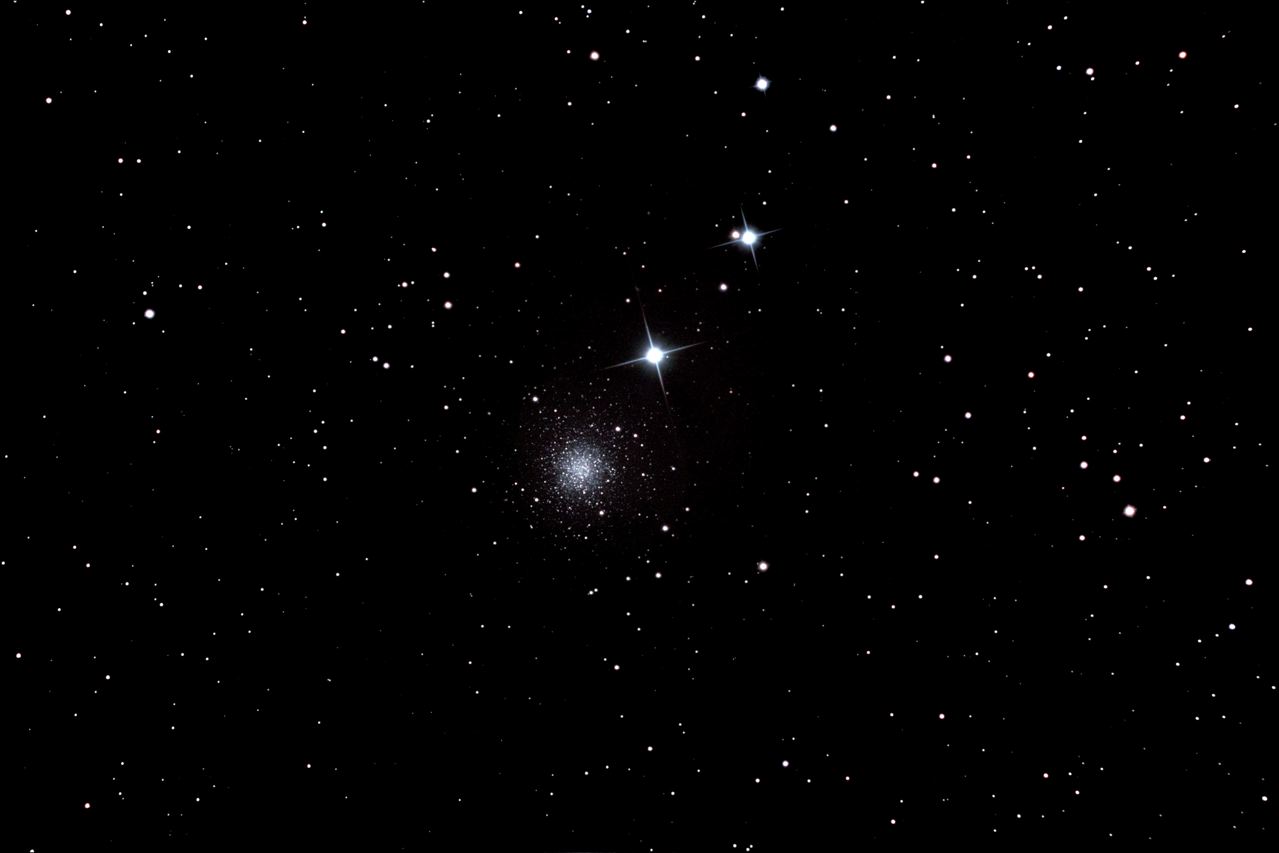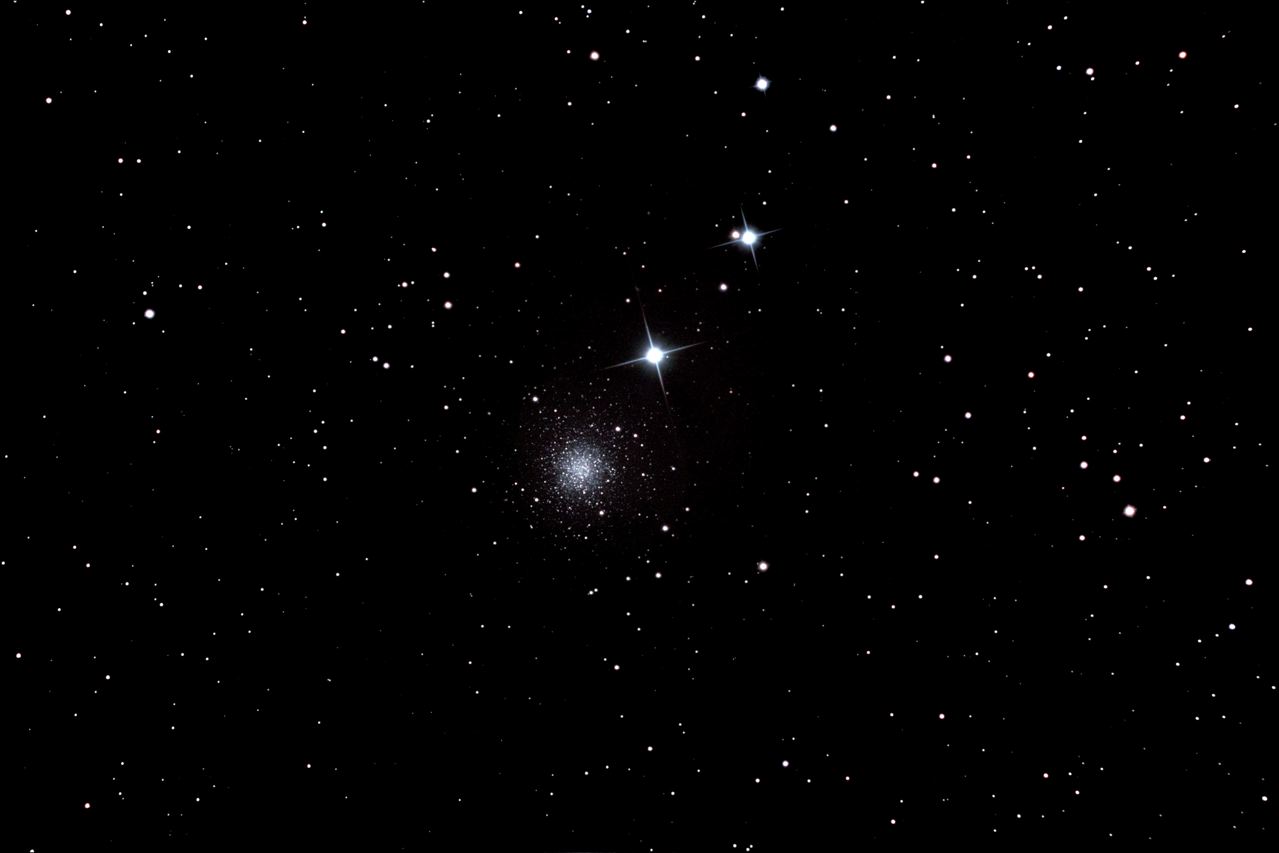
Of three objects prominent in this thoughtful telescopic image, a view toward the stealthy constellation Lynx, two (the spiky ones) are nearby stars. The third is the remote globular star cluster NGC 2419, at distance of nearly 300,000 light-years. NGC 2419 is sometimes called "the Intergalactic Wanderer", an appropriate title considering that the distance to the Milky Way's satellite galaxy, the Large Magellanic Cloud, is only about 160,000 light-years. Roughly similar to other large globular star clusters like Omega Centauri, NGC 2419 is itself intrinsically bright, but appears faint because it is so far away. NGC 2419 may really have an extragalactic origin as, for example, the remains of a small galaxy captured and disrupted by the Milky Way. But its extreme distance makes it difficult to study and compare its properties with other globular clusters that roam the halo of our Milky Way galaxy.
De tres objetos prominentes en esta imagen telescópica reflexiva, una vista hacia la esquiva constelación de Lince, dos (los que tienen picos) son estrellas cercanas. El tercero es el remoto cúmulo globular de estrellas NGC 2419, a una distancia de casi 300.000 años luz. NGC 2419 a veces se llama "el Vagabundo Intergaláctico", un título apropiado considerando que la distancia a la galaxia satélite de la Vía Láctea, la Gran Nube de Magallanes, es de solo aproximadamente 160.000 años luz. Aproximadamente similar a otros grandes cúmulos globulares de estrellas como Omega Centauri, NGC 2419 es intrínsecamente brillante, pero aparece débil porque está muy lejos. NGC 2419 puede tener realmente un origen extragaláctico, como, por ejemplo, los restos de una pequeña galaxia capturada y desintegrada por la Vía Láctea. Pero su distancia extrema hace que sea difícil estudiarlo y comparar sus propiedades con otros cúmulos globulares que vagan por el halo de nuestra galaxia Vía Láctea.