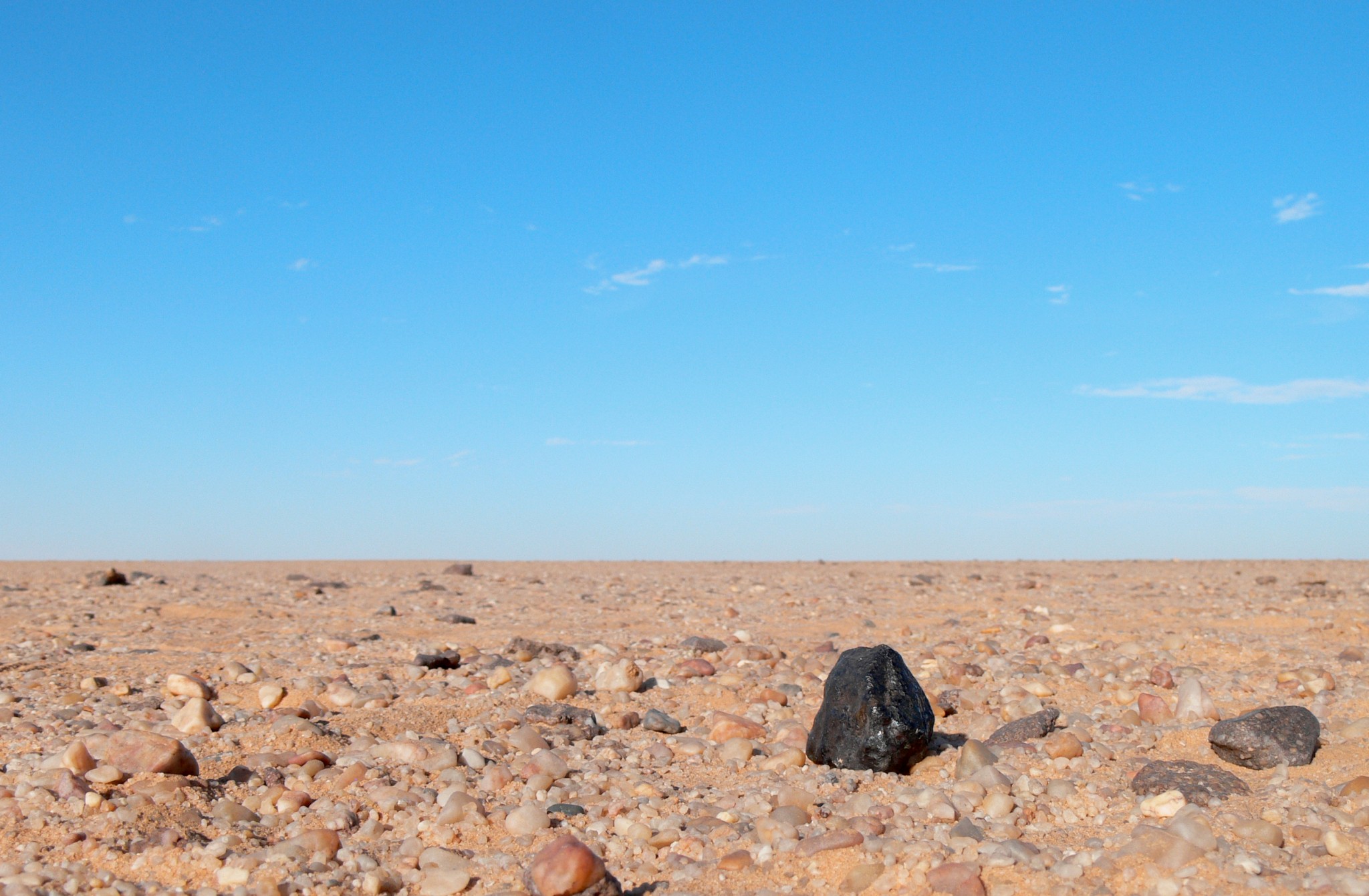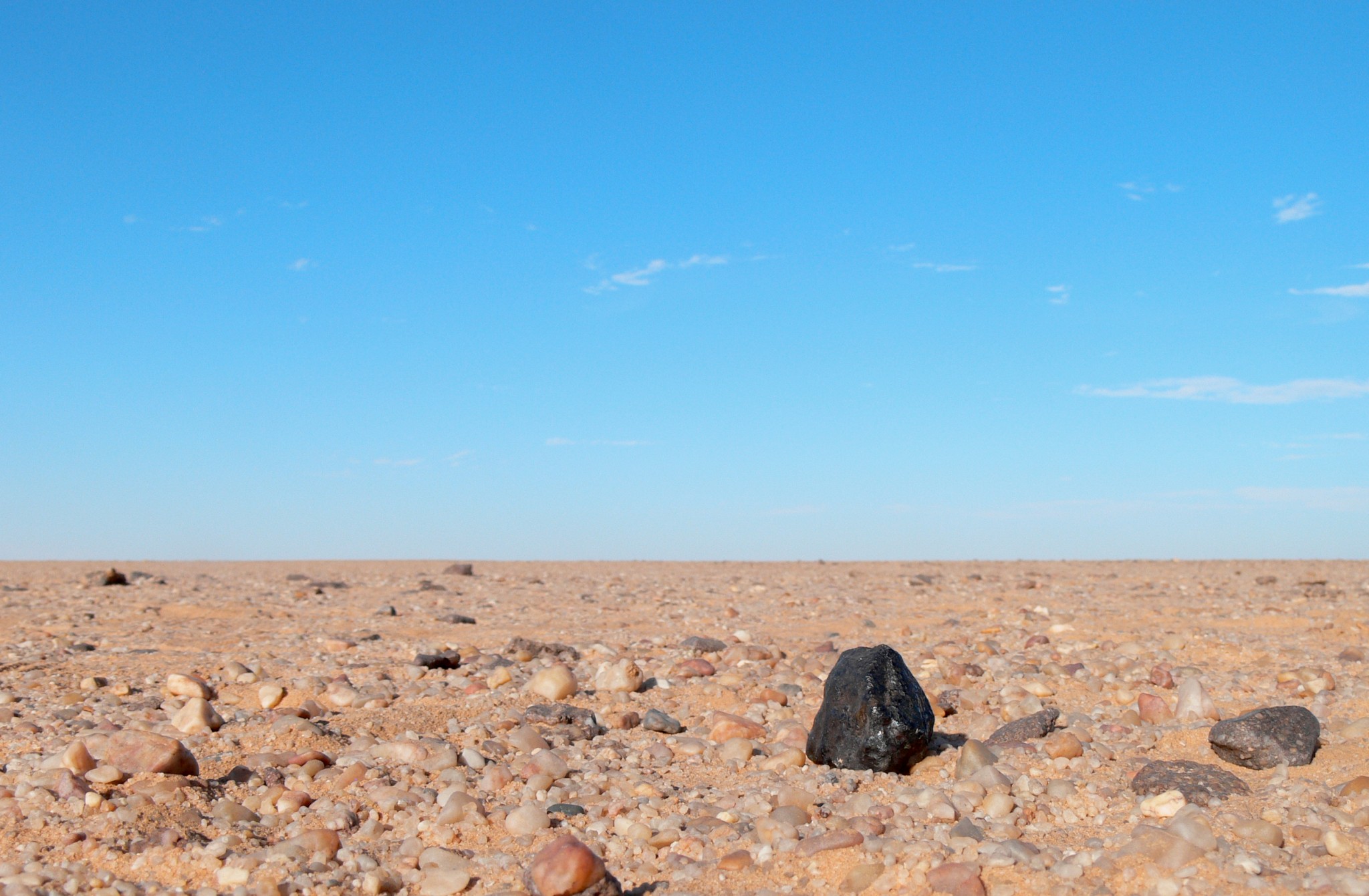
Small asteroid 2008 TC3 fell to Earth at dawn on October 7, 2008, tracking through the skies over the Nubian Desert in northern Sudan. That event was remarkable because it was the first time an asteroid was detected in space before crashing into planet Earth's atmosphere. It was generally assumed the asteroid itself had completely disintegrated to dust. But, based on satellite and ground observations of the atmospheric impact event, Dr. Mauwia Shaddad of the University of Khartoum, aided by Dr. Peter Jenniskens of the SETI Institute and NASA Ames Research Center, led an expedition of students and staff to the area, combing the desert for surviving fragments. On December 6, 2008, two hours after their search began, the first meteorite was found. The team ultimately collected some 280 small meteorites, now called Almahata Sitta, with a total mass of about 5 kilograms -- the first material recovered from a known asteroid. In stark contrast to the lighter-colored stones, the black fragment in the picture is Almahata Sitta meteorite number 15. About 4 centimeters in diameter, it is seen as it came to rest on the desert floor. Editor's note: In Arabic, Almahata Sitta is "Station Six": a railway stop in the Nubian desert where witnesses reported seeing the bright fireball meteor.
Crédito: NASA, SETI Institute, Universidad de Jartum El pequeño asteroide 2008 TC3 cayó a la Tierra al amanecer del 7 de octubre de 2008, atravesando los cielos sobre el desierto nubio en el norte de Sudán. Ese evento fue notable porque fue la primera vez que un asteroide fue detectado en el espacio antes de estrellarse contra la atmósfera terrestre. Se suponía generalmente que el asteroide mismo se había disuelto completamente en polvo. Sin embargo, basándose en observaciones satelitales y terrestres del evento de impacto atmosférico, el Dr. Mauwia Shaddad de la Universidad de Jartum, con la ayuda del Dr. Peter Jenniskens del SETI Institute y del Centro de Investigación Ames de la NASA, lideró una expedición de estudiantes y personal a la zona, buscando fragmentos sobrevivientes en el desierto. El 6 de diciembre de 2008, dos horas después de comenzar su búsqueda, se encontró la primera meteorita. El equipo recogió finalmente alrededor de 280 pequeñas meteoritas, ahora llamadas Almahata Sitta, con una masa total de aproximadamente 5 kilogramos: el primer material recuperado de un asteroide conocido. En contraste marcado con las piedras de color más claro, el fragmento negro en la imagen es la meteorita Almahata Sitta número 15. Con un diámetro de aproximadamente 4 centímetros, se ve tal como quedó en el suelo del desierto. Nota del editor: En árabe, Almahata Sitta significa 'Estación Seis': una parada ferroviaria en el desierto nubio donde los testigos reportaron haber visto el brillante bólido.