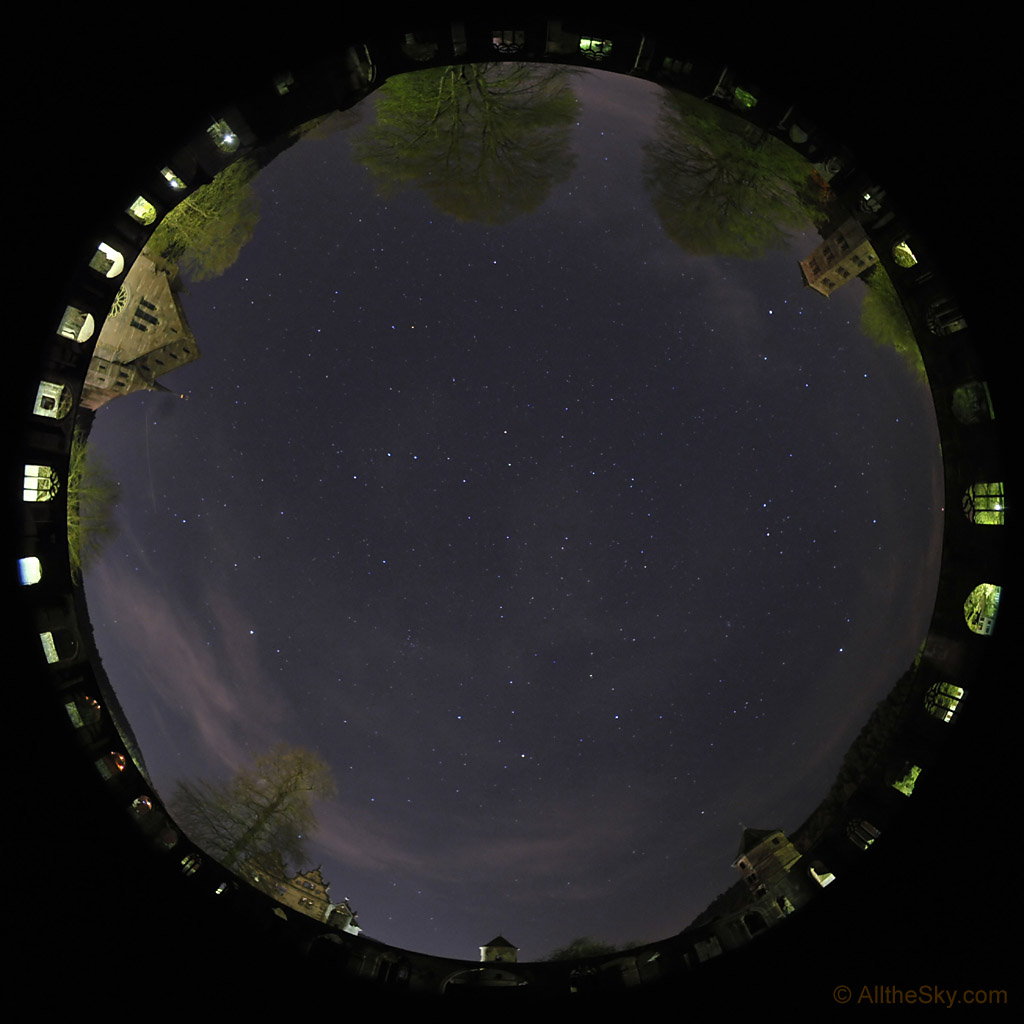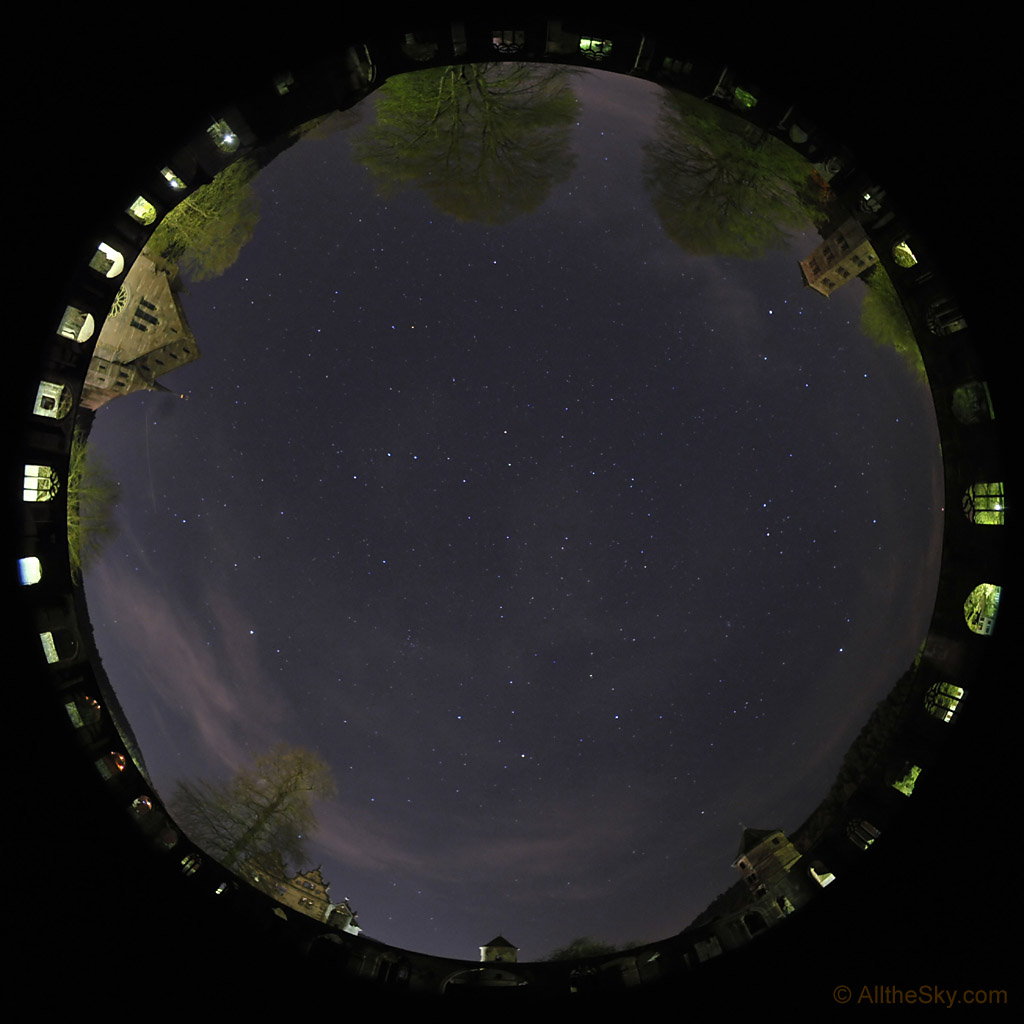
What's in the sky tonight? When strolling outside just after sunset, even if just going out to your car, a casual glance upwards can reveal a beautiful night sky also seen by many people across the Earth. To see your local version of the above image, start by facing south, and then tilt your head back. Visible nearly above you, during springtime at sunset in much of the northern hemisphere, will be the Big Dipper, part of the constellation of the Big Bear. The cup end of the Big Dipper will point to the North Star Polaris, the star around which the whole sky would seem to spin, if you could watch for hours. Polaris is at the tip of the Little Dipper, otherwise known as the constellation of the Little Bear. Depending on the time of night, other visible constellations would include Bootes, Leo, Gemini, and Auriga. The above fisheye image was taken from Germany last week. Visible around the entire image edge is the courtyard of Hirsau Abbey, once a Benedictine Monastery founded in the year 830. Moving your cursor over the image will bring up an annotated version of the above image, including the location of the planet Saturn.
Crédito: NASA, APOD ¿Qué hay en el cielo esta noche? Cuando caminas afuera poco después de la puesta de sol, incluso si solo sales a tu coche, una mirada casual hacia arriba puede revelar un hermoso cielo nocturno también visto por muchas personas en la Tierra. Para ver tu versión local de la imagen anterior, comienza mirando hacia el sur y luego inclina tu cabeza hacia atrás. Casi sobre ti, durante la primavera al atardecer en gran parte del hemisferio norte, se encuentra la Osa Mayor, parte de la constelación del Gran Oso. El extremo de la taza de la Osa Mayor apuntará a la Estrella Polar, la estrella alrededor de la cual todo el cielo parecería girar, si pudieras observar durante horas. La Estrella Polar está en la punta de la Osa Menor, también conocida como la constelación del Pequeño Oso. Dependiendo de la hora de la noche, otras constelaciones visibles incluirían a Bootes, Leo, Géminis y Auriga. La imagen de tipo fisheye anterior fue tomada en Alemania la semana pasada. Alrededor del borde de toda la imagen se ve el patio del monasterio de Hirsau, una vez un monasterio benedictino fundado en el año 830. Mover el cursor sobre la imagen mostrará una versión anotada de la imagen anterior, incluyendo la ubicación del planeta Saturno.