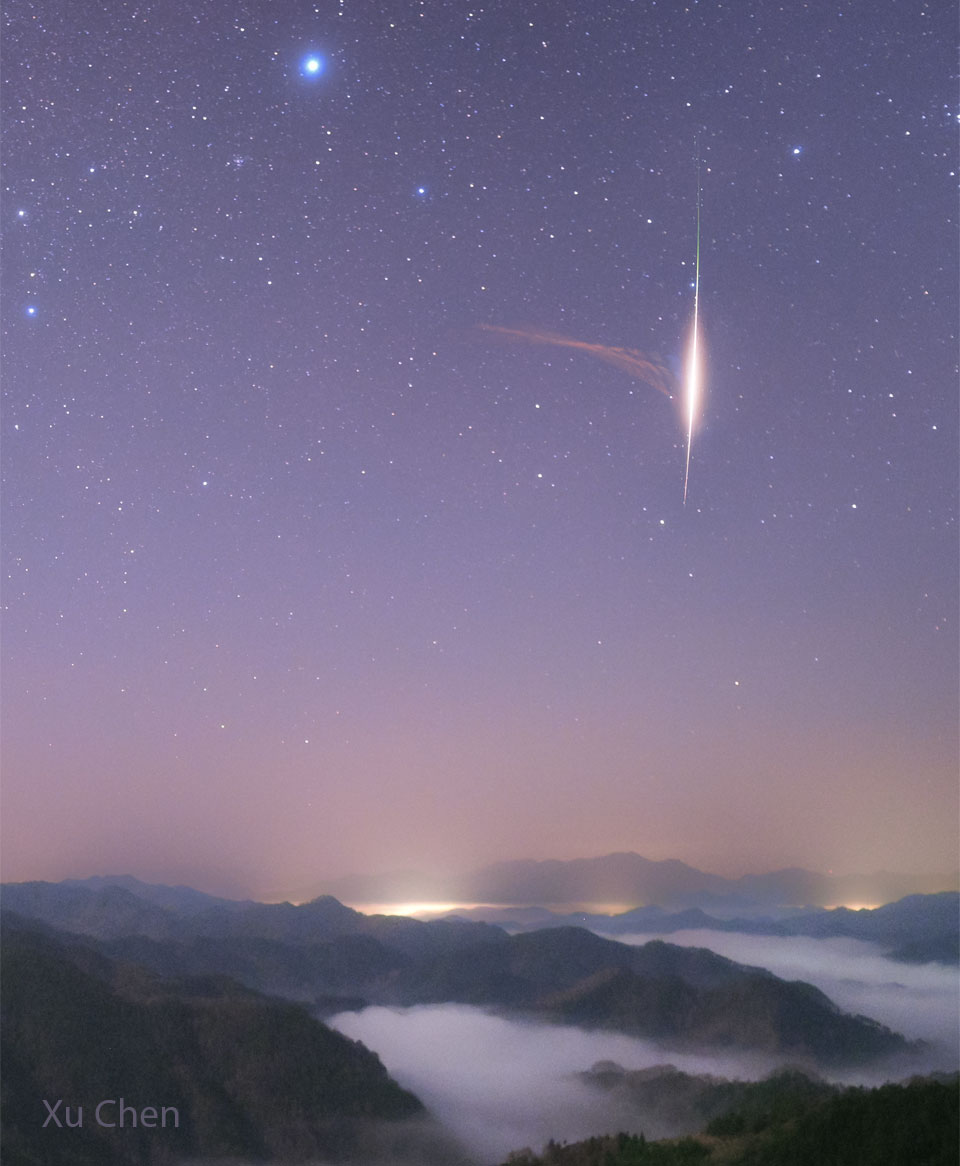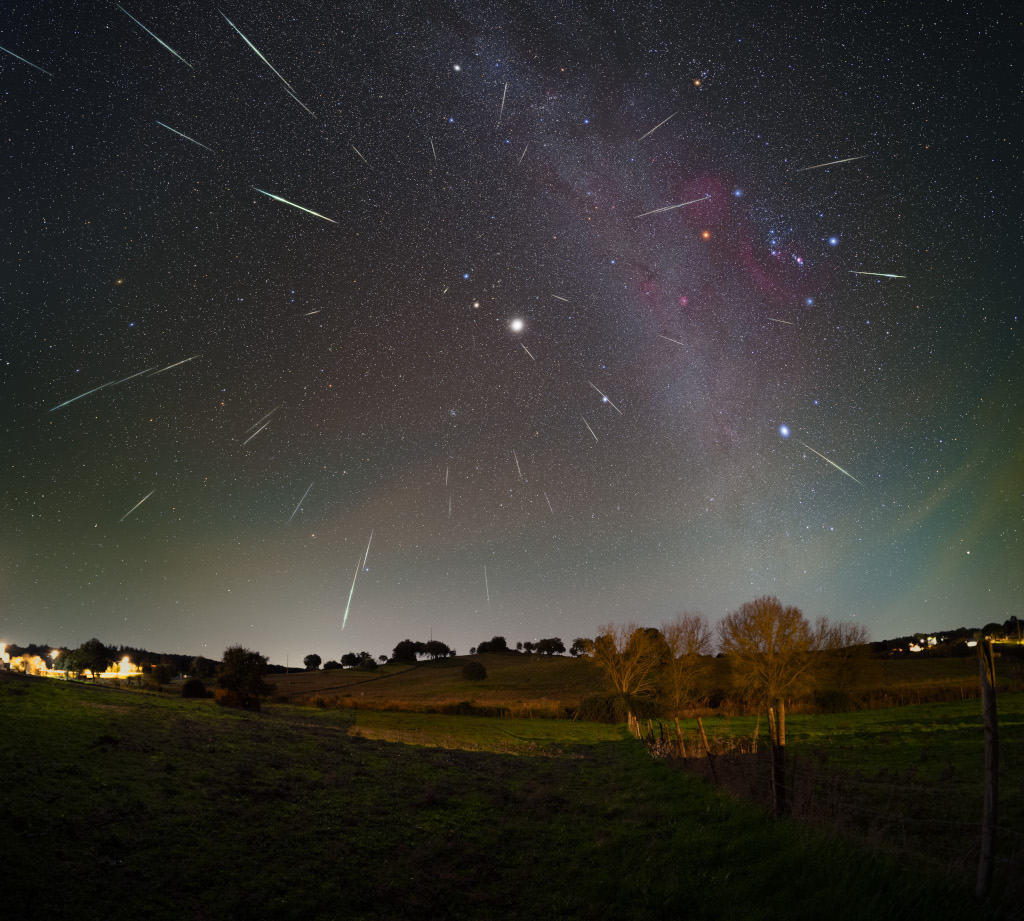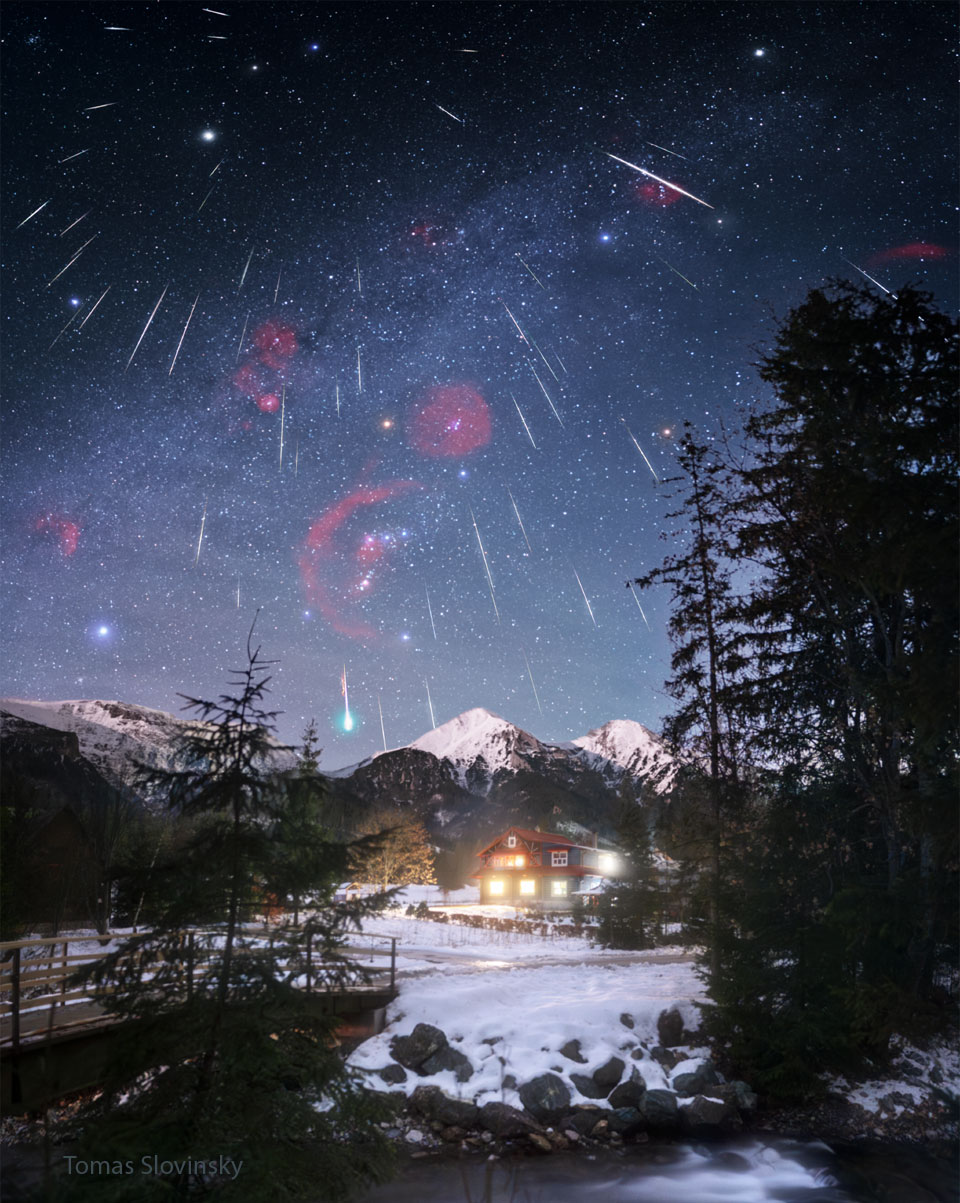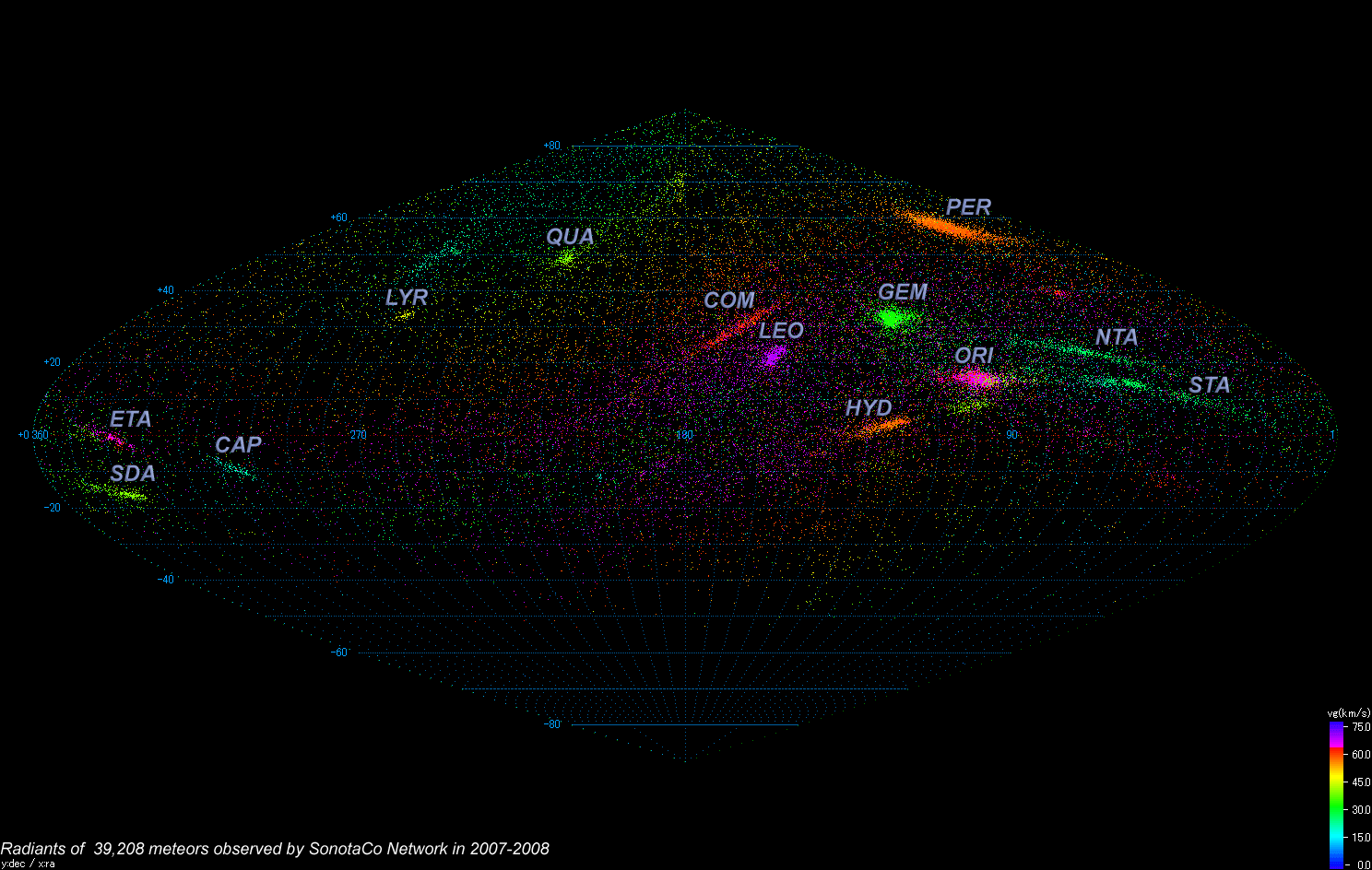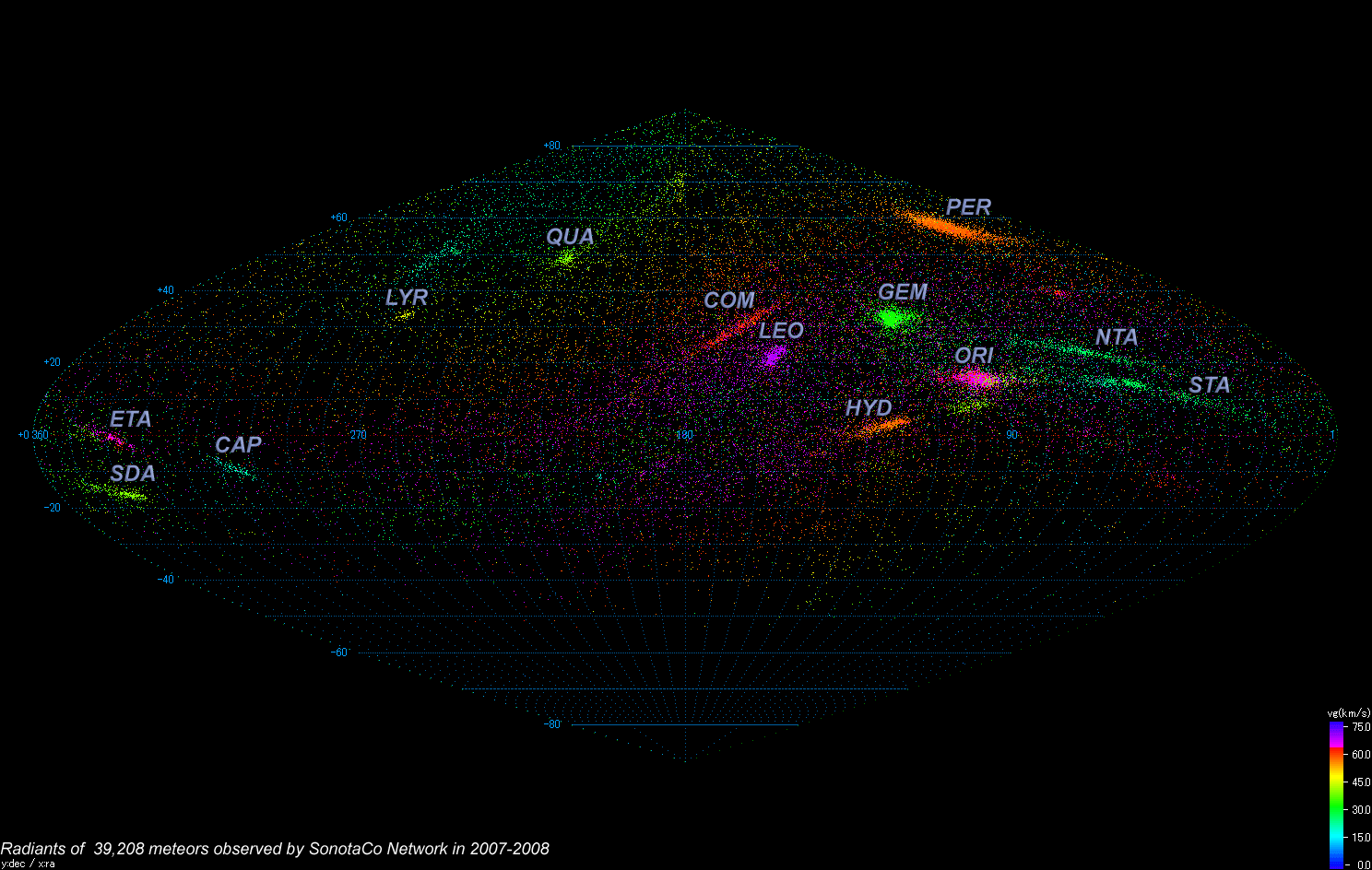
Where do meteors come from? Visible meteors are typically sand-sized grains of ice and rock that once fragmented from comets. Many a meteor shower has been associated with a known comet, although some intriguing orphan showers do remain. Recently, a group of meteor enthusiasts created a network of over 100 video cameras placed at 25 well-separated locations across Japan. This unprecedented network recorded not only 240,000 optically bright meteors over two years, but almost 40,000 meteors seen by more than one station. These multiple-station events were particularly interesting because they enabled the observers to extrapolate meteor trajectories back into the Solar System. The resulting radiant map is shown above, with many well known meteor showers labelled by the first three letters of the home constellation. Besides known meteor showers, eleven new showers were identified by new radiants on the sky from which meteors appear to flow. The meteor sky is ever changing, and it may be possible that new shower radiants will appear in the future. Research like this could also potentially identify previously unknown comets or asteroids that might one day pass close to the Earth.
¿De dónde provienen los meteoros? Los meteoros visibles son típicamente granos de hielo y roca del tamaño de la arena que en un momento se fragmentaron de cometas. Muchas lluvias de meteoros han sido asociadas con cometas conocidos, aunque aún quedan algunas lluvias huérfanas intrigantes. Recientemente, un grupo de entusiastas de los meteoros creó una red de más de 100 cámaras de video colocadas en 25 ubicaciones bien separadas a lo largo de Japón. Esta red sin precedentes registró no solo 240,000 meteoros ópticamente brillantes durante dos años, sino casi 40,000 meteoros observados por más de una estación. Estos eventos de múltiples estaciones resultaron particularmente interesantes, ya que permitieron a los observadores extrapolar las trayectorias de los meteoros hacia el interior del Sistema Solar. El mapa de radiantes resultante se muestra arriba, con muchas lluvias de meteoros bien conocidas etiquetadas por las primeras tres letras de la constelación de origen. Además de las lluvias de meteoros conocidas, se identificaron once nuevas lluvias por nuevos radiantes en el cielo desde los cuales parecen fluir los meteoros. El cielo de meteoros está en constante cambio, y es posible que en el futuro aparezcan nuevos radiantes de lluvias. Investigaciones como esta podrían identificar también cometas o asteroides previamente desconocidos que algún día podrían pasar cerca de la Tierra.