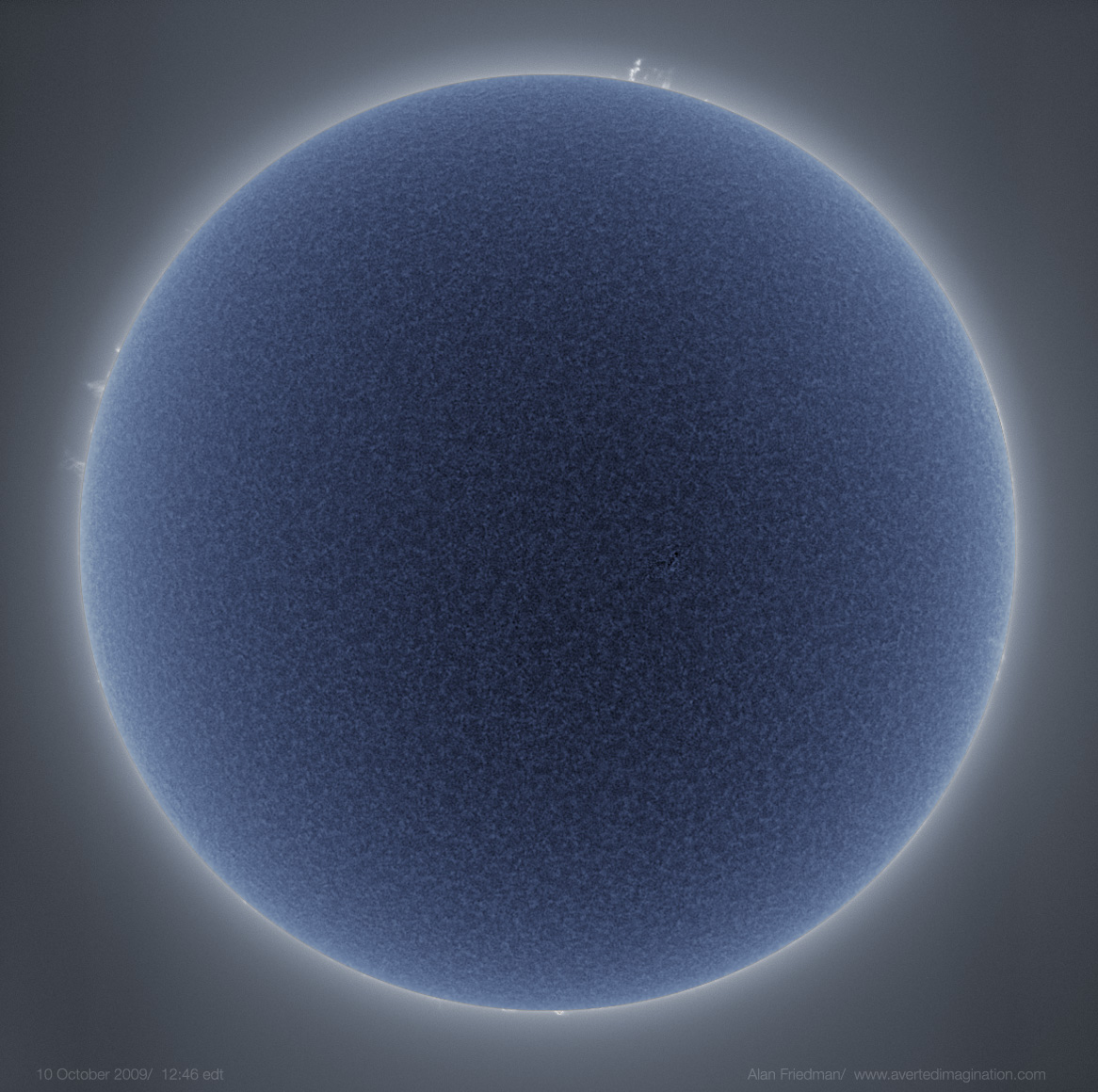
Our Sun may look like all soft and fluffy, but it's not. Our Sun is an extremely large ball of bubbling hot gas, mostly hydrogen gas. The above picture of our Sun was taken last month in a specific red color of light emitted by hydrogen gas called Hydrogen-alpha and then color inverted to appear blue. In this light, details of the Sun's chromosphere are particularly visible, highlighting numerous thin tubes of magnetically-confined hot gas known as spicules rising from the Sun like bristles from a shag carpet. Our Sun glows because it is hot, but it is not on fire. Fire is the rapid acquisition of oxygen, and there is very little oxygen on the Sun. The energy source of our Sun is the nuclear fusion of hydrogen into helium deep within its core. No sunspots or large active regions were visible on the Sun this day, although some solar prominences are visible around the edges.
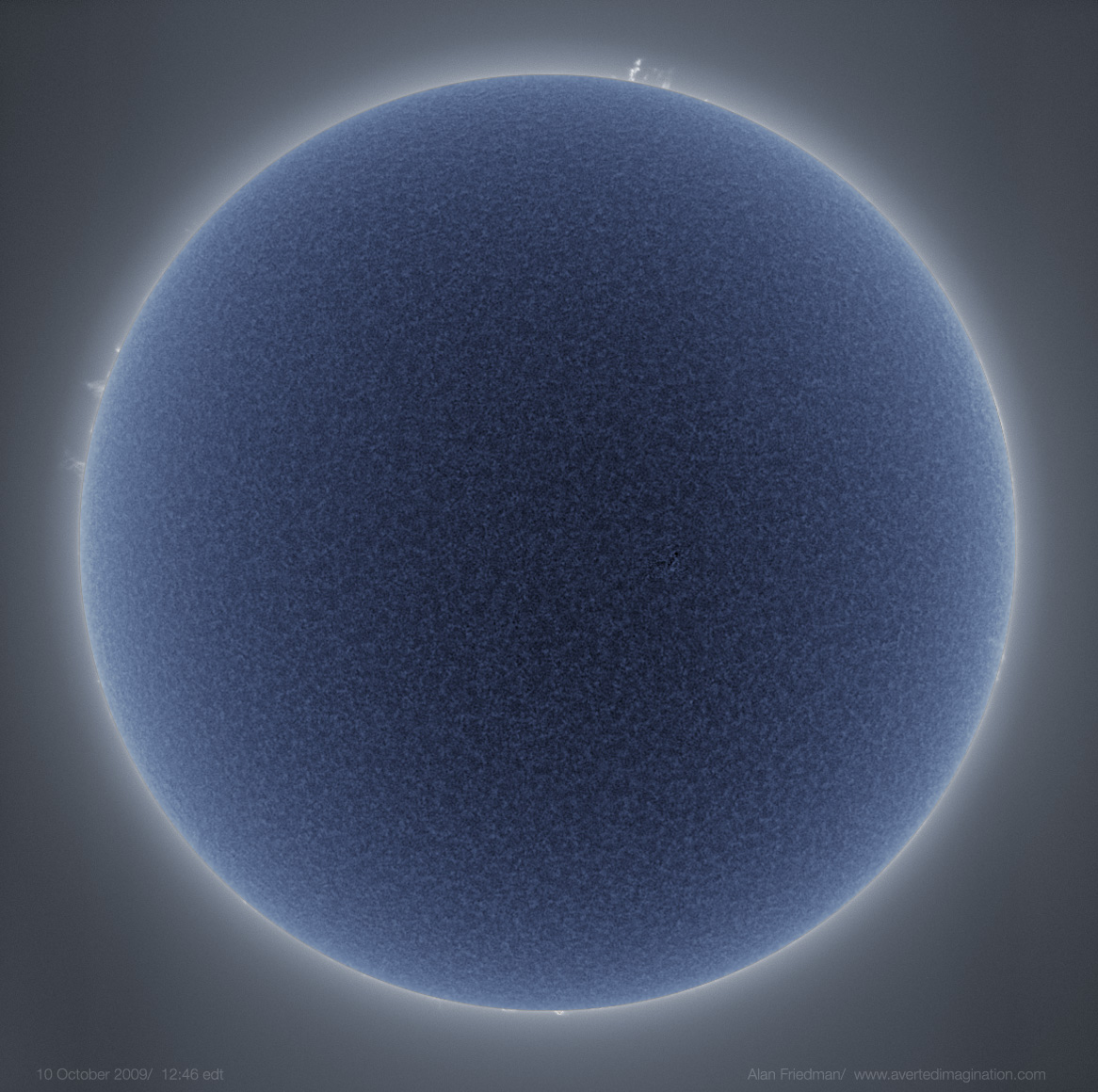
Nuestro Sol puede parecer suave y esponjoso, pero no lo es. Nuestro Sol es una esfera extremadamente grande de gas caliente burbujeante, principalmente gas hidrógeno. La imagen de nuestro Sol mostrada arriba fue tomada el mes pasado en una luz de color rojo específico emitida por el gas hidrógeno, llamada Hidrógeno-alfa, y luego invertida en color para aparecer azul. En esta longitud de onda, se ven con particular claridad detalles de la cromosfera solar, resaltando numerosos tubos finos de gas caliente confinado magnéticamente conocidos como espículas que se elevan desde el Sol como briznas de un tapete shag. Nuestro Sol brilla porque está caliente, pero no está en llamas. El fuego es la rápida adquisición de oxígeno, y hay muy poco oxígeno en el Sol. La fuente de energía de nuestro Sol es la fusión nuclear de hidrógeno en helio en su núcleo profundo. Ese día no se observaron manchas solares ni regiones activas grandes en el Sol, aunque se ven algunas prominencias solares alrededor de los bordes.