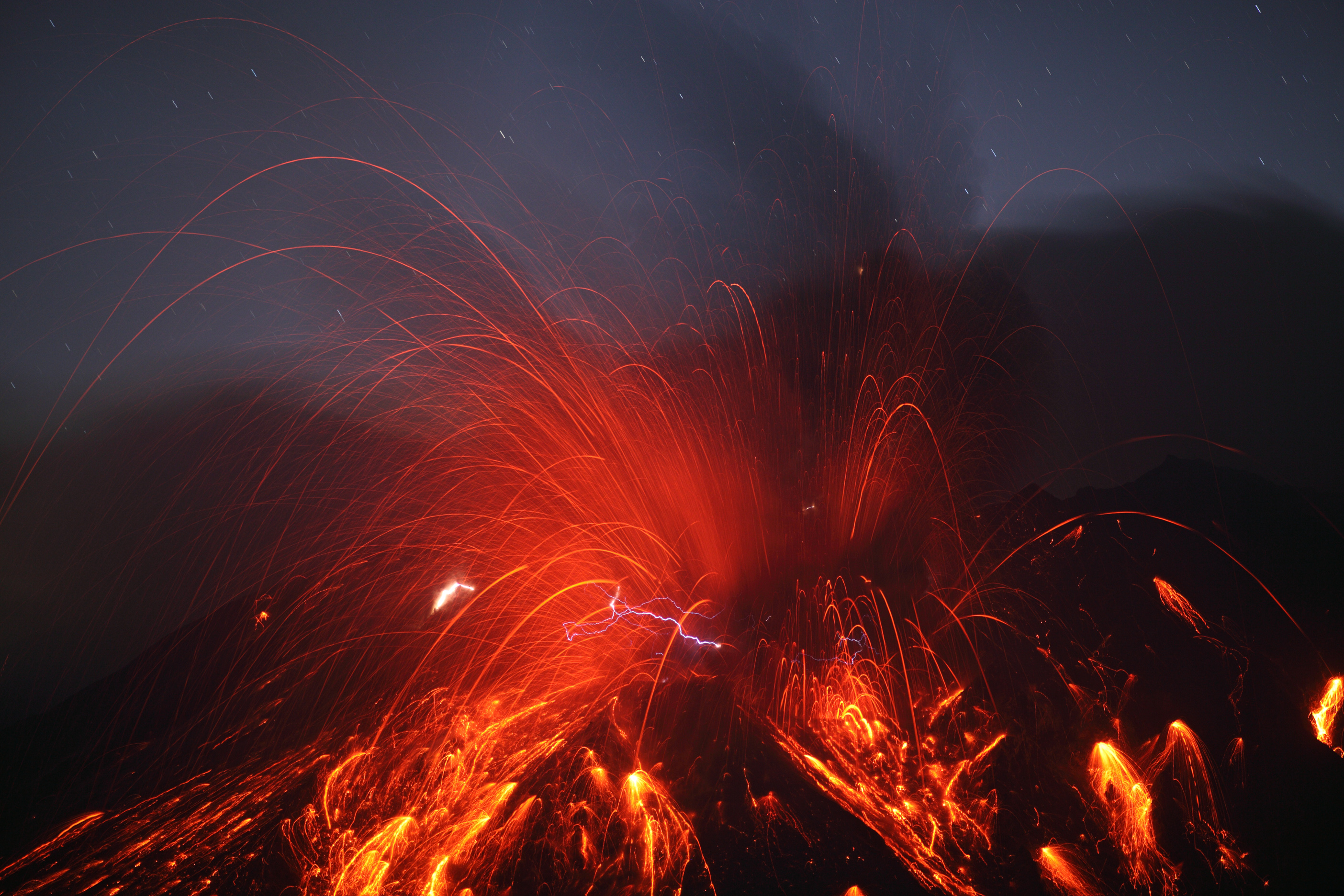
Why does a volcanic eruption sometimes create lightning? Pictured above, the Sakurajima volcano in southern Japan was caught erupting early last month. Magma bubbles so hot they glow shoot away as liquid rock bursts through the Earth's surface from below. The above image is particularly notable, however, for the lightning bolts caught near the volcano's summit. Why lightning occurs even in common thunderstorms remains a topic of research, and the cause of volcanic lightning is even less clear. Surely, lightning bolts help quench areas of opposite but separated electric charges. One hypothesis holds that catapulting magma bubbles or volcanic ash are themselves electrically charged, and by their motion create these separated areas. Other volcanic lightning episodes may be facilitated by charge-inducing collisions in volcanic dust. Lightning is usually occurring somewhere on Earth, typically over 40 times each second.
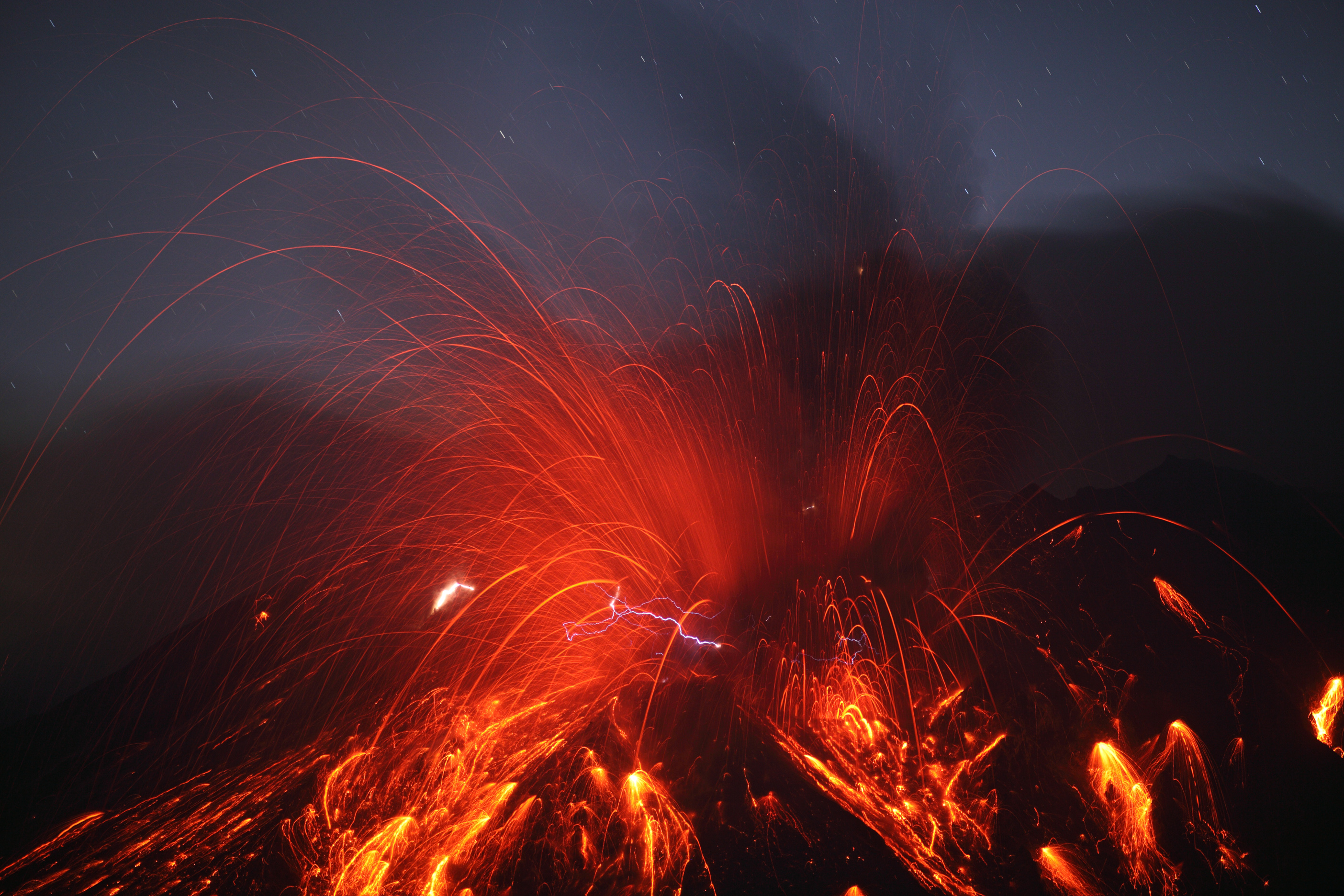
¿Por qué una erupción volcánica a veces genera relámpagos? En la imagen mostrada, el volcán Sakurajima en el sur de Japón fue captado en erupción a principios del mes pasado. Burbujas de magma tan calientes que brillan son expulsadas cuando la roca líquida rompe la superficie terrestre desde abajo. Sin embargo, la imagen es particularmente notable por los relámpagos captados cerca del pico del volcán. ¿Por qué ocurren los relámpagos incluso en tormentas eléctricas comunes sigue siendo un tema de investigación, y la causa del relámpago volcánico es aún menos clara. Con seguridad, los relámpagos ayudan a neutralizar áreas de carga eléctrica opuesta pero separada. Una hipótesis sostiene que las burbujas de magma o la ceniza volcánica, al ser expulsadas, están ellas mismas cargadas eléctricamente, y mediante su movimiento crean estas áreas separadas. Otros episodios de relámpagos volcánicos podrían ser facilitados por colisiones en la polvo volcánico que inducen carga. Los relámpagos ocurren normalmente en alguna parte de la Tierra, típicamente más de 40 veces por segundo.