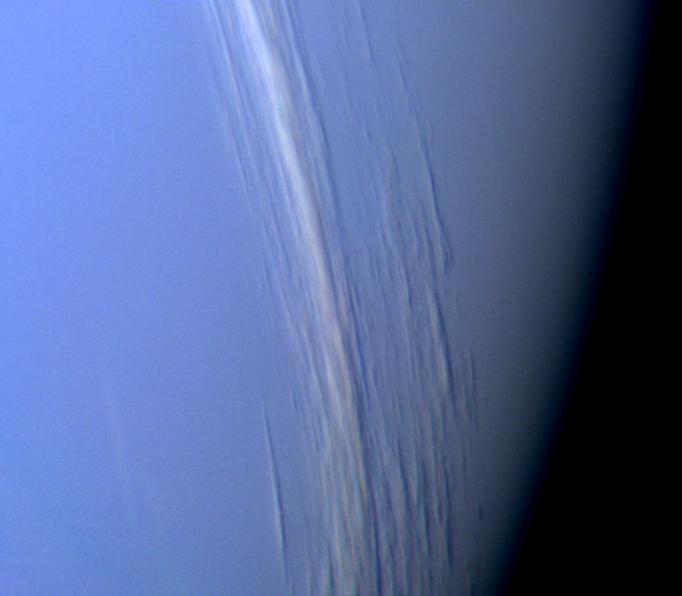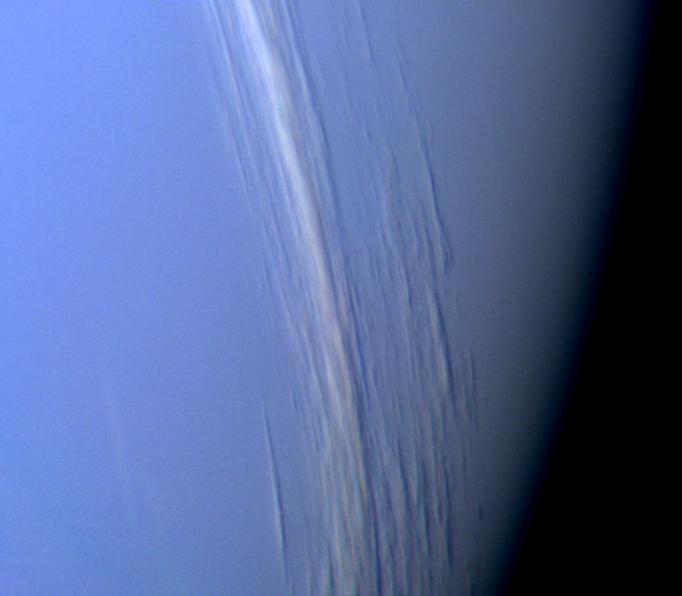
Two hours before closest approach to Neptune in 1989, the Voyager 2 robot spacecraft snapped this picture. Clearly visible for the first time were long light-colored cirrus-type clouds floating high in Neptune's atmosphere. Shadows of these clouds can even be seen on lower cloud decks. Most of Neptune's atmosphere is made of hydrogen and helium, which is invisible. Neptune's blue color therefore comes from smaller amounts of atmospheric methane, which preferentially absorbs red light. Neptune has the fastest winds in the Solar System, with gusts reaching 2000 kilometers per hour. Speculation holds that diamonds may be created in the dense hot conditions that exist under the cloud tops of Uranus and Neptune.
Dos horas antes del acercamiento más cercano a Neptuno en 1989, la nave espacial robotizada Voyager 2 tomó esta imagen. Claramente visibles por primera vez eran nubes alargadas de color claro, similares a cirros, flotando a gran altura en la atmósfera de Neptuno. Incluso se pueden ver las sombras de estas nubes sobre capas de nubes más bajas. La mayor parte de la atmósfera de Neptuno está compuesta por hidrógeno y helio, que son invisibles. Por lo tanto, el color azul de Neptuno proviene de cantidades menores de metano atmosférico, que absorbe preferentemente la luz roja. Neptuno tiene los vientos más rápidos del Sistema Solar, con ráfagas que alcanzan los 2000 kilómetros por hora. Se especula que se pueden formar diamantes en las condiciones densas y calientes que existen bajo las nubes en la superficie de Urano y Neptuno.