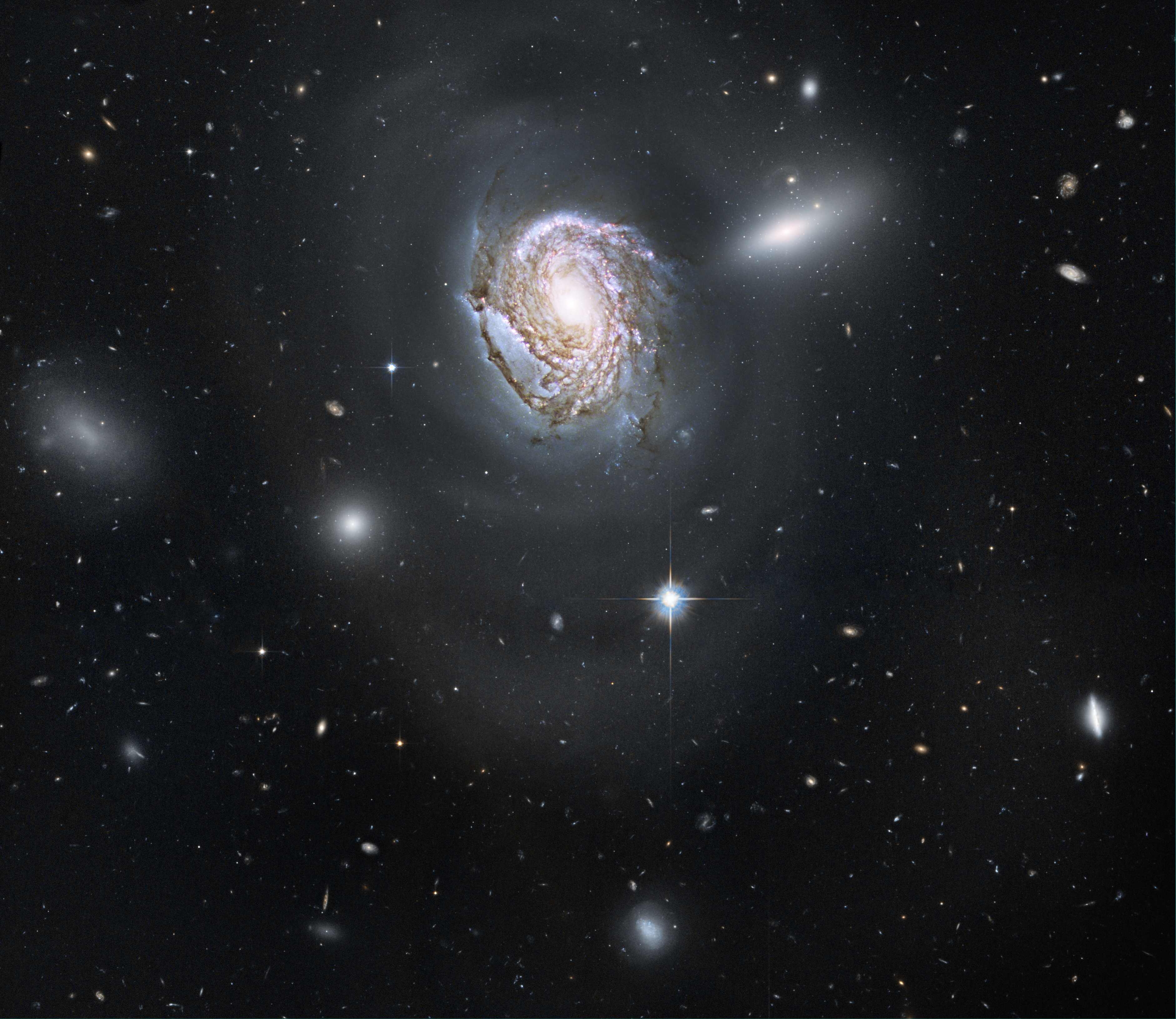
Why are there faint rings around this spiral galaxy? Possibly because the galaxy, NGC 4911, is being pulled at by its neighbors as it falls into the enormous Coma Cluster of Galaxies. If NGC 4911 ends up like most of the galaxies in the central Coma cluster, it will become a yellowish elliptical galaxy, losing not only its outer layers, but dust, gas, and its cadre of surrounding satellite galaxies as well. Currently, however, this process is just beginning. Visible in the above deep image from the Hubble Space Telescope are NGC 4911's bright nucleus, distorted spiral arms laced with dark dust, clusters of recently formed stars, unusual faint outer rings, dwarf companion galaxies, and even faint globular clusters of stars. Far in the distance many unassociated galaxies from the early universe are visible, some even through NGC 4911 itself. The Coma Cluster contains over 1,000 galaxies making it among the most massive objects known. NGC 4911 can be found to the lower left of the great cluster's center.
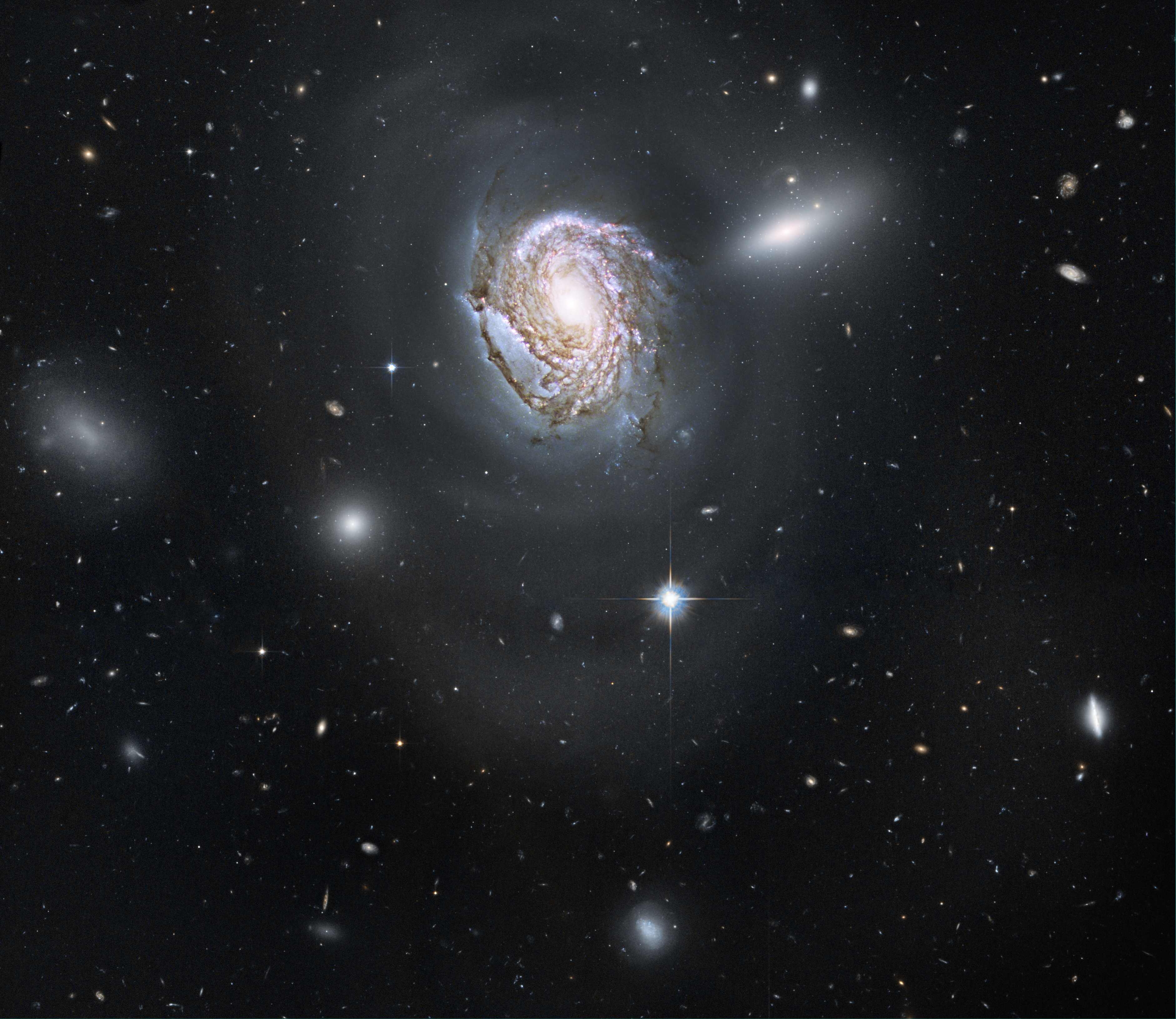
¿Por qué hay anillos tenues alrededor de esta galaxia espiral? Posiblemente porque la galaxia, NGC 4911, está siendo atraída por sus vecinas mientras se precipita hacia el enorme Cúmulo de Galaxias Coma. Si NGC 4911 termina como la mayoría de las galaxias en el cúmulo central de Coma, se convertirá en una galaxia elíptica de color amarillento, perdiendo no solo sus capas externas, sino también polvo, gas y su conjunto de galaxias satélite que la rodean. Actualmente, sin embargo, este proceso apenas está comenzando. En la imagen profunda obtenida por el Telescopio Espacial Hubble se ven el núcleo brillante de NGC 4911, brazos espirales distorsionados teñidos de polvo oscuro, grupos de estrellas recientemente formadas, anillos externos tenues inusuales, galaxias compañeras enanas y hasta cúmulos globulares tenues de estrellas. En la lejanía se ven muchas galaxias no asociadas del universo primitivo, algunas incluso a través de NGC 4911 misma. El Cúmulo de Coma contiene más de 1,000 galaxias, convirtiéndolo en uno de los objetos más masivos conocidos. NGC 4911 se encuentra a la izquierda inferior del centro del gran cúmulo.