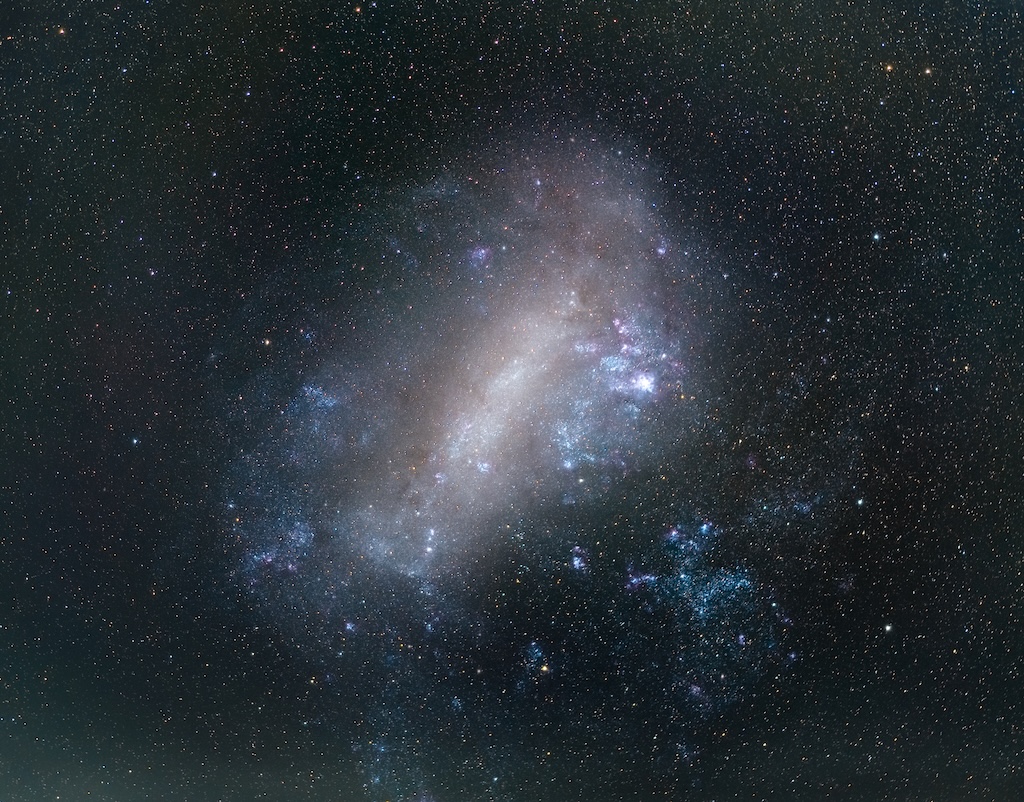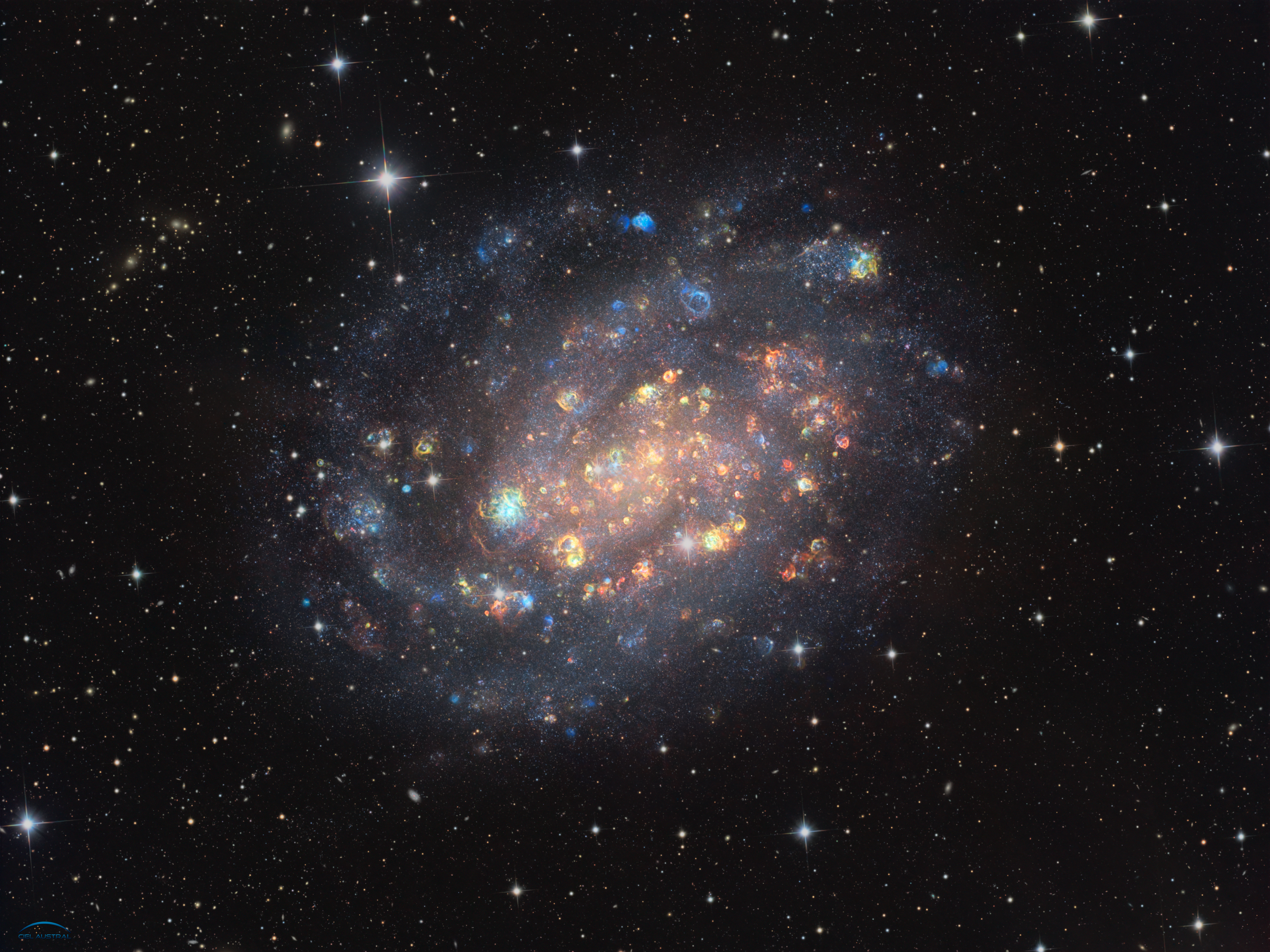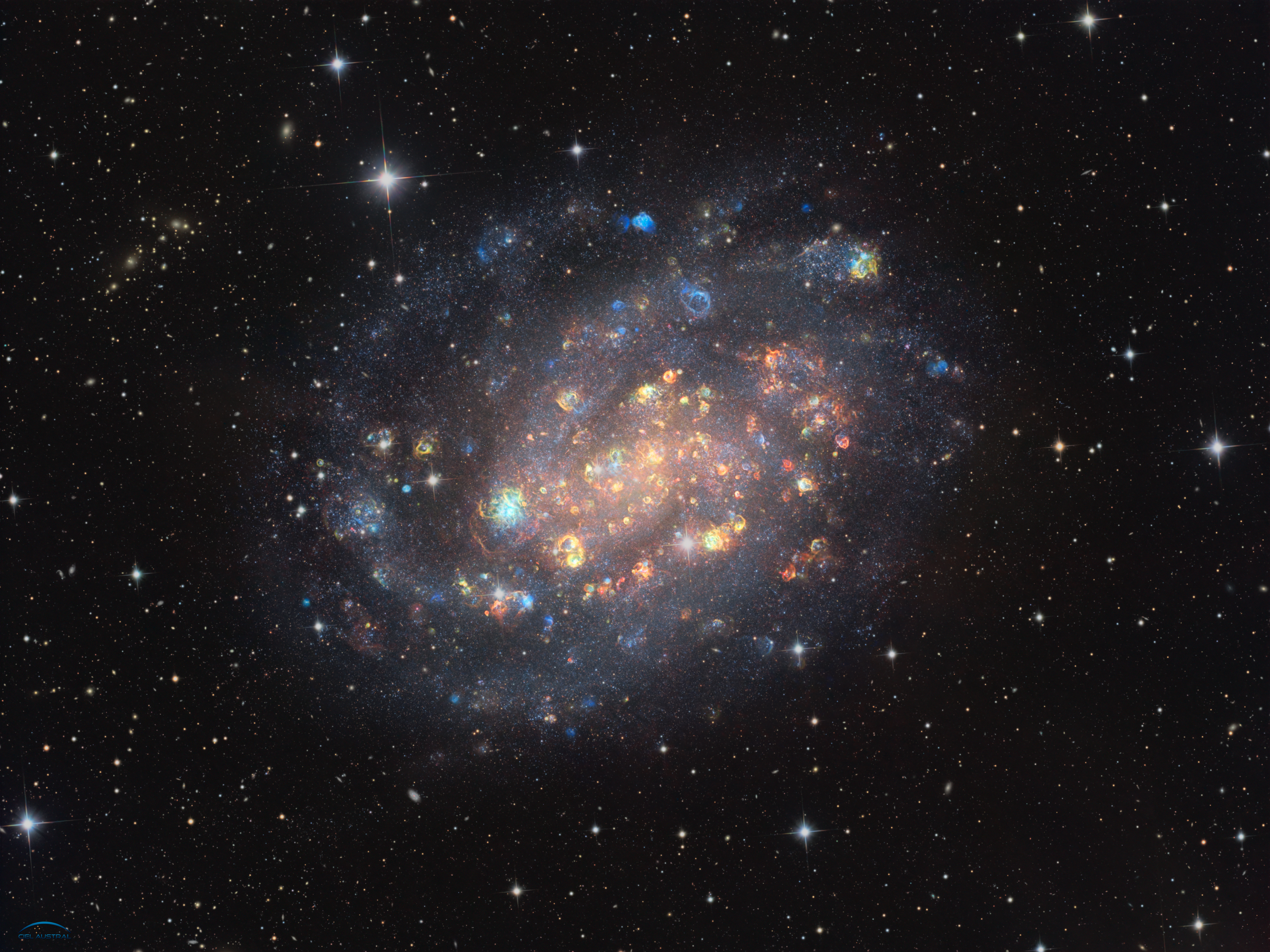
This sparkling, colorful gemstone is a spiral galaxy, NGC 300. It is one of the closest spiral galaxies to Earth, only about 6 million light-years away. But does it really look like this? Here is a more standard portrait of it. This unusual image combines the light from the stars and dust within the galaxy with the light from ionized clouds of interstellar gas shown in red (Sulphur), green (Hydrogen) and blue (Oxygen). Combining red and green light in different proportions makes yellow or orange light, most visible in the image. Light from other ionized gases is also at work in neon signs, fluorescent tubes and street lights. These massive clouds of ionized gas are typically created by young, massive stars that produce high-energy ultraviolet radiation capable of ionizing the gas. Massive stars are short-lived, compared with lighter stars like our sun, and explode as supernovas at the end of their lives. Some of the colorful clouds in the image could be hiding supernova remnants.
Esta reluciente y colorida gema es una galaxia espiral: NGC 300. Es una de las galaxias espirales más cercanas a la Tierra, a tan solo unos 6 millones de años luz de distancia. Pero, ¿realmente tiene este aspecto? Esta inusual imagen combina la luz de las estrellas y el polvo presentes en la galaxia con la luz proveniente de nubes ionizadas de gas interestelar, representadas en rojo (azufre), verde (hidrógeno) y azul (oxígeno). La combinación de luz roja y verde en distintas proporciones produce luz amarilla o anaranjada, que es la más visible en la imagen. La luz de otros gases ionizados también está presente en letreros de neón, tubos fluorescentes y alumbrado público. Estas masivas nubes de gas ionizado son creadas típicamente por estrellas jóvenes y masivas que producen radiación ultravioleta de alta energía, capaz de ionizar el gas. Las estrellas masivas tienen una vida más corta en comparación con estrellas de menor masa como nuestro Sol, y explotan como supernovas al final de su existencia. Algunas de las coloridas nubes presentes en la imagen podrían estar ocultando remanentes de supernovas.