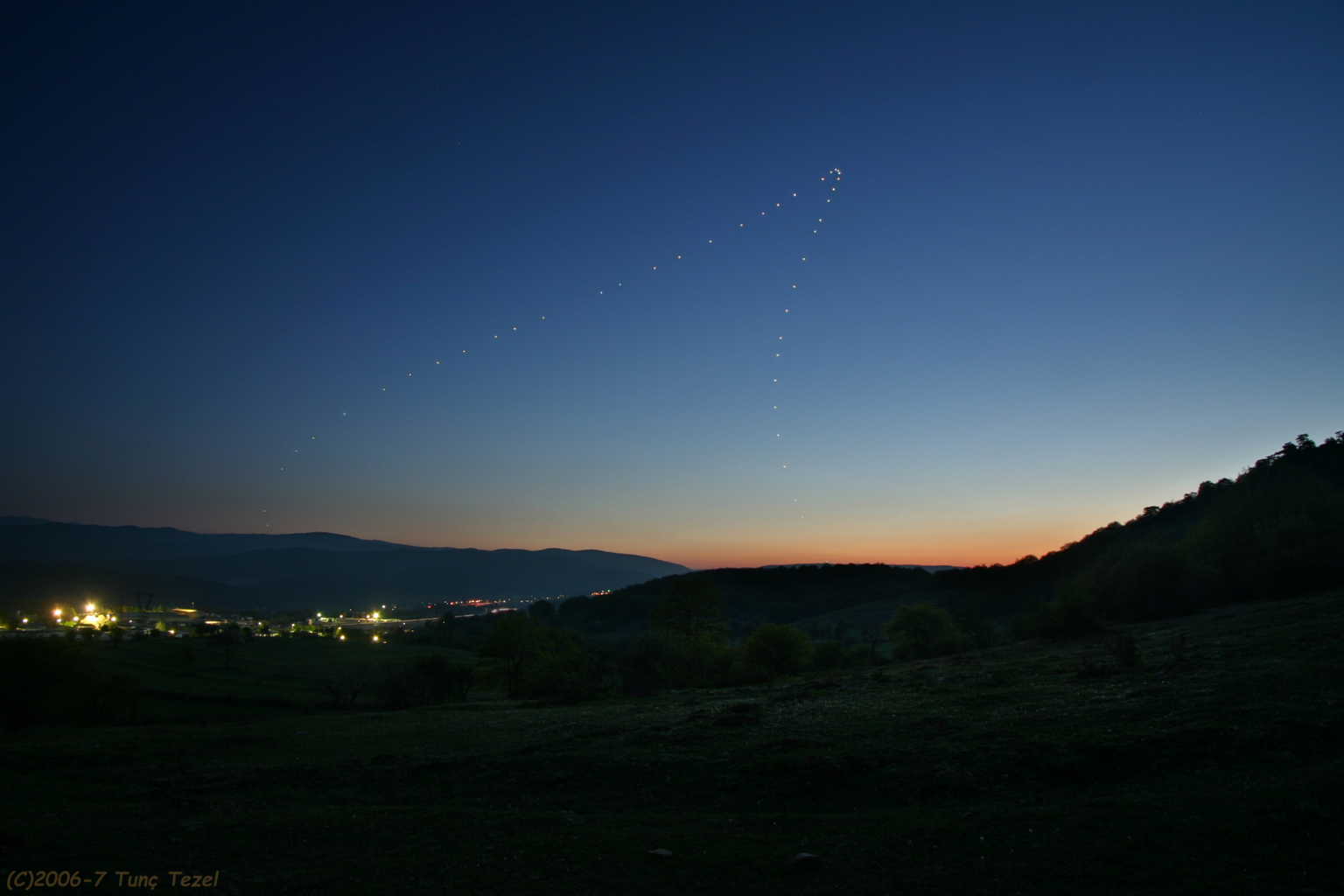
Is that Venus or an airplane? A common ponderable for sky enthusiasts is deciding if that bright spot near the horizon is the planet Venus. Usually, an airplane will show itself by moving significantly in a few moments. Venus will set only slowly as the Earth turns. Still, the identification would be easier if Venus did not keep shifting its position each night. Pictured above, Venus was captured on 44 different nights during 2006 and 2007 over the Bolu mountains in Turkey, when Earth's sister planet appeared exclusively in the evening sky. The average spacing of the images was about five days, while the images were always taken with the Sun about seven degrees below the horizon. That bright spot toward the west in your evening sky this month might be neither Venus nor an airplane, but Mars.
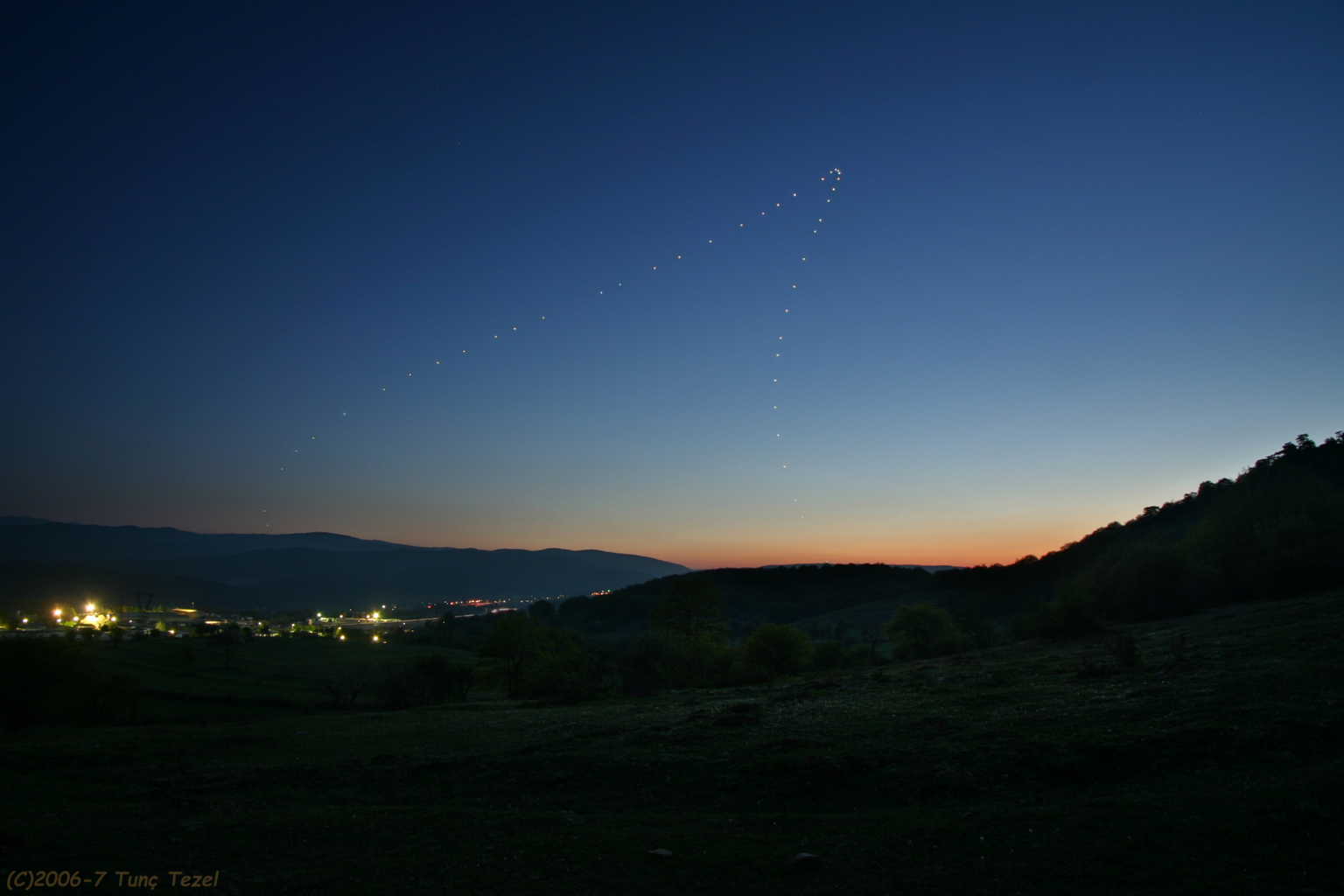
¿Es Venus o un avión? Una pregunta común entre los entusiastas del cielo es determinar si ese punto brillante cerca del horizonte es el planeta Venus. Normalmente, un avión se revela al moverse significativamente en unos pocos momentos. Venus, en cambio, se ocultará lentamente a medida que la Tierra gire. Sin embargo, la identificación sería más fácil si Venus no cambiara su posición cada noche. En la imagen de arriba, Venus fue capturado en 44 noches diferentes durante 2006 y 2007 sobre las montañas de Bolu en Turquía, cuando el planeta hermano de la Tierra apareció exclusivamente en el cielo vespertino. El espacio promedio entre las imágenes fue de aproximadamente cinco días, y siempre se tomaron con el Sol unos siete grados por debajo del horizonte. Ese punto brillante hacia el oeste en tu cielo vespertino este mes podría ser ni Venus ni un avión, sino Marte.