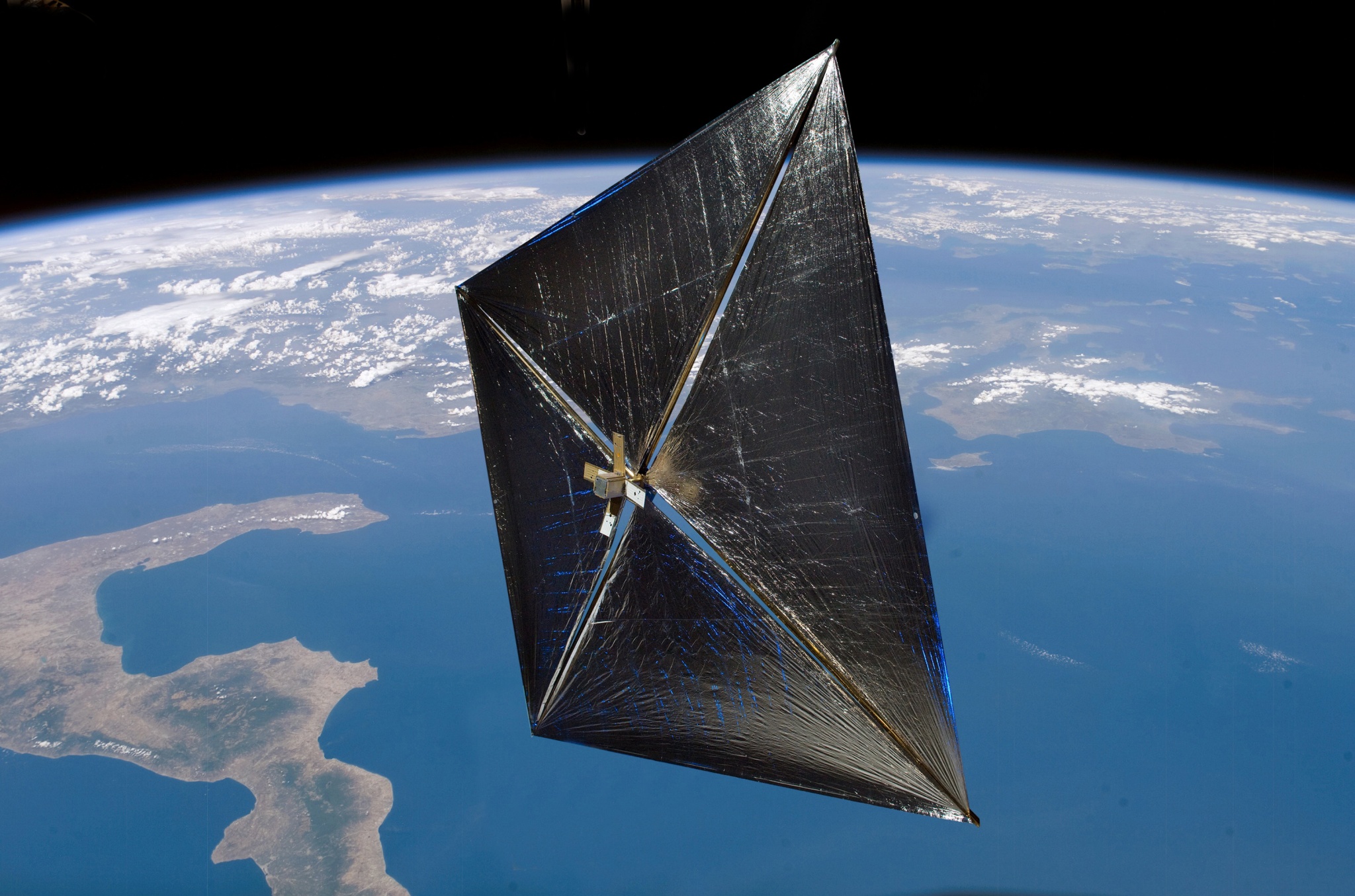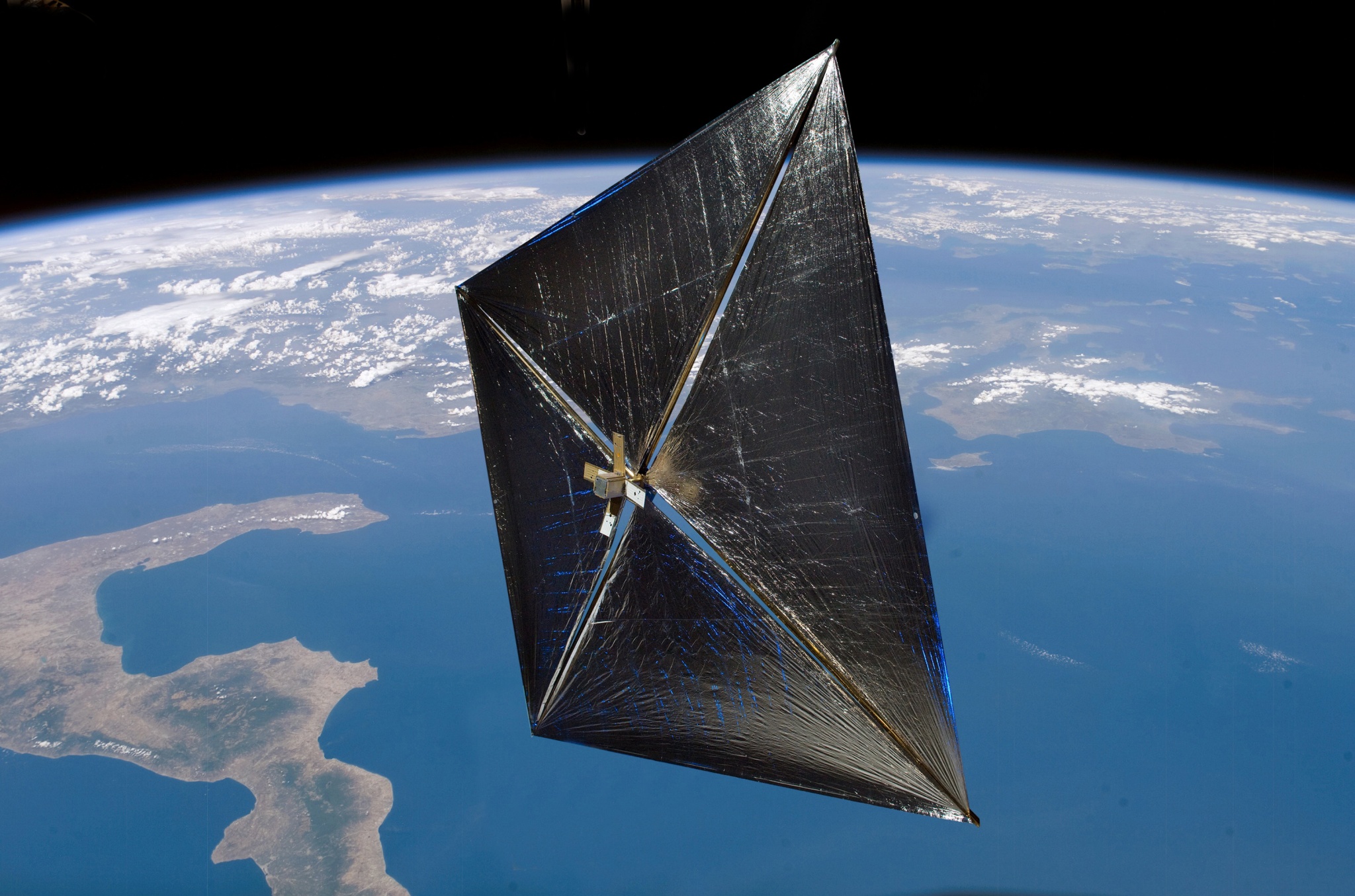
Featured in this artist's illustration, NASA's NanoSail-D finally unfurled a very thin, 10 square meter reflective sail on January 20th, becoming the first solar sail spacecraft in low Earth orbit. Often considered the stuff of science fiction, sailing through space was suggested 400 years ago by astronomer Johannes Kepler who observed comet tails blown by the solar wind. Modern solar sail spacecraft designs, like NanoSail-D or the Japanese interplanetary spacecraft IKAROS, rely on the small but continuous pressure from sunlight itself for thrust. Glinting in the sunlight as it circles planet Earth, the NanoSail-D solar sail will periodically be bright and easily visible to the eye. In fact, skygazers are urged to participate in an ongoing contest to capture images of NanoSail-D. The images will help NASA monitor the satellite before it reenters the atmosphere in April or May.
Representada en esta ilustración artística, la nave NanoSail-D de la NASA desplegó finalmente una vela reflectante muy delgada de 10 metros cuadrados el 20 de enero, convirtiéndose en la primera nave espacial de vela solar en órbita baja terrestre. A menudo considerada materia de ciencia ficción, la idea de navegar por el espacio fue sugerida hace 400 años por el astrónomo Johannes Kepler, quien observó las colas de los cometas impulsadas por el viento solar. Los diseños modernos de naves con vela solar, como NanoSail-D o la nave interplanetaria japonesa IKAROS, se apoyan en la pequeña pero continua presión de la propia luz solar como fuerza de propulsión. Destellando bajo la luz del Sol mientras orbita la Tierra, la vela solar NanoSail-D será periódicamente brillante y fácilmente visible a simple vista. De hecho, se invita a los aficionados a la astronomía a participar en un concurso en curso para capturar imágenes de NanoSail-D. Dichas imágenes ayudarán a la NASA a monitorear el satélite antes de que reingrese a la atmósfera en abril o mayo.