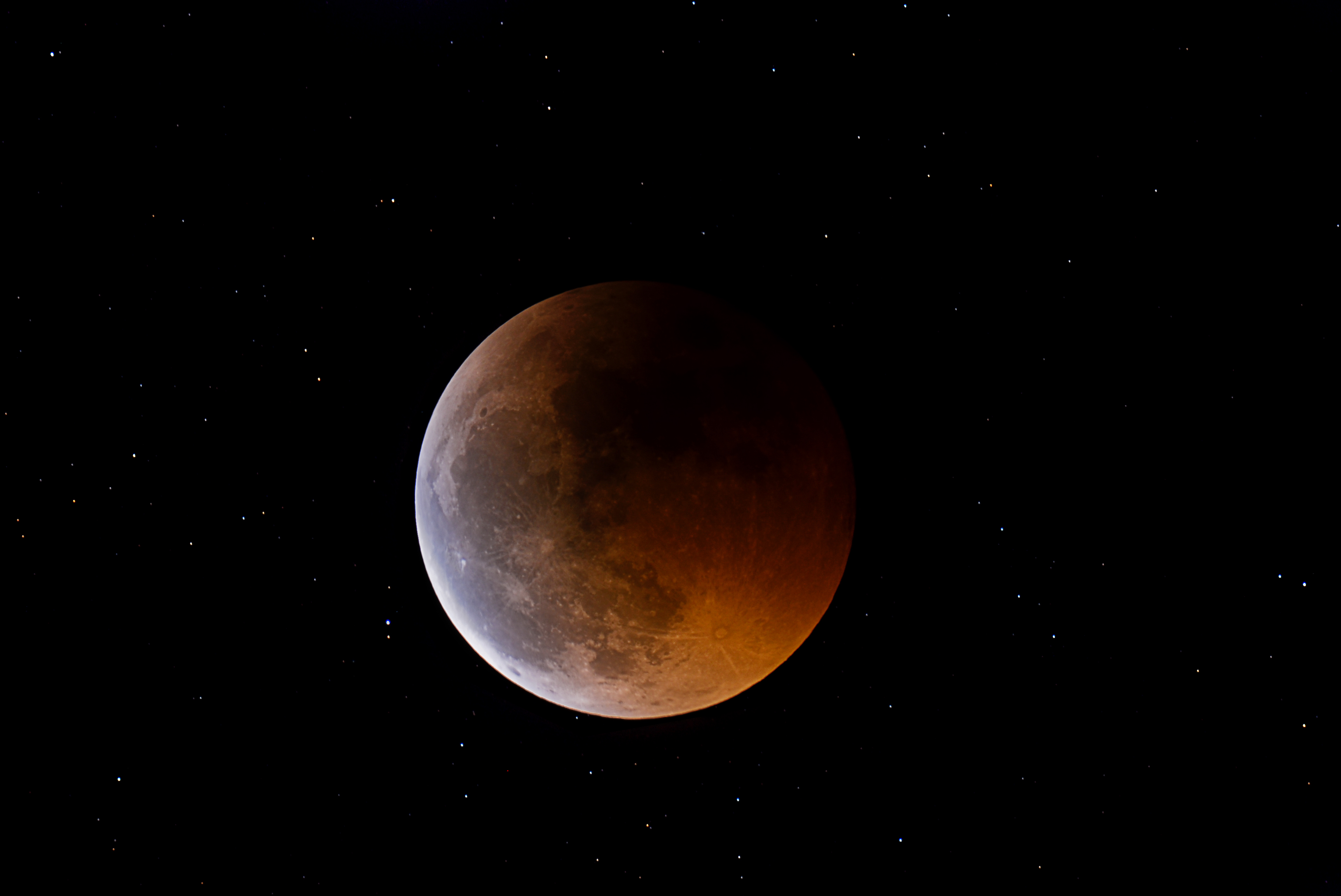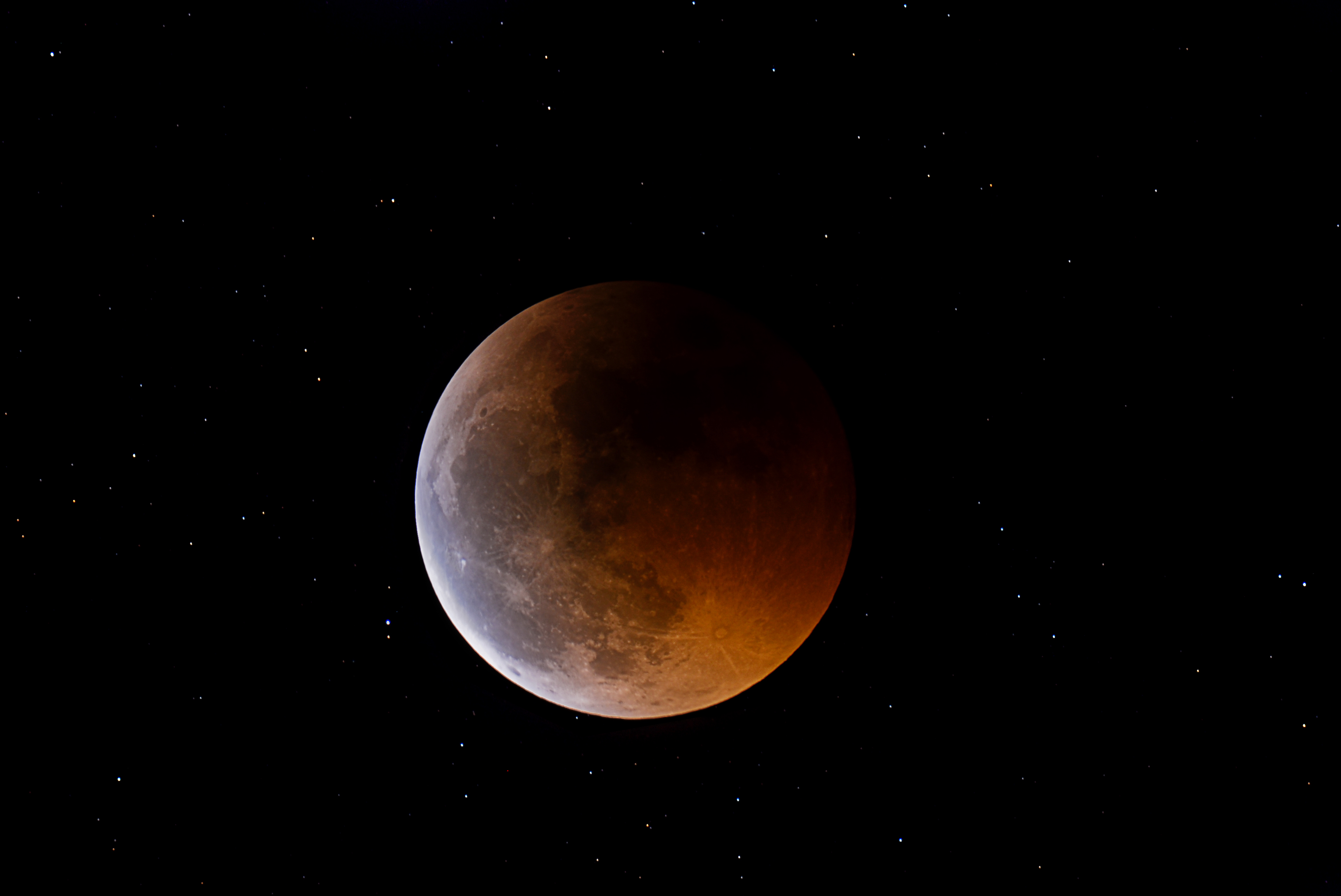
A celestial prelude to today's solstice, the June 15 total lunar eclipse was one of the longest in recent years. It was also one of the darkest, but not completely dark. Even during totality, a somber, red lunar disk could be seen in the starry night sky, reflecting reddened light falling on to its surface. Seen from a lunar perspective, the ruddy illumination is from all the sunsets and sunrises around the edges of a silhouetted Earth. In this sharp portrait of the eclipsed Moon from Granada, Spain, the Moon's edge reflects a bluish tinge as well as it emerges from Earth's umbral shadow. The bluer light is still filtered through Earth's atmosphere, but originates in rays of sunlight passing through layers high in the upper stratosphere. That light is colored by ozone that absorbs red light and transmits bluer hues.
Un preludio celestial al solsticio de hoy, el eclipse lunar total del 15 de junio fue uno de los más prolongados de los últimos años. Fue también uno de los más oscuros, aunque no completamente oscuro. Incluso durante la totalidad, un sombrío disco lunar rojizo podía observarse en el cielo estrellado nocturno, reflejando la luz enrojecida que caía sobre su superficie. Desde una perspectiva lunar, la rojiza iluminación proviene de todos los atardeceres y amaneceres distribuidos alrededor de los bordes de una Tierra en silueta. En este nítido retrato de la Luna eclipsada desde Granada, España, el borde lunar refleja también un leve tono azulado mientras emerge de la sombra umbral de la Tierra. Esta luz más azul sigue siendo filtrada por la atmósfera terrestre, pero se origina en rayos de luz solar que atraviesan capas elevadas de la estratosfera superior. Dicha luz es coloreada por el ozono, que absorbe la luz roja y transmite tonalidades más azules.