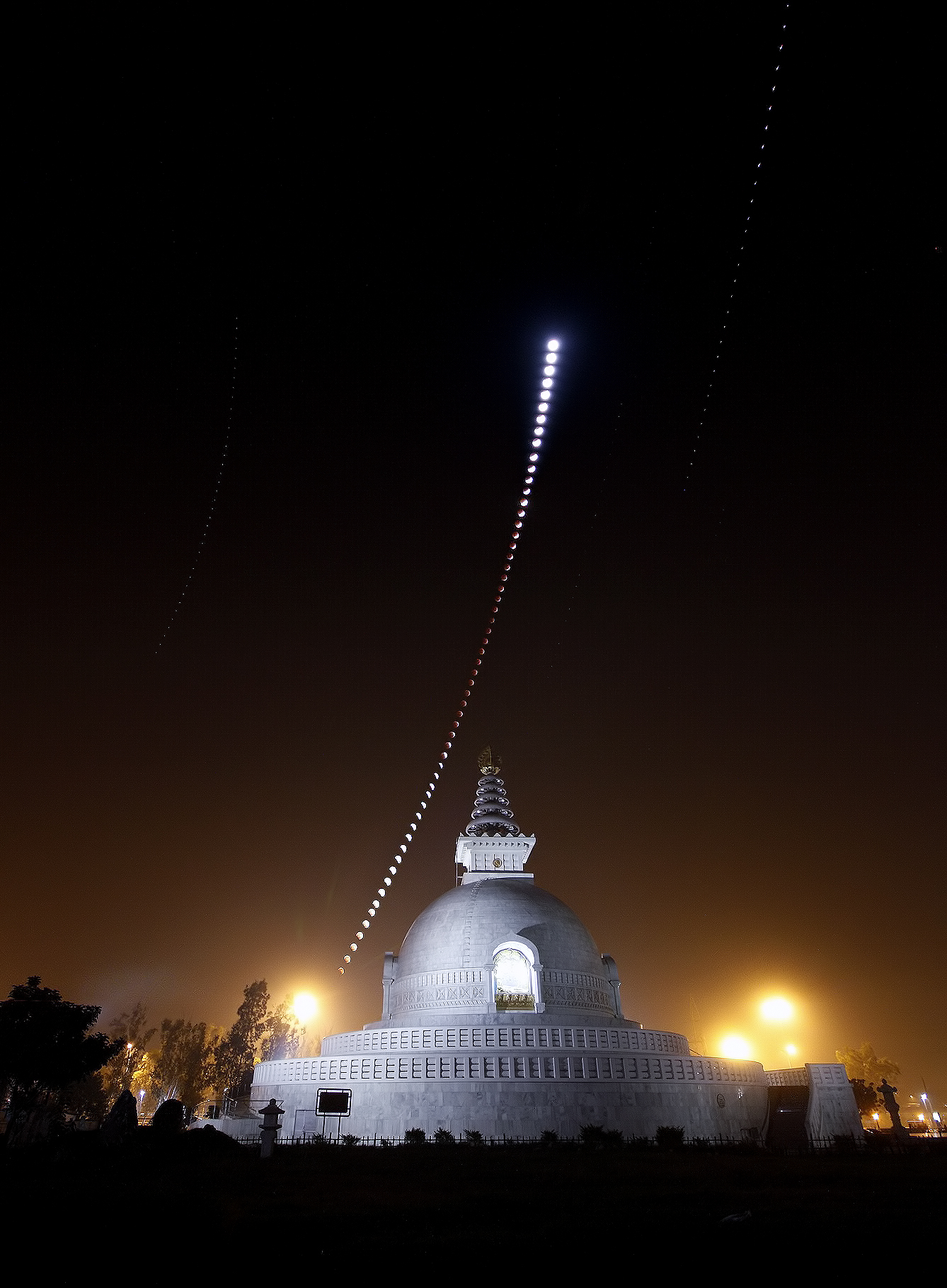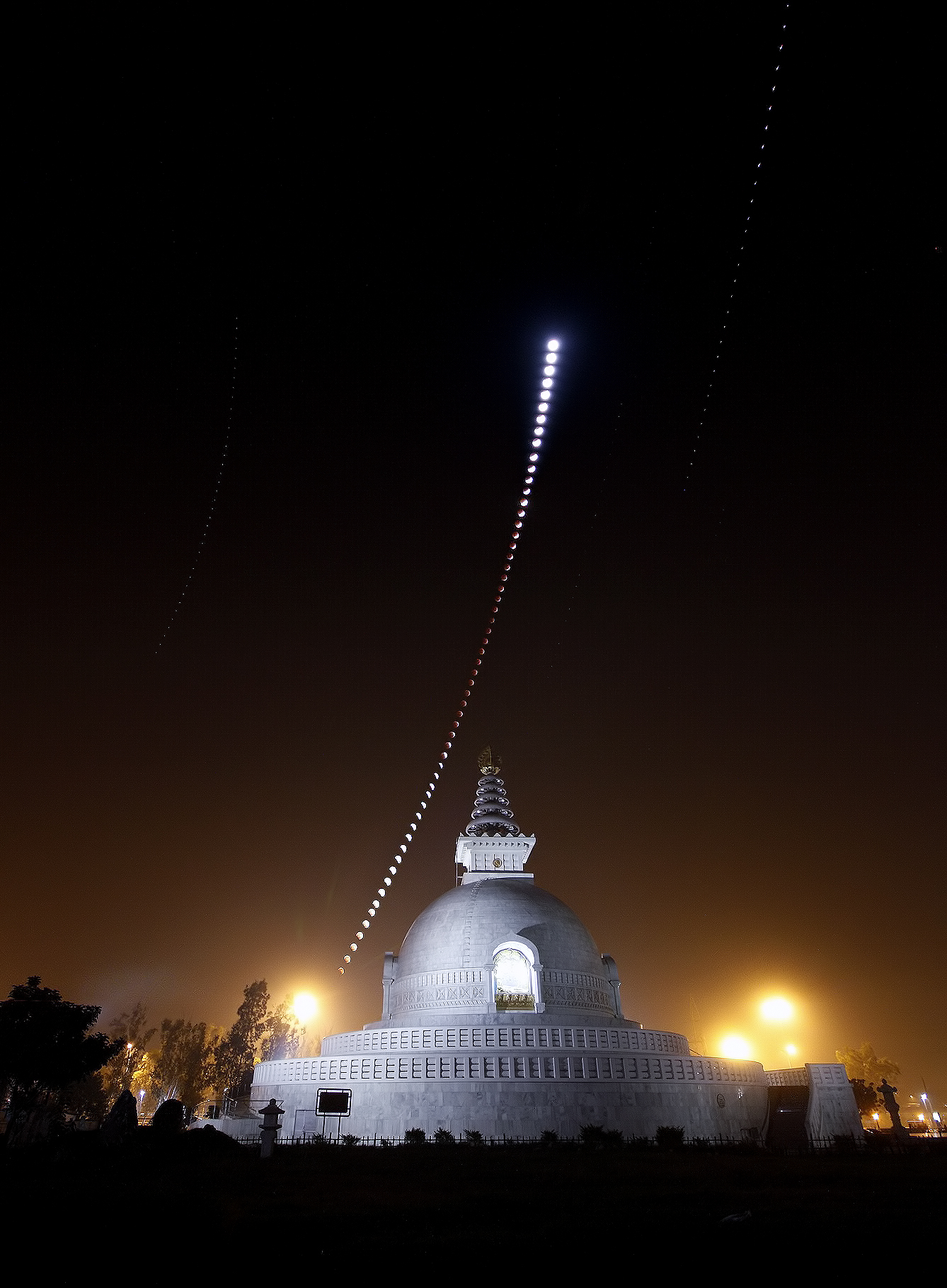
Our Moon turned red last week. The reason was that during December 10, a total lunar eclipse occurred. The above digitally superimposed image mosaic captured the Moon many times during the eclipse, from before the Moon entered Earth's shadow until after the Moon exited. The image sequence was recorded over a Shanti Stupa Peace Pagota near the center of New Delhi, India. The red tint of the eclipsed Moon was created by sunlight first passing through the Earth's atmosphere, which preferentially scatters blue light (making the sky blue) but passes and refracts red light, before reflecting back off the Moon. Differing amounts of clouds and volcanic dust in the Earth's atmosphere make each lunar eclipse appear differently. The next total lunar eclipse will occur only in 2014. Discovery + Outreach: Graduate student research position open for APOD
Nuestra Luna se tiñó de rojo la semana pasada. La razón fue que durante el 10 de diciembre ocurrió un eclipse lunar total. El mosaico de imágenes superpuestas digitalmente captura la Luna en múltiples momentos durante el eclipse, desde antes de que la Luna entrara en la sombra de la Tierra hasta después de que saliera de ella. La secuencia de imágenes fue registrada sobre una Stupa de Shanti (Pagoda de la Paz) cerca del centro de Nueva Delhi, India. El tinte rojizo de la Luna eclipsada fue creado por la luz solar que primero atraviesa la atmósfera terrestre, la cual dispersa preferentemente la luz azul (dando al cielo su color azul), pero deja pasar y refracta la luz roja antes de reflejarse en la Luna. Las distintas cantidades de nubes y polvo volcánico presentes en la atmósfera terrestre hacen que cada eclipse lunar tenga una apariencia diferente. El próximo eclipse lunar total ocurrirá recién en 2014.