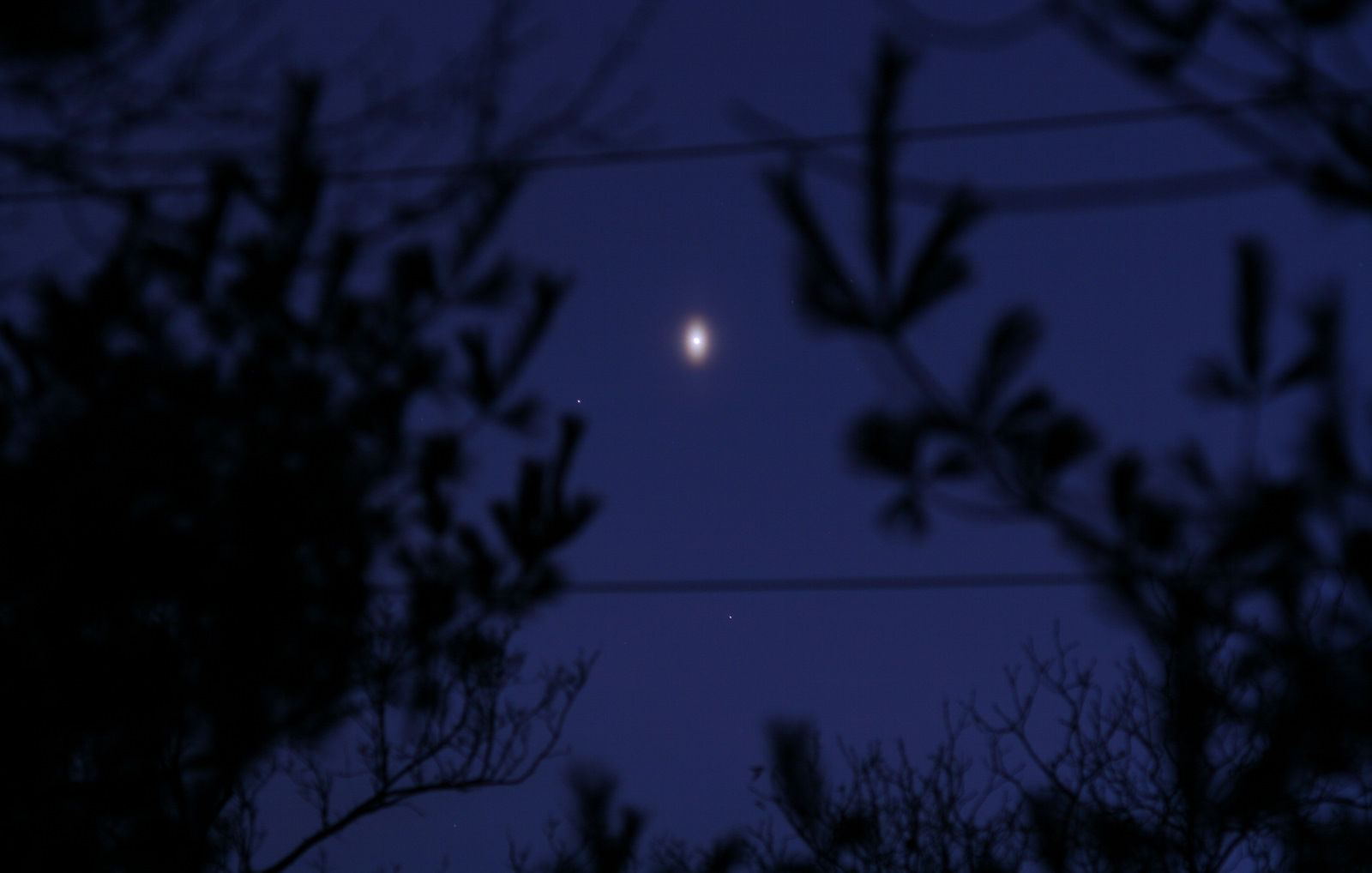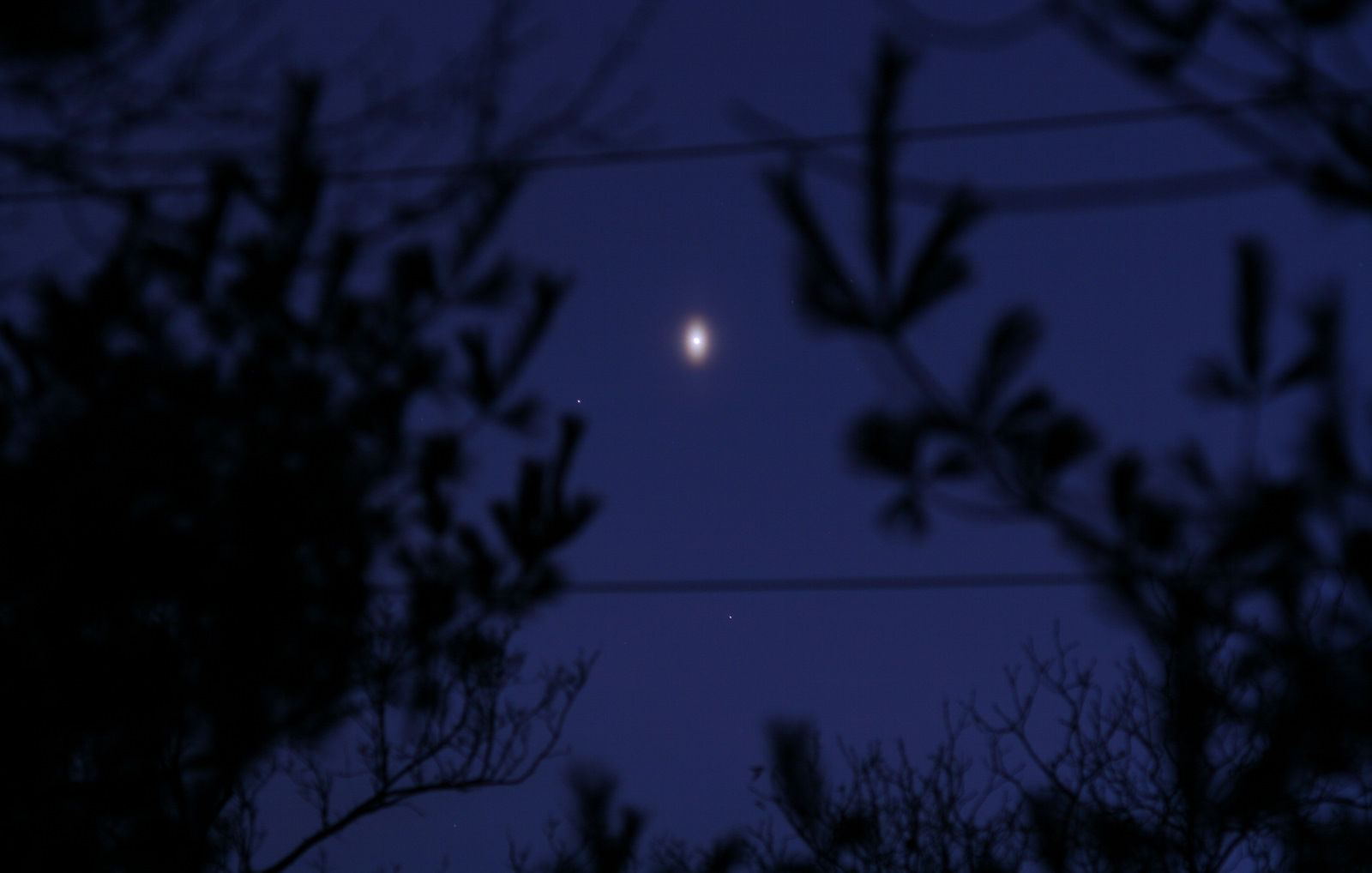
Why would Venus appear oval? Venus has been seen countless times from the surface of the Earth, and every time the Earth's atmosphere has dispersed its light to some degree. When the air has just the right amount of dust or water droplets, small but distant objects like Venus appear spread out into an angularly large aureole. Aureoles are not unusual to see and are frequently noted as circular coronas around the Sun or Moon. Recently, however, aureoles have been imaged that are not circular but distinctly oval. The above oval Venusian aureole was imaged by the astrophotographer who first noted the unusual phenomenon three years ago. Initially disputed, the unusual distortion has now been confirmed multiple times by several different astrophotographers. What causes the ellipticity is currently unknown, and although several hypotheses hold that horizontally oriented ice crystals are responsible, significant discussions about it are still taking place.
¿Por qué Venus aparecería con forma oval? Venus ha sido observado incontables veces desde la superficie de la Tierra, y en cada ocasión la atmósfera terrestre ha dispersado su luz en cierta medida. Cuando el aire contiene la cantidad precisa de polvo o gotas de agua, objetos pequeños pero distantes como Venus aparecen extendidos en una aureola de gran extensión angular. Las aureolas no son un fenómeno inusual y se observan con frecuencia como coronas circulares alrededor del Sol o la Luna. Sin embargo, recientemente se han obtenido imágenes de aureolas que no son circulares sino claramente ovaladas. La aureola venusina oval mostrada aquí fue fotografiada por el astrofotógrafo que notó por primera vez este inusual fenómeno hace tres años. Inicialmente cuestionada, la distorsión inusual ha sido confirmada en múltiples ocasiones por varios astrofotógrafos distintos. La causa de esta elipticidad es actualmente desconocida y, aunque diversas hipótesis sostienen que cristales de hielo orientados horizontalmente son los responsables, el debate al respecto continúa vigente.