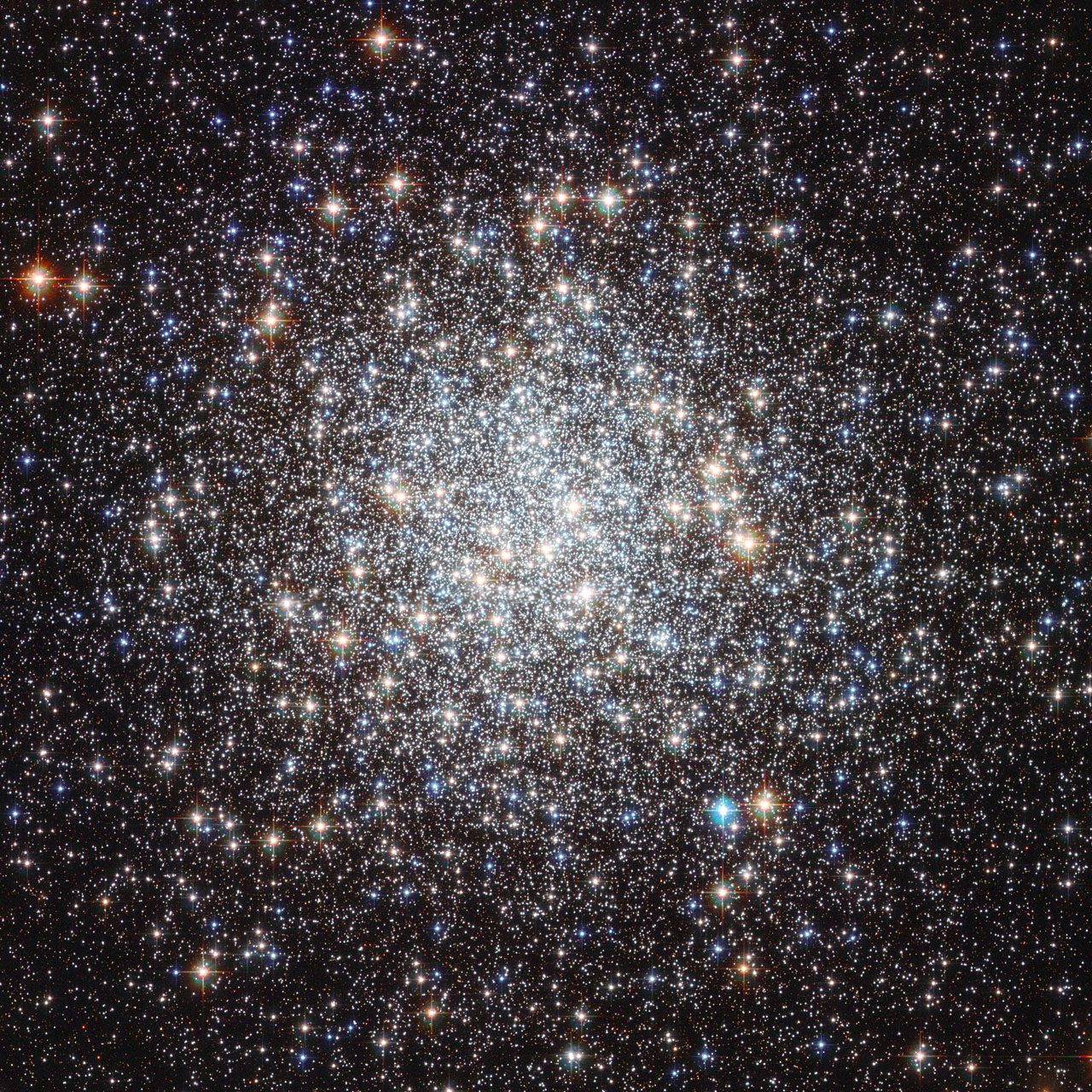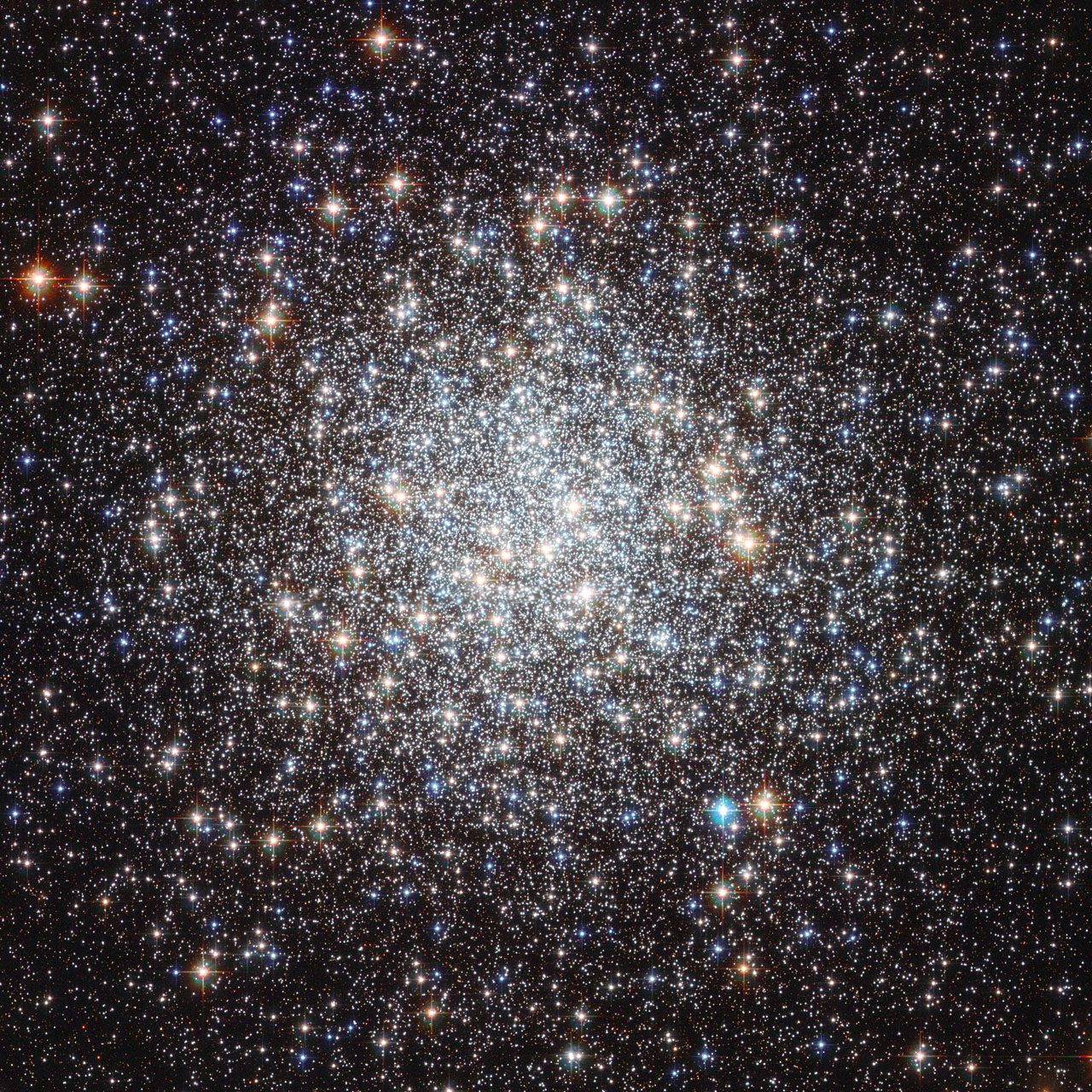
Renown 18th century astronomer Charles Messier described this 9th entry in his famous astronomical catalog as "Nebula, without star, in the right leg of Ophiuchus ...". But Messier 9 (M9) does have stars, known to modern astronomers as a globular cluster of over 300,000 stars within a diameter of about 90 light-years. It lies some 25,000 light-years distant, near the central bulge of our Milky Way galaxy. This Hubble Space Telescope close-up resolves the dense swarm of stars across the cluster's central 25 light-years. At least twice the age of the Sun and deficient in heavy elements, the cluster stars have colors corresponding to their temperatures, redder stars are cooler, bluer stars are hotter. Many of the cluster's cool red giant stars show a yellowish tint in the sharp Hubble view.
El renombrado astrónomo del siglo XVIII Charles Messier describió esta novena entrada en su famoso catálogo astronómico como 'Nebulosa, sin estrella, en la pierna derecha de Ofiuco...'. Pero Messier 9 (M9) sí tiene estrellas, conocidas por los astrónomos modernos como un cúmulo globular de más de 300 000 estrellas dentro de un diámetro de aproximadamente 90 años luz. Se encuentra a unos 25 000 años luz de distancia, cerca del bulbo central de nuestra galaxia Vía Láctea. Esta imagen de alta resolución del Telescopio Espacial Hubble resuelve la densa manada de estrellas a lo largo de los 25 años luz centrales del cúmulo. Al menos el doble de antiguo que el Sol y con una baja proporción de elementos pesados, las estrellas del cúmulo tienen colores que corresponden a sus temperaturas, las estrellas rojizas son más frías, las azules son más calientes. Muchas de las estrellas gigantes rojas frías del cúmulo muestran un tono amarillento en la nítida imagen del Hubble.