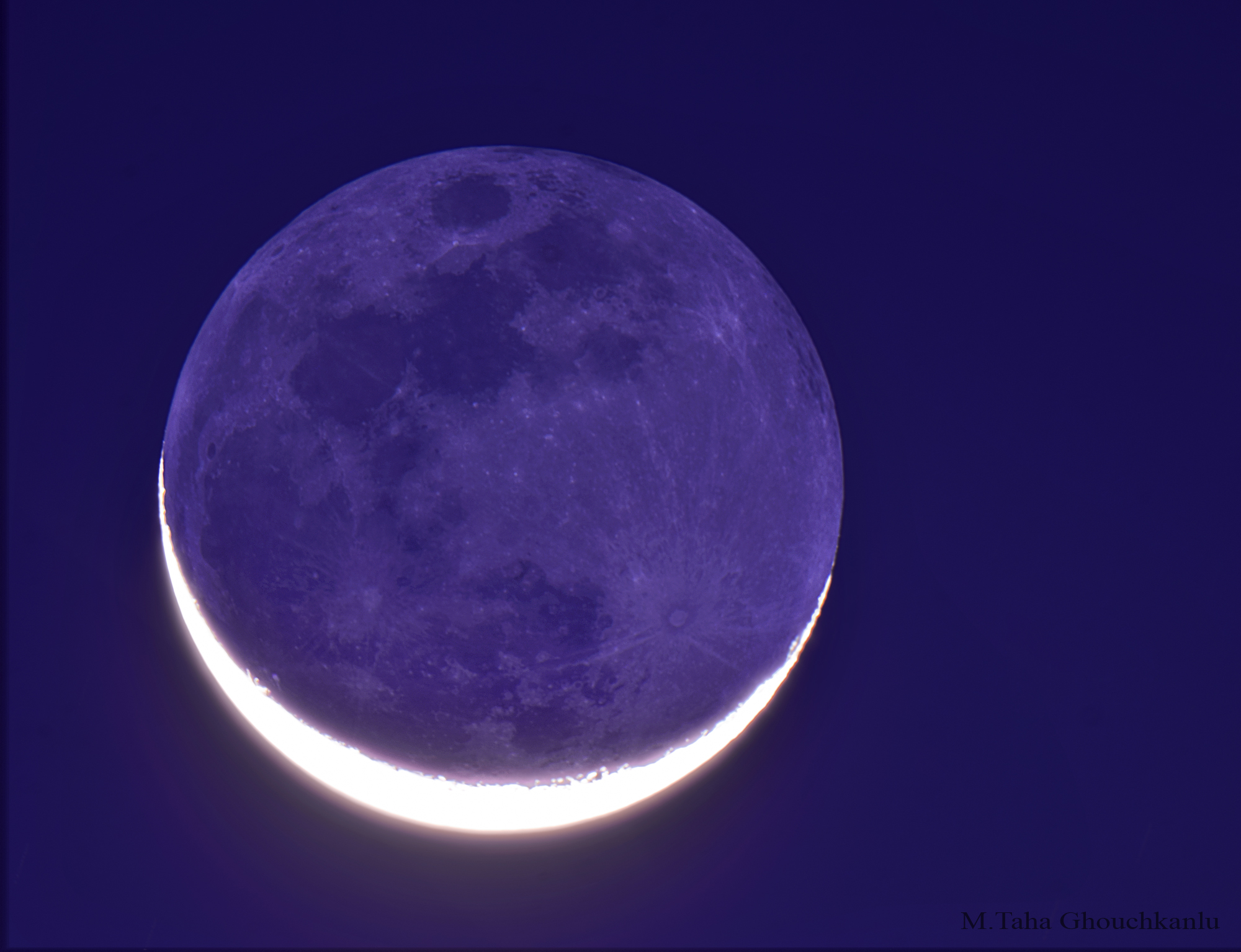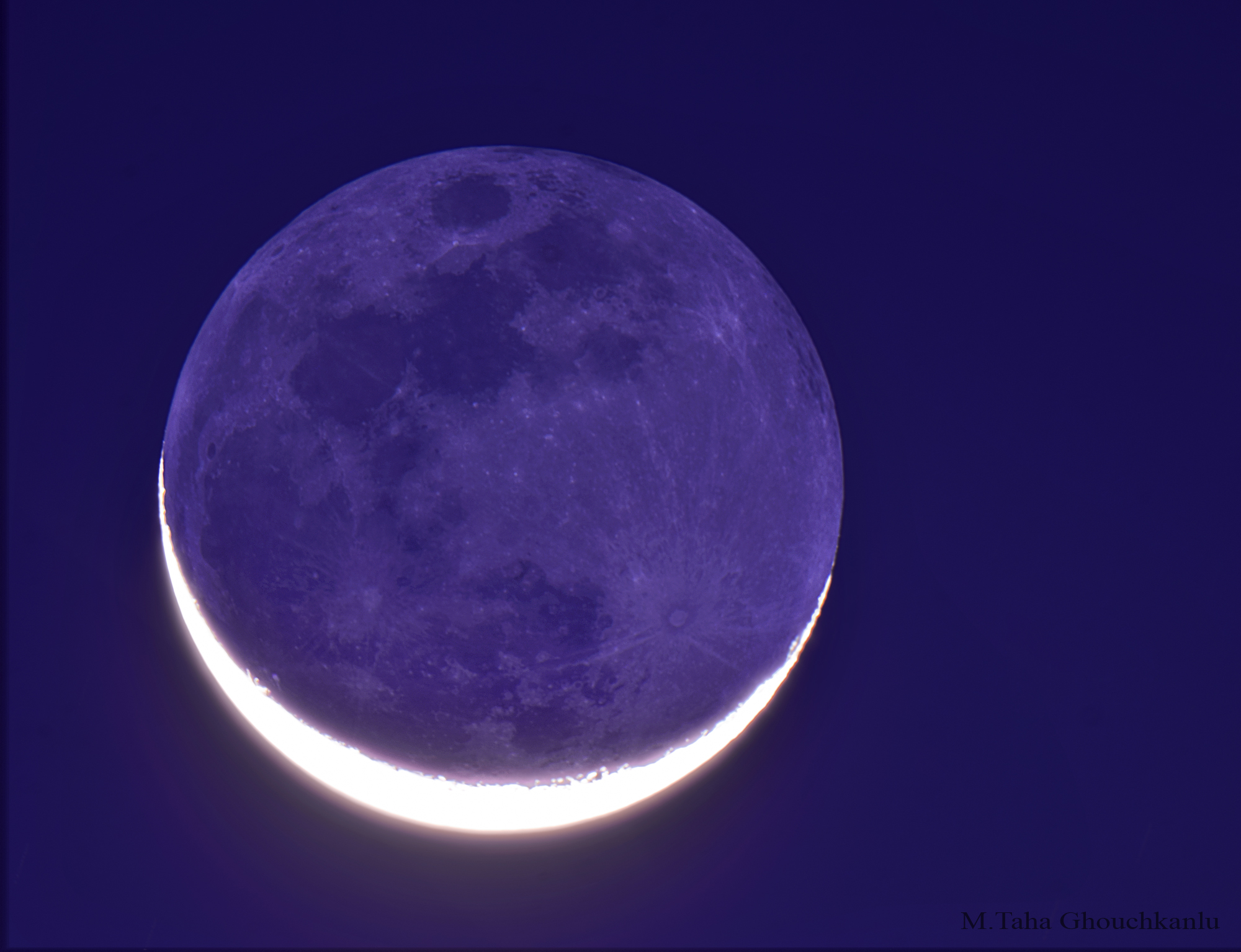
Also known as the Moon's ashen glow, Earthshine is Earthlight illuminating the Moon's night side. Taken on Nowruz, the March 20 equinox, from Esfahan, Iran, planet Earth, this telescopic image captures strong Earthshine from an old Moon. The darker earthlit disk is in the arms of a bright sunlit crescent. But the view from the Moon would have been enchanting too. When the Moon appears in Earth's sky as a slender crescent, a dazzlingly bright, nearly full Earth would be seen from the lunar surface. The Earth's brightness due to reflected sunlight is known to be strongly influenced by cloud cover. Still, a description of Earthshine, in terms of sunlight reflected by Earth's oceans in turn illuminating the Moon's dark surface, was written 500 years ago by Leonardo da Vinci.
También conocida como el resplandor ceniciento de la Luna, la Tierraclara es la luz de la Tierra iluminando el lado nocturno de la Luna. Esta imagen telescópica, tomada el Nowruz, el equinoccio del 20 de marzo, desde Isfahán, Irán, en la Tierra, captura una fuerte Tierraclara proveniente de una Luna vieja. El disco más oscuro iluminado por la Tierra está en los brazos de un creciente brillante iluminado por el Sol. Pero la vista desde la Luna también habría sido encantadora. Cuando la Luna aparece en el cielo terrestre como un delgado creciente, desde la superficie lunar se vería una Tierra brillante y casi llena. Se sabe que la brillantez de la Tierra, debido a la luz solar reflejada, está fuertemente influenciada por la cobertura nubosa. Sin embargo, una descripción de la Tierraclara, en términos de luz solar reflejada por los océanos de la Tierra que a su vez iluminan la superficie oscura de la Luna, fue escrita hace 500 años por Leonardo da Vinci.