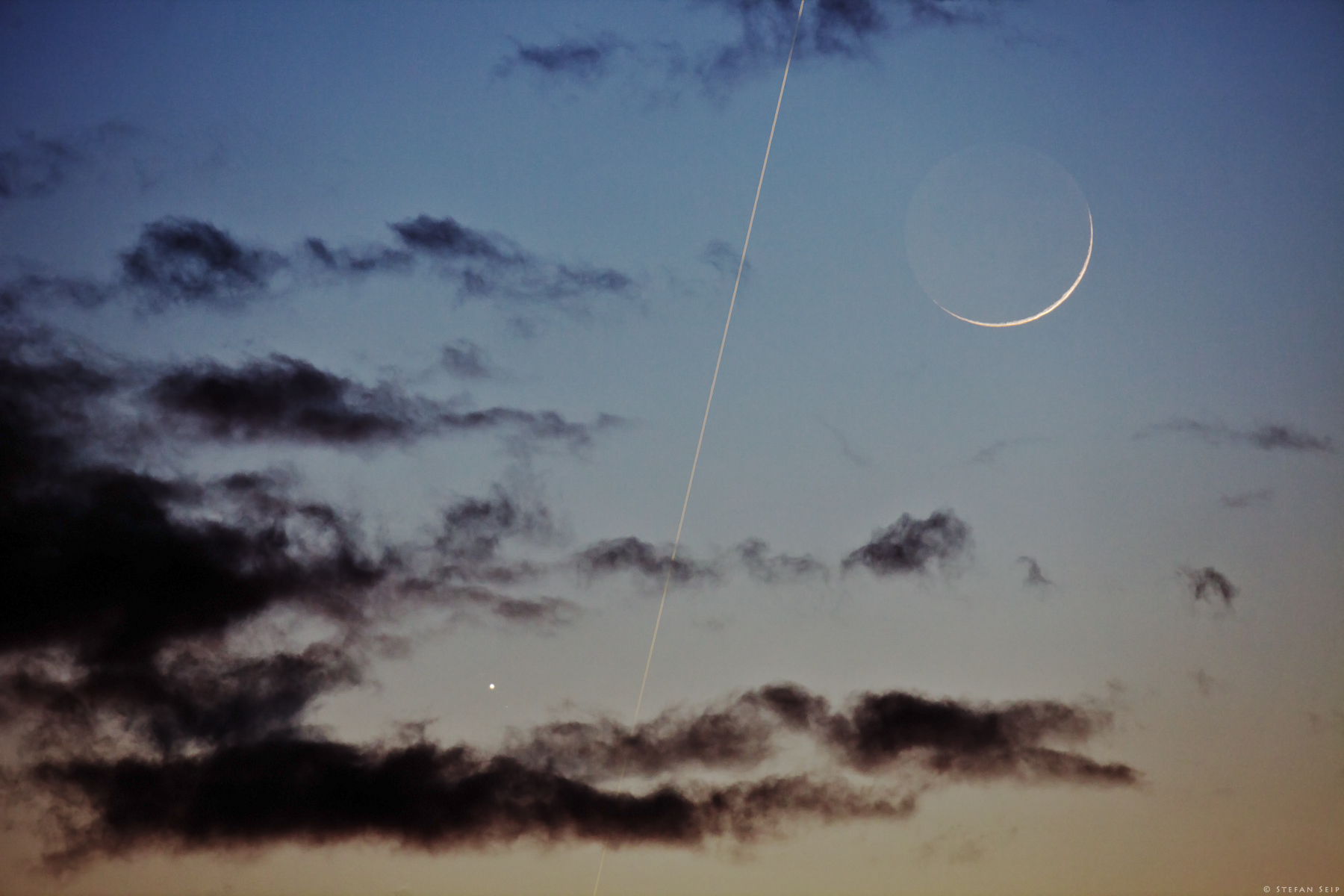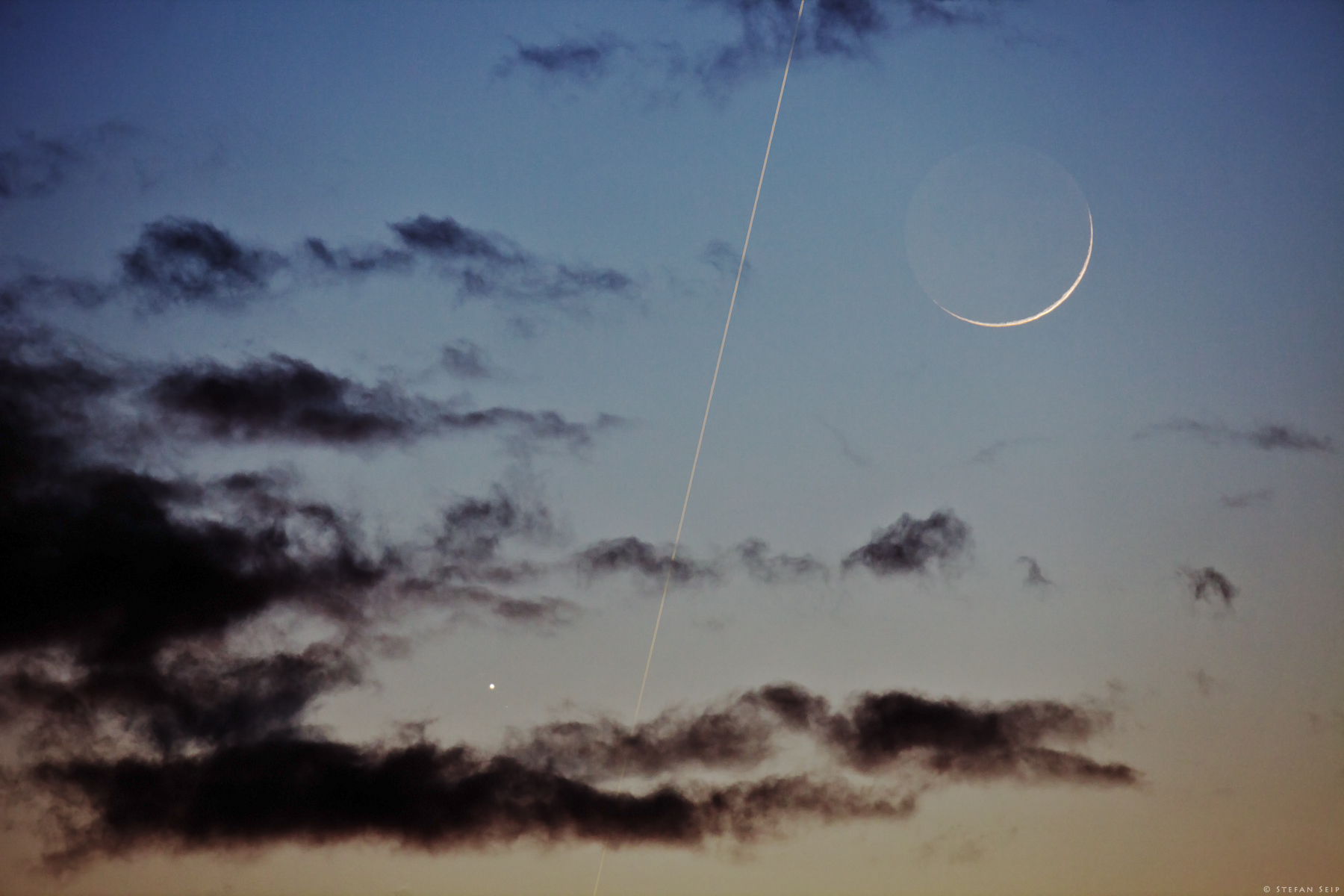
Planet Earth has many moons. Its largest artifical moon, the International Space Station, streaks through this lovely skyview with clouds in silhouette against the fading light of a sunset. Captured from Stuttgart, Germany last Sunday, the frame also includes Earth's largest natural satellite 1.5 days after its New Moon phase. Just below and left of the young crescent is Jupiter, another bright celestial beacon hovering near the western horizon in early evening skies. Only briefly, as seen from the photographer's location, Jupiter and these moons of Earth formed the remarkably close triple conjunction. Of course, Jupiter has many moons too. In fact, close inspection of the photo will reveal tiny pin pricks of light near the bright planet, large natural satellites of Jupiter known as Galilean moons.
El planeta Tierra tiene muchos satélites. Su satélite artificial más grande, la Estación Espacial Internacional, cruza esta hermosa vista del cielo con nubes en silueta contra la luz menguante de un atardecer. Capturada desde Stuttgart, Alemania, el domingo pasado, el marco también incluye el satélite natural más grande de la Tierra, 1.5 días después de su fase de Luna Nueva. Justo debajo y a la izquierda del joven creciente se encuentra Júpiter, otro brillante faro celestial que se encuentra cerca del horizonte occidental en los cielos de la tarde temprana. Solo brevemente, desde la ubicación del fotógrafo, Júpiter y estos satélites de la Tierra formaron una notable conjunción triple muy cercana. Por supuesto, Júpiter también tiene muchos satélites. De hecho, una inspección cuidadosa de la foto revelará pequeños puntos de luz cerca del planeta brillante, grandes satélites naturales de Júpiter conocidos como lunas galileanas.