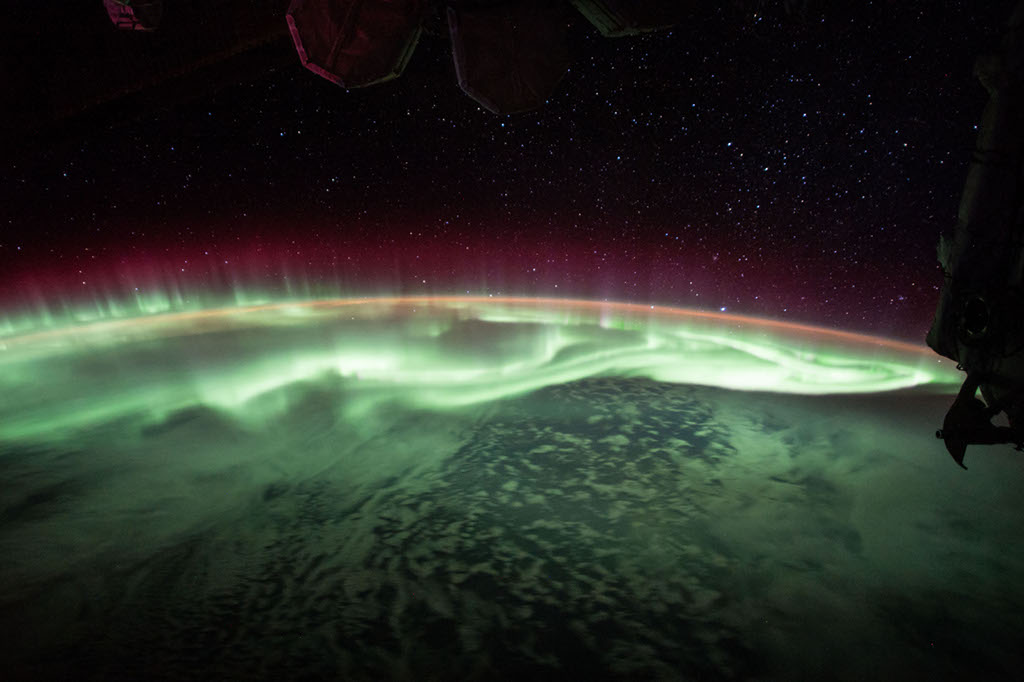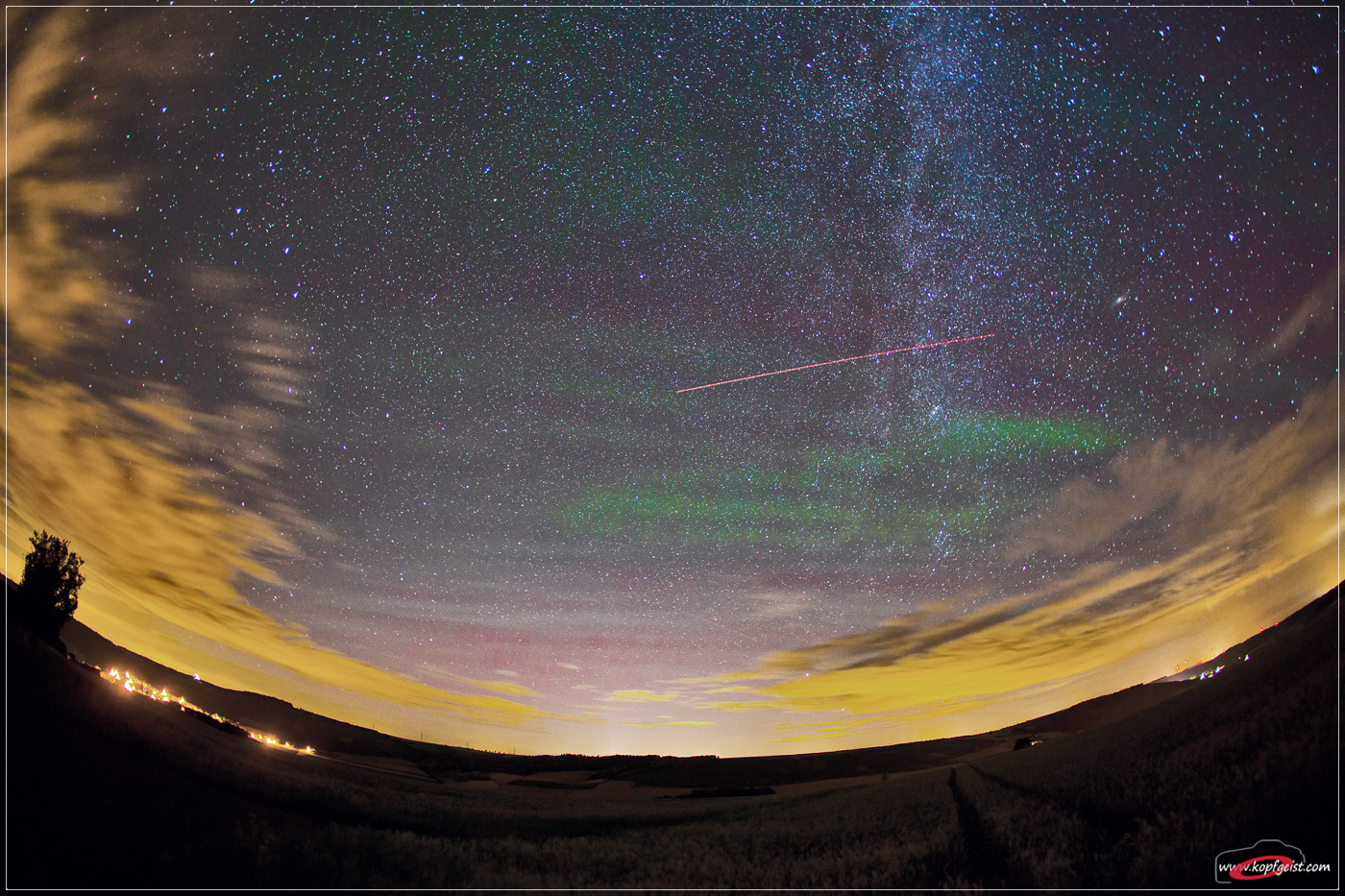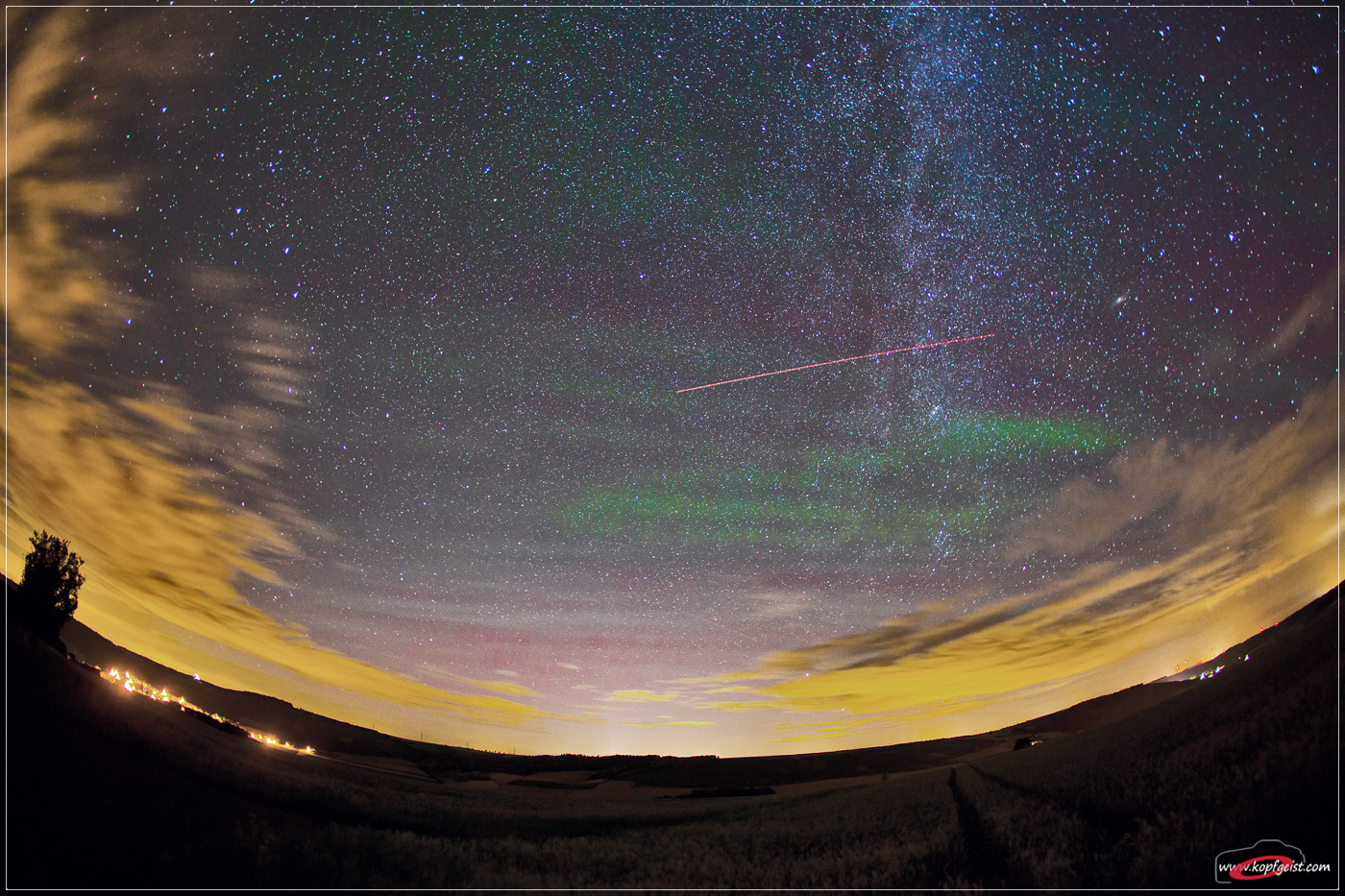
Does air glow? It does, but it is usually hard to see. When conditions are right, however, a faint glow about 90 kilometers up can be observed, most easily with a wide-angle long-duration camera exposure. The same airglow can also frequently be seen looking down -- in pictures taken from Earth orbit -- as a faint arc hovering above the surface. Pictured above between the beige clouds, above the curving Earth, behind the streaking airplane, and in front of the sparkling stars are some green bands of airglow. The glow is predominantly created by the excitation of atoms by ultraviolet light from the Sun, with the bands resulting from density fluctuations caused by upward moving atmospheric gravity waves. The above image was taken in mid-July above Weikersheim, Germany. Lightning and aurorae can also cause air to glow, but result from particle collisions and are more fleeting. Astrophysicists: Now over 500 codes in the Astrophysics Source Code Library
¿La atmósfera brilla? Lo hace, pero normalmente es difícil de ver. Cuando las condiciones son adecuadas, sin embargo, se puede observar un tenue brillo a unos 90 kilómetros de altura, siendo más fácilmente visible mediante una exposición prolongada con una cámara de ángulo amplio. El mismo brillo atmosférico también se puede ver con frecuencia desde abajo — en imágenes tomadas desde órbita terrestre — como un tenue arco flotando sobre la superficie. En la imagen, entre las nubes de color beige, sobre la Tierra curvada, detrás de la estela de un avión y delante de las estrellas brillantes, se ven algunas bandas verdes de brillo atmosférico. El brillo es principalmente causado por la excitación de átomos por la luz ultravioleta del Sol, con las bandas resultantes de fluctuaciones de densidad causadas por ondas gravitacionales atmosféricas ascendentes. La imagen fue tomada a mediados de julio sobre Weikersheim, Alemania. Los relámpagos y las auroras también pueden hacer que la atmósfera brille, pero son causados por colisiones de partículas y son más efímeros.