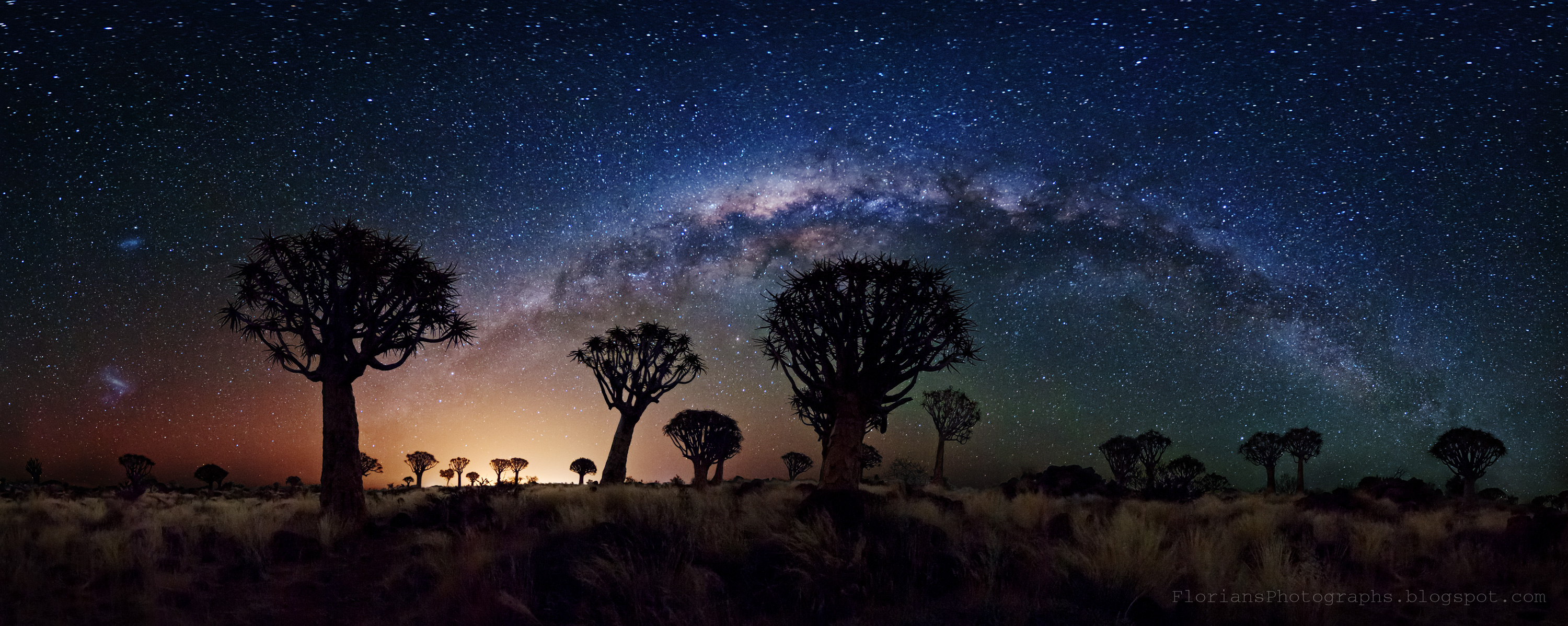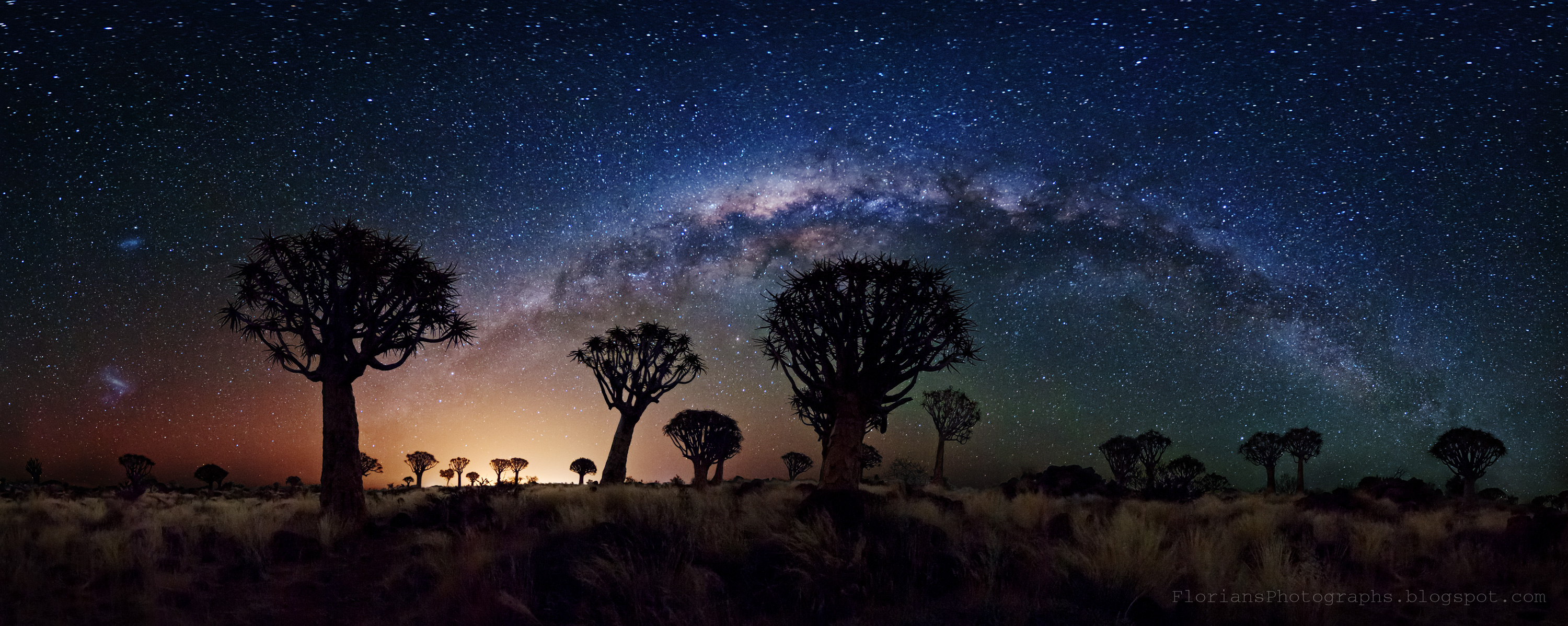
In front of a famous background of stars and galaxies lies some of Earth's more unusual trees. Known as quiver trees, they are actually succulent aloe plants that can grow to tree-like proportions. The quiver tree name is derived from the historical usefulness of their hollowed branches as dart holders. Occurring primarily in southern Africa, the trees pictured in the above 16-exposure composite are in Quiver Tree Forest located in southern Namibia. Some of the tallest quiver trees in the park are estimated to be about 300 years old. Behind the trees is light from the small town of Keetmanshoop, Namibia. Far in the distance, arching across the background, is the majestic central band of our Milky Way Galaxy. Even further in the distance, visible on the image left, are the Large and Small Magellanic Clouds, smaller satellite galaxies of the Milky Way that are prominent in the skies of Earth's southern hemisphere. Last Repetitive Day this Century: For one second today the date and time will be 12/12/12 12:12:12.
Crédito: NASA, CGRO SSC En frente de un fondo famoso de estrellas y galaxias se encuentran algunos de los árboles más inusuales de la Tierra. Conocidos como árboles quiver, son en realidad plantas suculentas de la familia de la aloe que pueden crecer hasta alcanzar proporciones arboladas. El nombre árbol quiver proviene de su utilidad histórica de sus ramas huecas como portadores de dardos. Presentes principalmente en el sur de África, los árboles mostrados en la imagen compuesta de 16 exposiciones se encuentran en el Bosque de Árboles Quiver ubicado en el sur de Namibia. Algunos de los árboles quiver más altos del parque se estiman que tengan alrededor de 300 años. Detrás de los árboles hay luz proveniente del pequeño pueblo de Keetmanshoop, en Namibia. Muy lejos, arqueándose a través del fondo, se encuentra la majestuosa banda central de nuestra galaxia, la Vía Láctea. Incluso más lejos, visible a la izquierda de la imagen, se encuentran las Nubes de Magallanes, galaxias satélite más pequeñas de la Vía Láctea que son prominentes en los cielos del hemisferio sur de la Tierra.