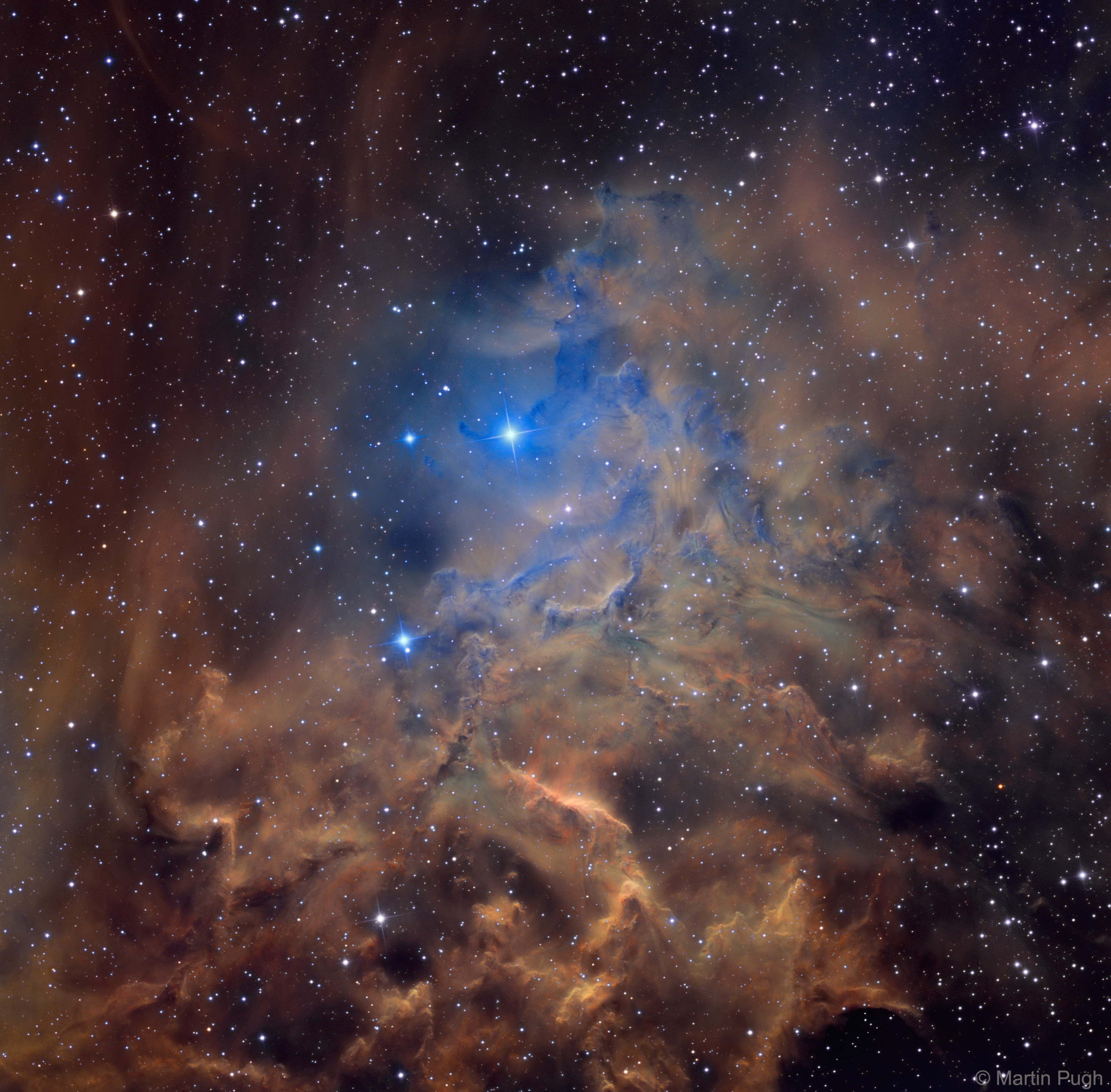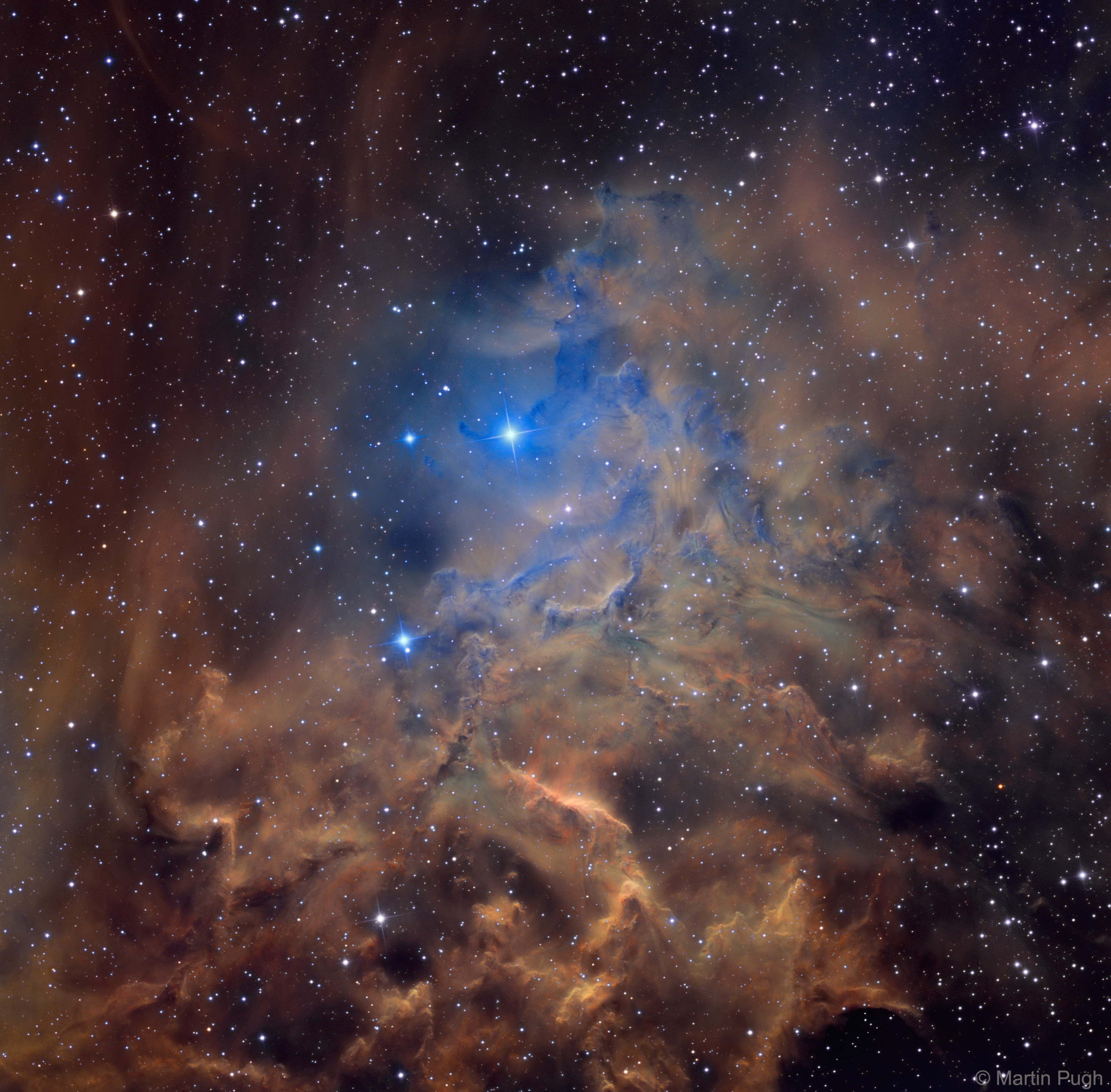
AE Aurigae is called the flaming star. The surrounding nebula IC 405 is named the Flaming Star Nebula and the region seems to harbor smoke, but there is no fire. Fire, typically defined as the rapid molecular acquisition of oxygen, happens only when sufficient oxygen is present and is not important in such high-energy, low-oxygen environments. The material that appears as smoke is mostly interstellar hydrogen, but does contain smoke-like dark filaments of carbon-rich dust grains. The bright star AE Aurigae, visible near the nebula center, is so hot it is blue, emitting light so energetic it knocks electrons away from atoms in the surrounding gas. When an atom recaptures an electron, light is emitted creating the surrounding emission nebula. In this cosmic portrait, the Flaming Star nebula lies about 1,500 light years distant, spans about 5 light years, and is visible with a small telescope toward the constellation of the Charioteer (Auriga). Best of APOD 2012: Download a free 2013 APOD Calendar
AE Aurigae se conoce como la estrella en llamas. La nebulosa IC 405 que la rodea se llama Nebulosa Estrella en Llamas, y la región parece contener humo, pero no hay fuego. El fuego, típicamente definido como la rápida adquisición molecular de oxígeno, ocurre solo cuando hay suficiente oxígeno presente y no es importante en tales entornos de alta energía y baja presencia de oxígeno. El material que parece humo está compuesto principalmente por hidrógeno interestelar, pero también contiene filamentos oscuros similares al humo de granos de polvo ricos en carbono. La brillante estrella AE Aurigae, visible cerca del centro de la nebulosa, es tan caliente que es de color azul, emitiendo luz tan energética que arranca electrones de los átomos en el gas circundante. Cuando un átomo recupera un electrón, se emite luz, creando la nebulosa de emisión que rodea a la estrella. En este retrato cósmico, la nebulosa Estrella en Llamas se encuentra a unos 1.500 años luz de distancia, abarca aproximadamente 5 años luz y es visible con un telescopio pequeño hacia la constelación del Carro (Auriga).