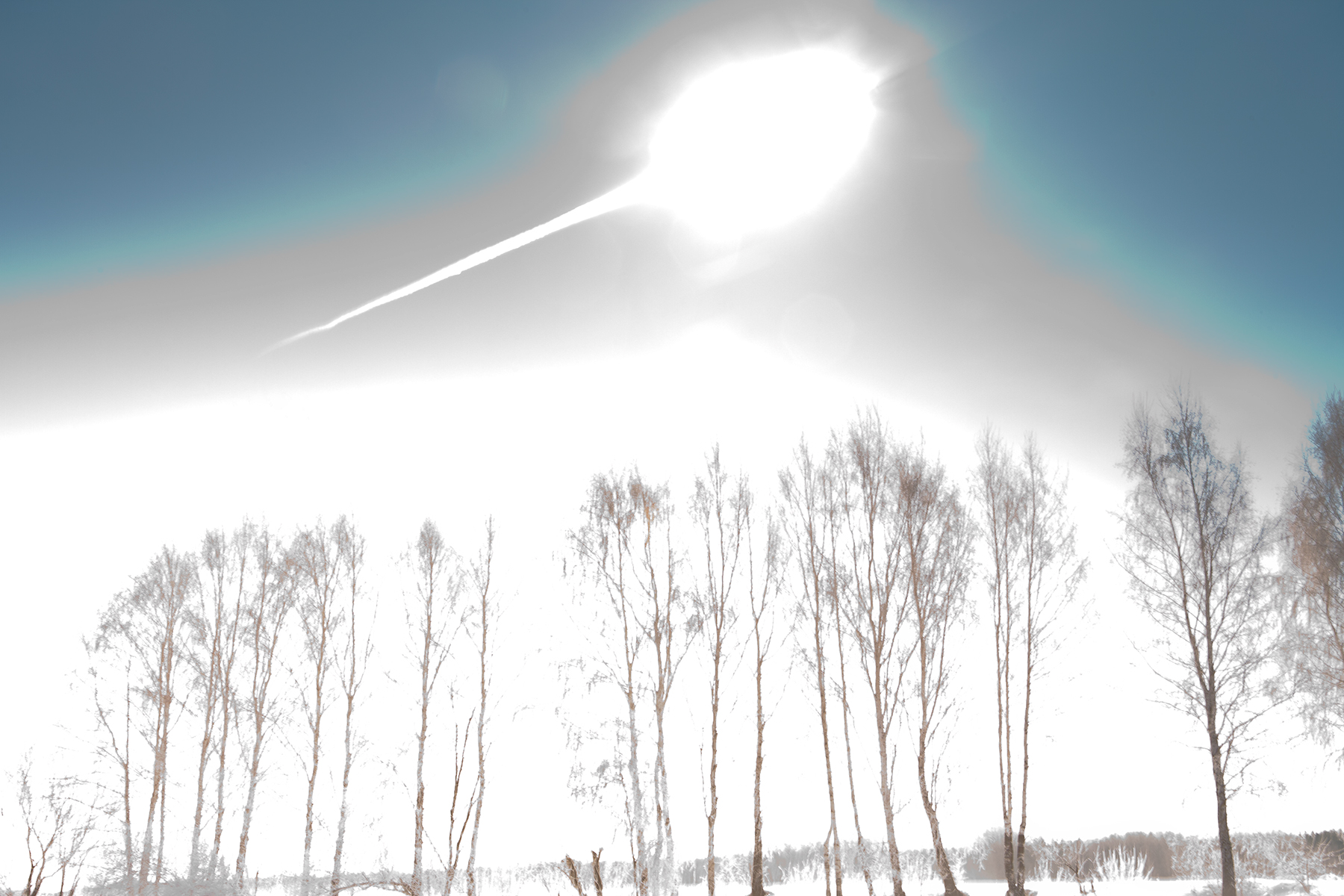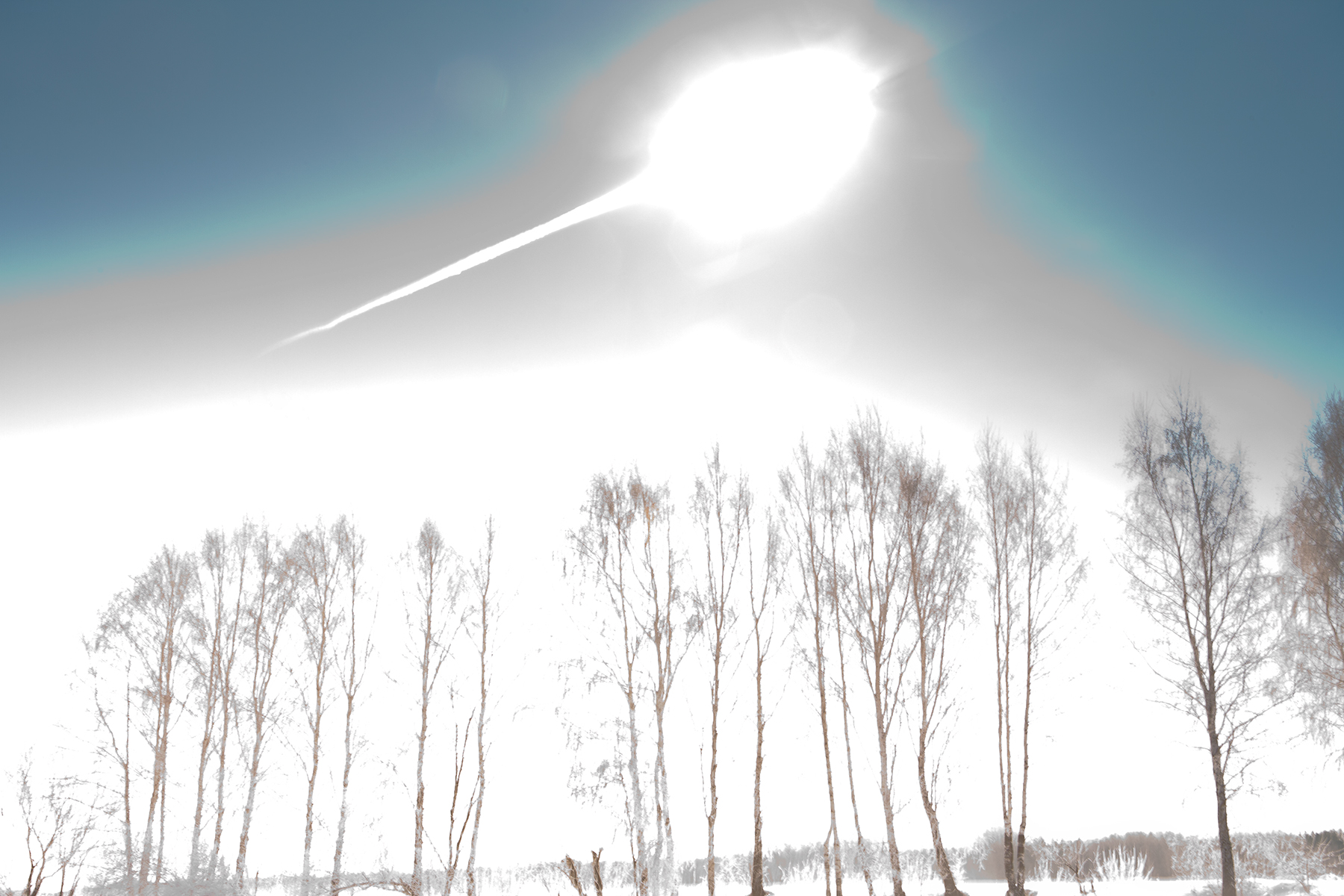
A meteoroid fell to Earth on February 15, streaking some 20 to 30 kilometers above the city of Chelyabinsk, Russia at 9:20am local time. Initially traveling at about 20 kilometers per second, its explosive deceleration after impact with the lower atmosphere created a flash brighter than the Sun. This picture of the brilliant bolide (and others of its persistent trail) was captured by photographer Marat Ametvaleev, surprised during his morning sunrise session creating panoramic images of the nearby frosty landscape. An estimated 500 kilotons of energy was released by the explosion of the 17 meter wide space rock with a mass of 7,000 to 10,000 tons. Actually expected to occur on average once every 100 years, the magnitude of the Chelyabinsk event is the largest known since the Tunguska impact in 1908.
Un meteoroides cayó a la Tierra el 15 de febrero, cruzando aproximadamente 20 a 30 kilómetros sobre la ciudad de Chelyabinsk, Rusia, a las 9:20 a.m. hora local. Inicialmente viajando a unos 20 kilómetros por segundo, su desaceleración explosiva tras impactar con la atmósfera inferior generó un destello más brillante que el Sol. Esta imagen del brillante bolide (y otras de su trayectoria persistente) fue capturada por el fotógrafo Marat Ametvaleev, quien se encontraba sorprendido durante su sesión matutina de amanecer creando imágenes panorámicas del paisaje cercano nevado. Se estima que se liberaron 500 kilotones de energía por la explosión del cuerpo espacial de 17 metros de ancho, con una masa de 7,000 a 10,000 toneladas. En realidad, se espera que un evento de esta magnitud ocurra en promedio una vez cada 100 años, y la magnitud del evento de Chelyabinsk es la más grande conocida desde el impacto de Tunguska en 1908.