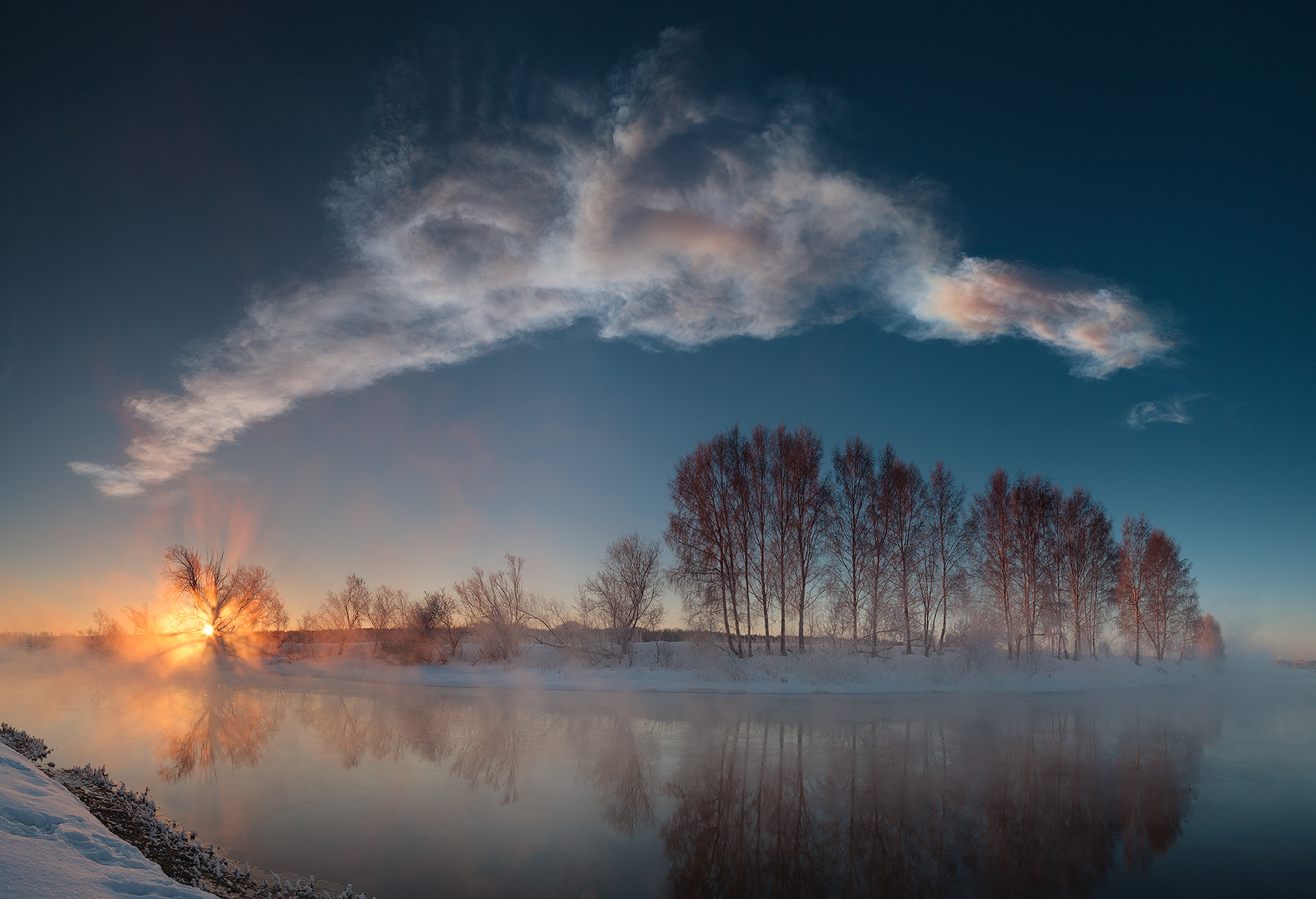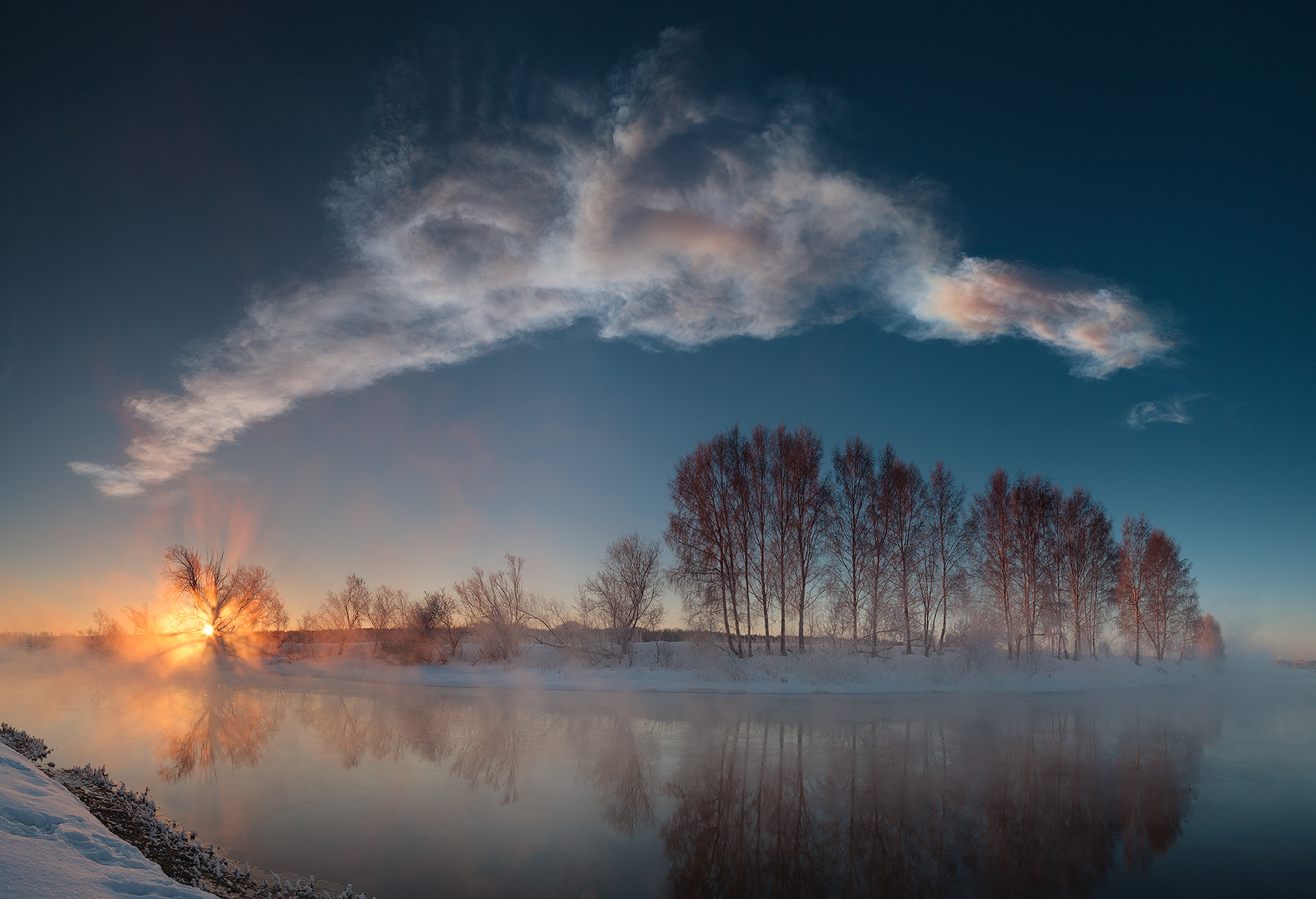
ch day on planet Earth can have a serene beginning at sunrise as the sky gently grows bright over a golden eastern horizon. This sunrise panorama seems to show such a moment on the winter morning of February 15. In the mist, a calm, mirror-like stretch of the Miass River flows through the foreground along a frosty landscape near Chelyabinsk, Russia. But the long cloud wafting through the blue sky above is the evolving persistent train of the Chelyabinsk Meteor. The vapor trail was left by the space rock that exploded over the city only 18 minutes earlier, causing extensive damage and injuring over 1,000 people. A well-documented event, the numerous webcam and dashcam video captures from the region soon contributed to a reconstruction of the meteor's trajectory and an initial orbit determination. Preliminary findings indicate the parent meteoriod belonged to the Apollo class of Earth crossing asteroids.
Cada día en el planeta Tierra puede tener un comienzo sereno al amanecer, cuando el cielo se ilumina suavemente sobre un horizonte oriental dorado. Este panorama de amanecer parece mostrar tal momento durante la mañana de invierno del 15 de febrero. En la niebla, una extensión tranquila y espejada del río Miass fluye a través del primer plano por un paisaje helado cerca de Chelyabinsk, Rusia. Pero la larga nube que se desplaza a través del cielo azul por encima es la evolución de la cola persistente del meteorito de Chelyabinsk. La trayectoria de vapor fue dejada por la roca espacial que estalló sobre la ciudad solo 18 minutos antes, causando daños extensos e hiriendo a más de 1,000 personas. Un evento bien documentado, las numerosas grabaciones de videocámaras y cámaras de seguridad de la región pronto contribuyeron a la reconstrucción de la trayectoria del meteorito y a una determinación inicial de su órbita. Los hallazgos preliminares indican que el meteorito progenitor pertenecía a la clase Apollo de asteroides que cruzan la órbita terrestre.