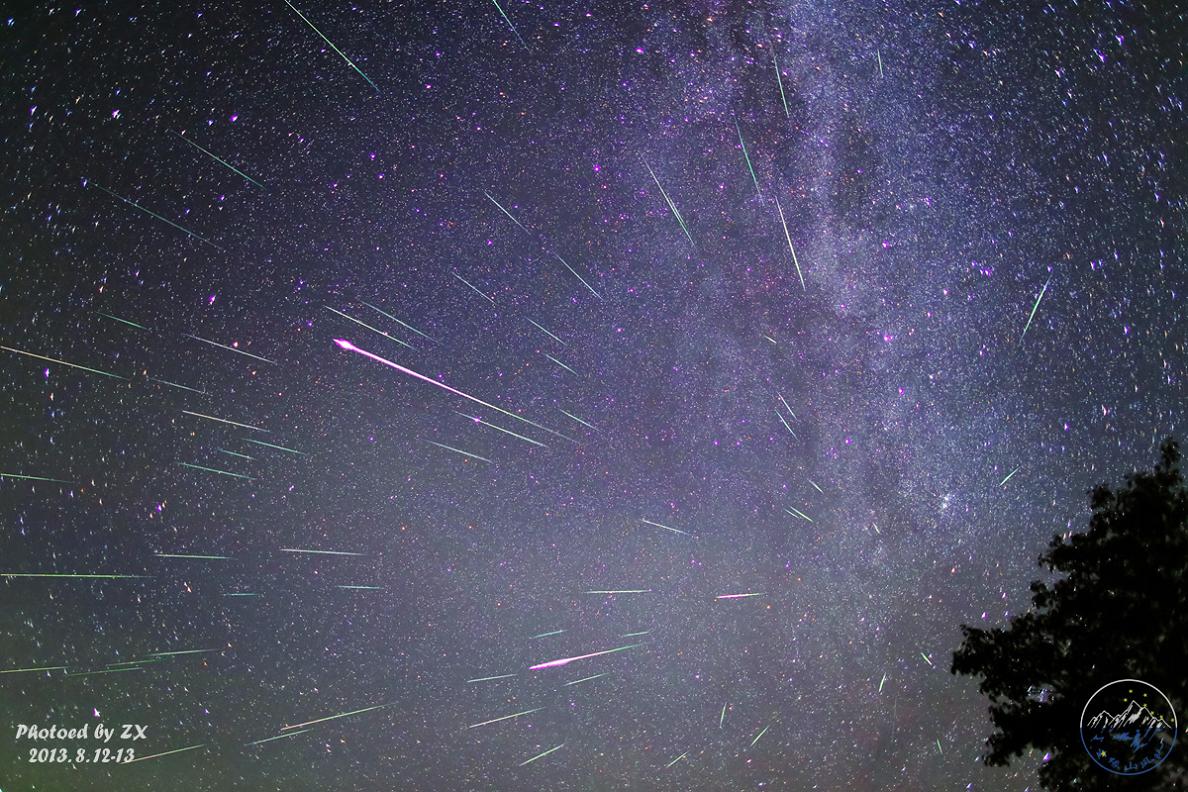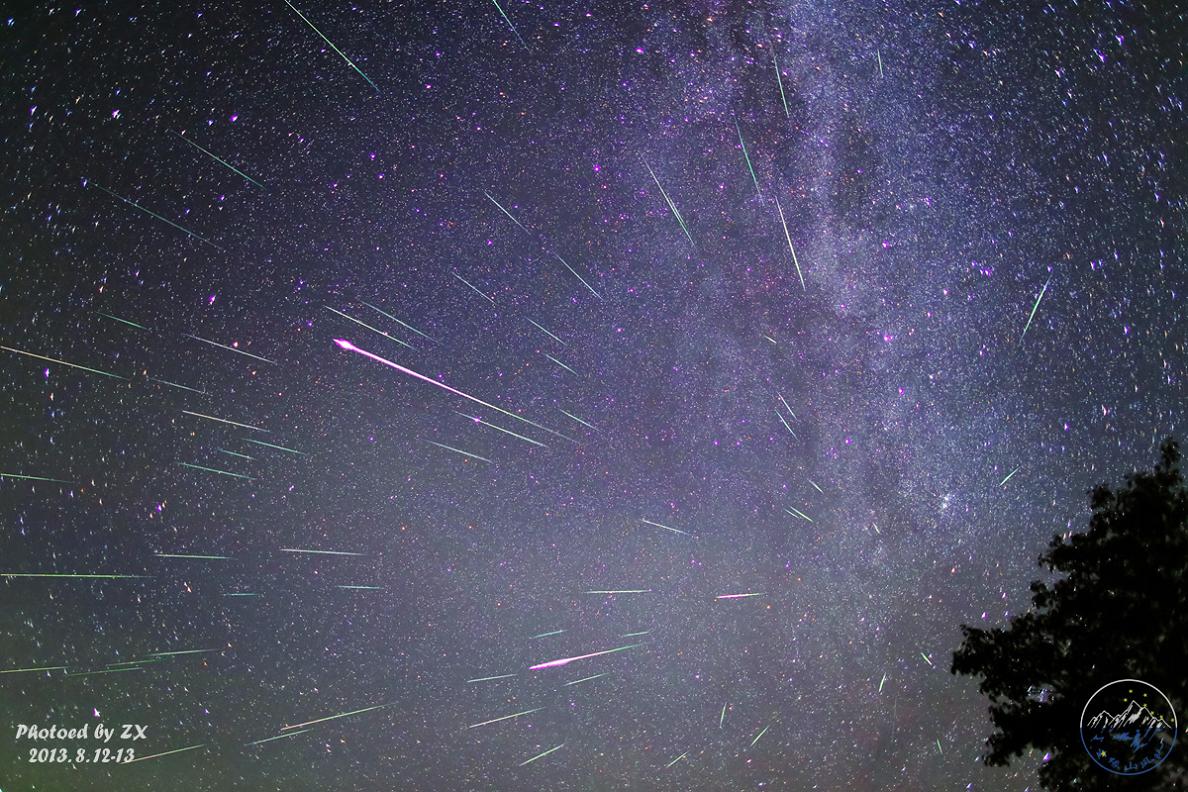
Comet dust rained down on planet Earth earlier this month, streaking through dark skies in the annual Perseid meteor shower. While enjoying the anticipated space weather above Zhangbei Prairie, Hebei Province, China, astronomer Xiang Zhan recorded a series of 10 second long exposures spanning four hours on the night of August 12/13 using a wide angle lens. Combining frames which captured 68 meteor flashes, he produced the above composite view of the Perseids of summer. Although the sand-sized comet particles are traveling parallel to each other, the resulting shower meteors clearly seem to radiate from a single point on the sky in the eponymous constellation Perseus. The radiant effect is due to perspective, as the parallel tracks appear to converge at a distance. The next notable meteor shower may be the Orionids in late October. Gallery: Highlights of the 2013 Perseids Meteor Shower
Polvo cometario cayó sobre la Tierra durante este mes, trazando destellos a través del cielo oscuro en la lluvia de meteoros anual de Perseo. Mientras disfrutaba del esperado clima espacial sobre la Pradera de Zhangbei, provincia de Hebei, China, el astrónomo Xiang Zhan registró una serie de exposiciones de 10 segundos cada una, que abarcaron cuatro horas durante la noche del 12/13 de agosto, utilizando un objetivo de gran angular. Combinando imágenes que capturaron 68 destellos de meteoros, produjo la vista compuesta anterior de los meteoros de verano de Perseo. Aunque las partículas cometarias del tamaño de granos de arena viajan en paralelo entre sí, los meteoros resultantes de la lluvia claramente parecen radiar desde un solo punto en el cielo, en la constelación homónima de Perseo. El efecto de radiante se debe a la perspectiva, ya que las trayectorias paralelas parecen converger a una distancia. La próxima lluvia de meteoros notable podría ser la de Orión en octubre tardío.