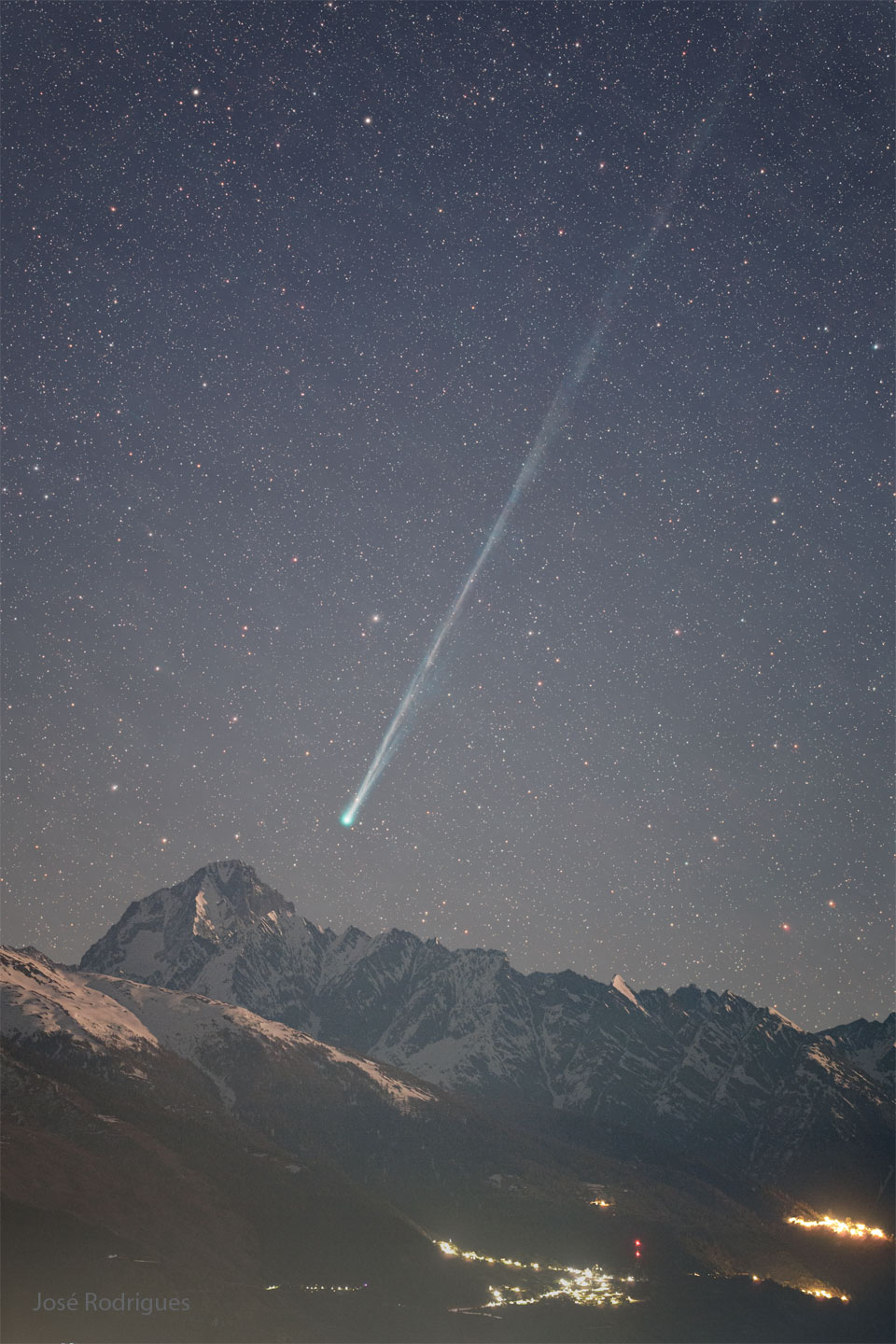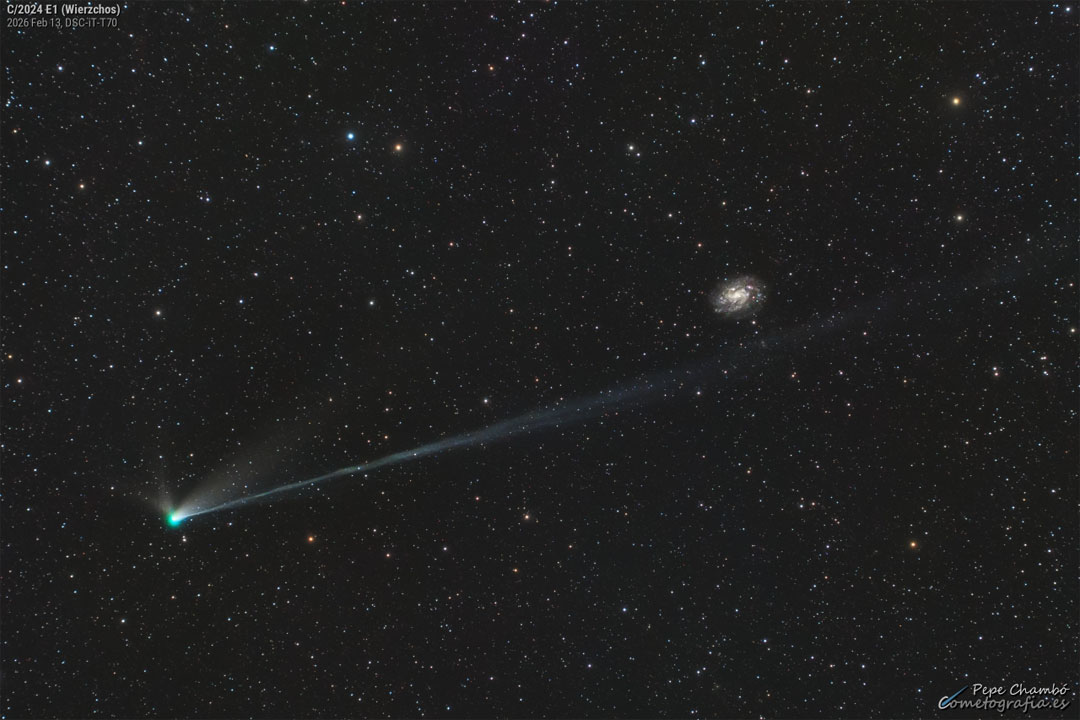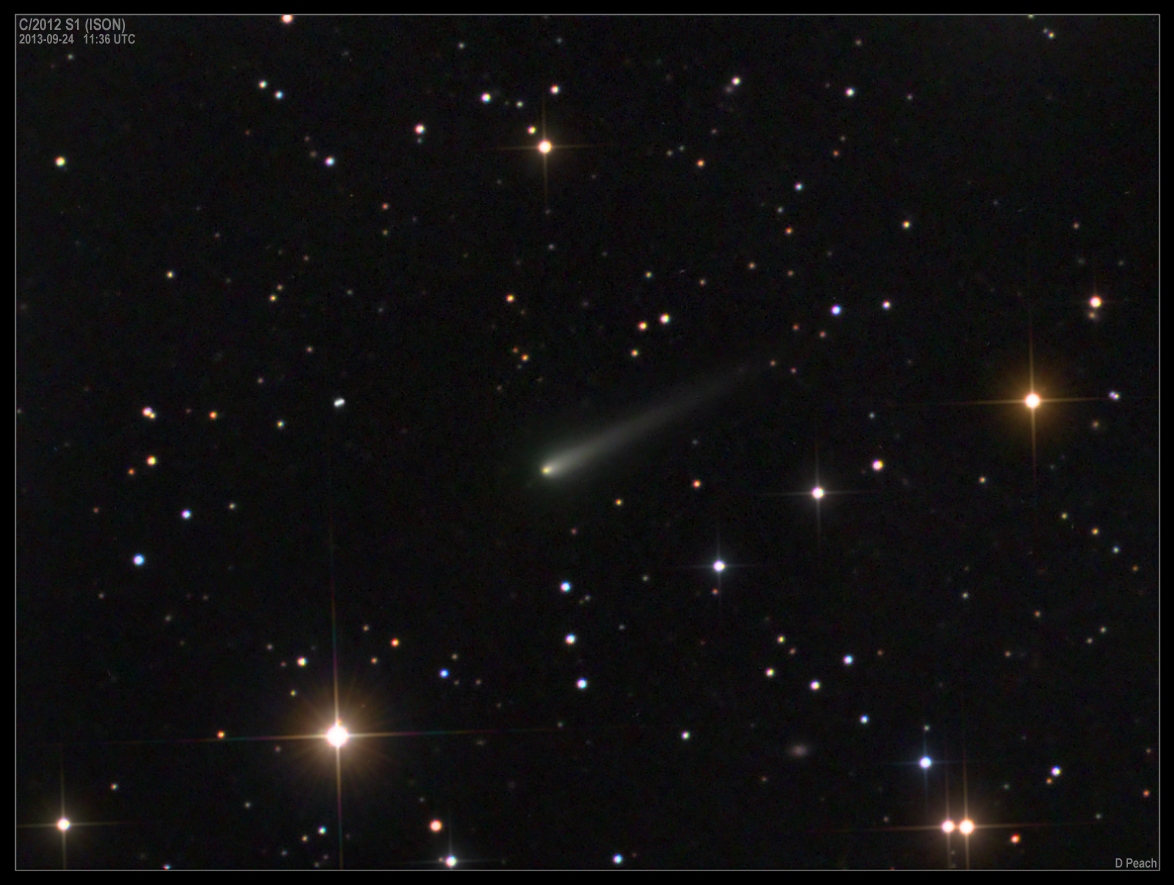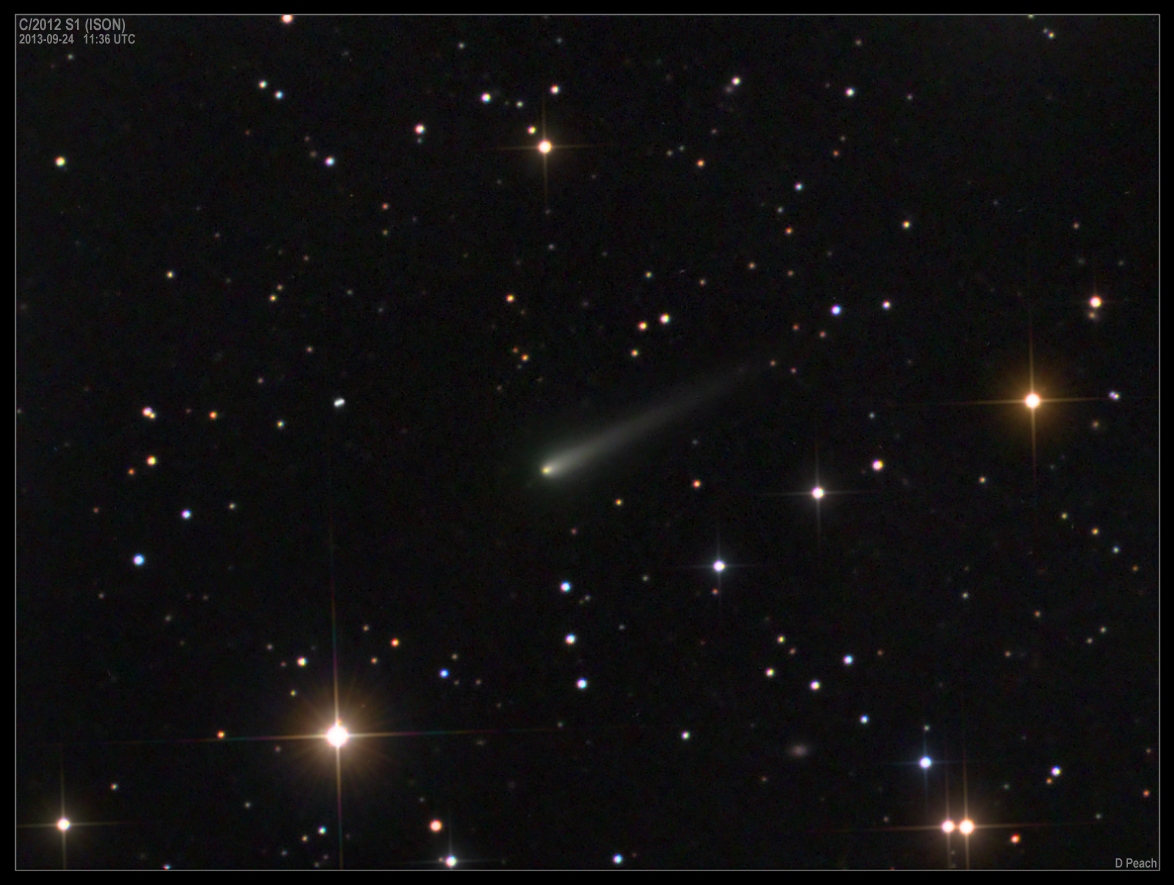
How impressive will Comet ISON become? No one is sure, but unfortunately, as the comet approaches the inner Solar System, it is brightening more slowly than many early predictions. Pictured above, Comet ISON is seen about two weeks ago as it continued to develop a tail. Last week the comet passed relatively close to Mars, and was directly imaged by the Mars Reconnaissance Orbiter. When Comet ISON dives to within a few solar radii of the Sun's surface in late November, it may become brighter than the Moon and sport a long and flowing tail -- or it may appear somewhat less spectacular. Either way, sky enthusiasts hope that whatever comet parts survive will put on quite an impressive show, as viewed from Earth, through at least the rest of the year.
¿Cuán impresionante se volverá el Cometa ISON? Nadie está seguro, pero desafortunadamente, a medida que el cometa se acerca al sistema solar interno, su brillo aumenta más lentamente de lo que muchas predicciones tempranas sugirieron. En la imagen de arriba, el Cometa ISON se ve aproximadamente hace dos semanas, mientras seguía desarrollando una cola. La semana pasada, el cometa pasó relativamente cerca de Marte y fue captado directamente por la sonda Mars Reconnaissance Orbiter. Cuando el Cometa ISON se acerque a menos de unas pocas radios solares de la superficie del Sol a finales de noviembre, podría volverse más brillante que la Luna y mostrar una larga y fluida cola — o podría parecer algo menos espectacular. De cualquier manera, los entusiastas del cielo esperan que las partes del cometa que sobrevivan ofrezcan una espectacular exhibición, vista desde la Tierra, al menos durante el resto del año.