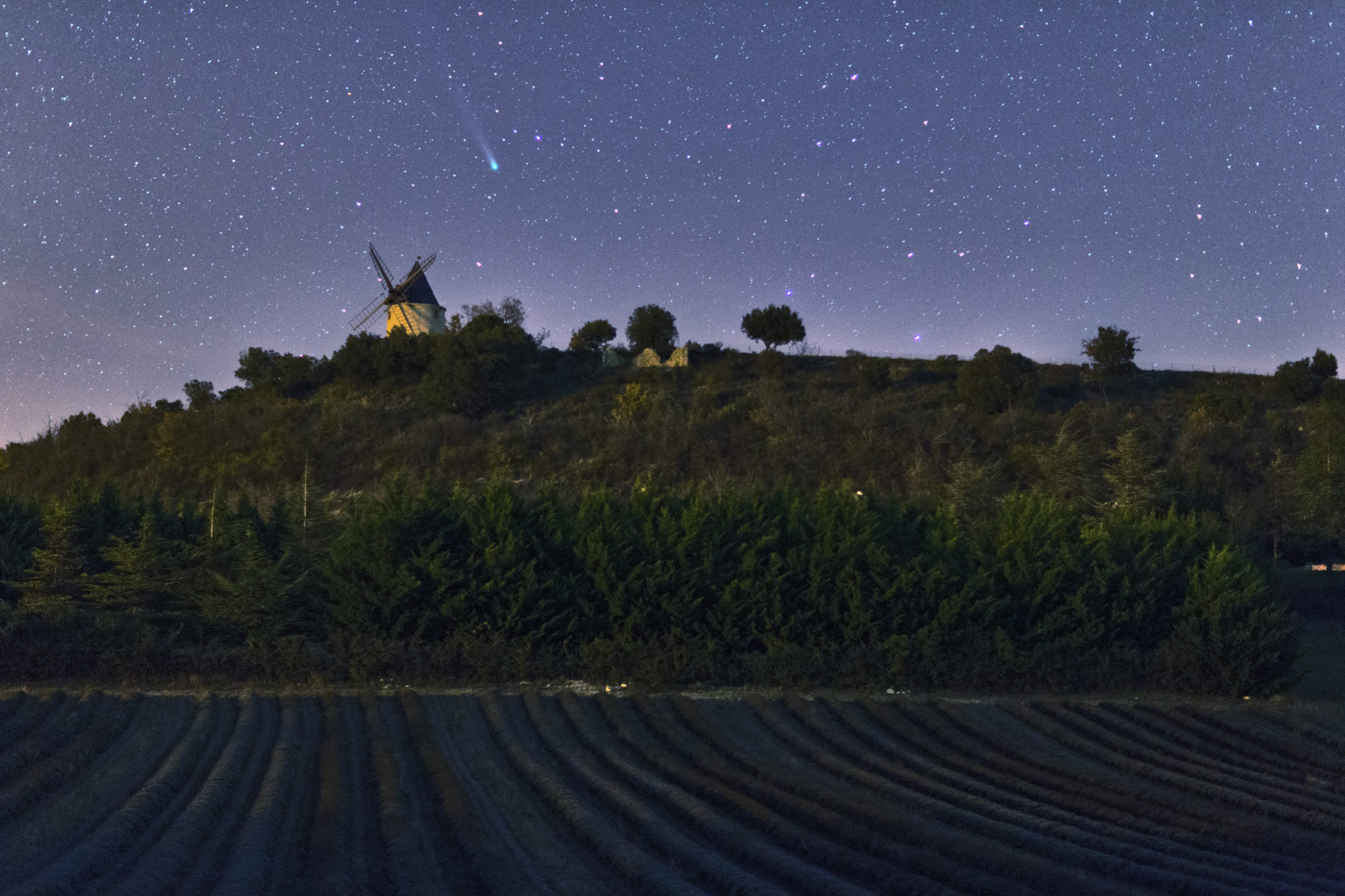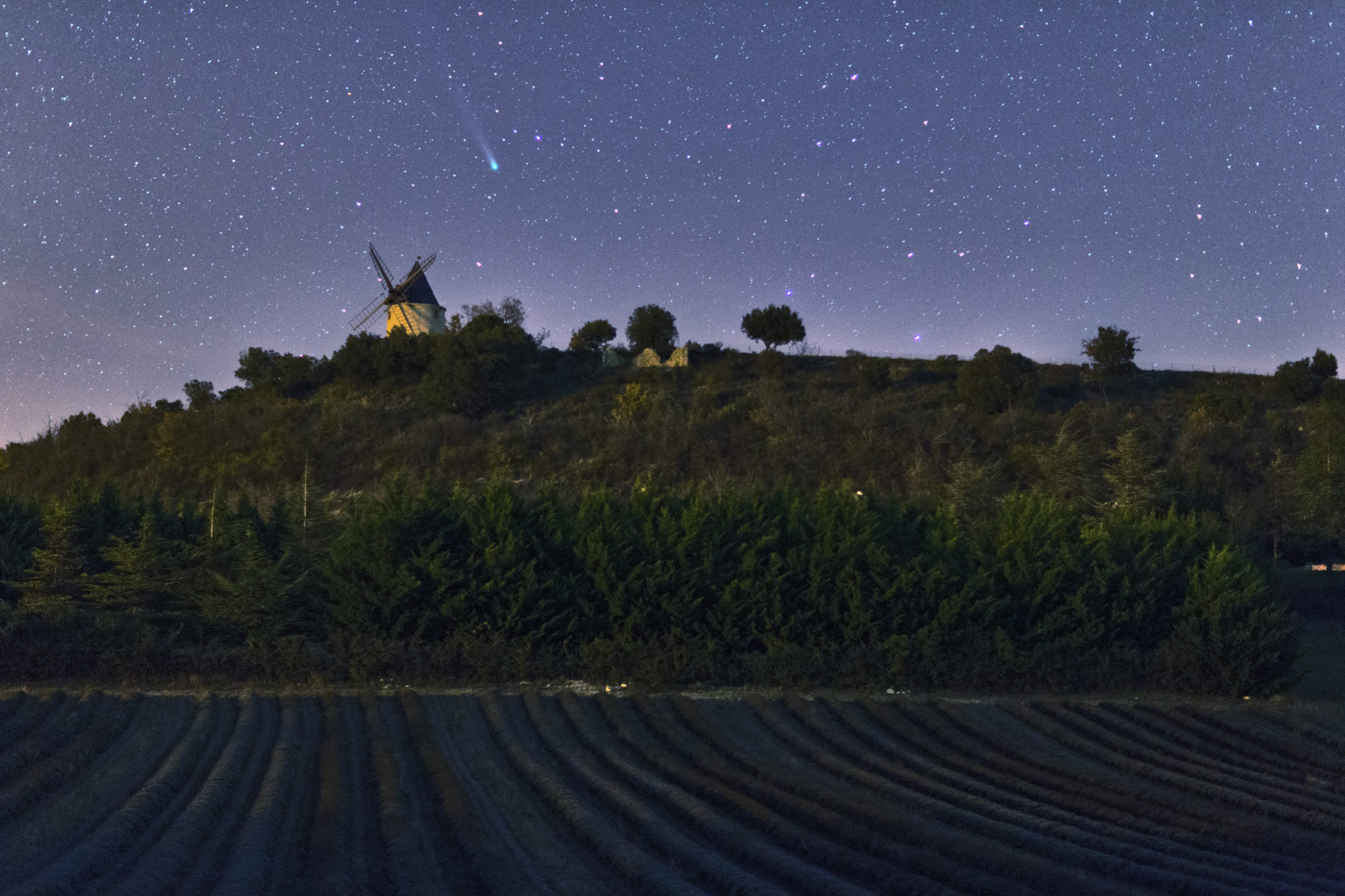
Lovejoy continues to be an impressive camera comet. Pictured above, Comet C/2013 R1 (Lovejoy) was imaged above the windmill in Saint-Michel-l'Observatoire in southern France with a six-second exposure. In the foreground is a field of lavender. Comet Lovejoy should remain available for photo opportunities for northern observers during much of December and during much of the night, although it will be fading as the month progresses and highest in the sky before sunrise. In person, the comet will be best viewed with binoculars. A giant dirty snowball, Comet Lovejoy last visited the inner Solar System about 7,000 years ago, around the time that humans developed the wheel. Budget Universe: Free APOD 2014 Calendar in PDF format
El Cometa Lovejoy sigue siendo un cometa impresionante para la fotografía. En la imagen de arriba, el Cometa C/2013 R1 (Lovejoy) fue capturado sobre el molino de viento en Saint-Michel-l'Observatoire en el sur de Francia con una exposición de seis segundos. En primer plano se observa un campo de lavanda. El Cometa Lovejoy seguirá siendo visible para los observadores del norte durante gran parte de diciembre y durante gran parte de la noche, aunque irá desvaneciéndose a medida que avance el mes y alcanzará su punto más alto en el cielo antes del amanecer. En persona, el cometa se verá mejor con binoculares. Un gran bolo de nieve sucio, el Cometa Lovejoy visitó por última vez el sistema solar interior hace aproximadamente 7,000 años, alrededor del tiempo en que los humanos desarrollaron la rueda.