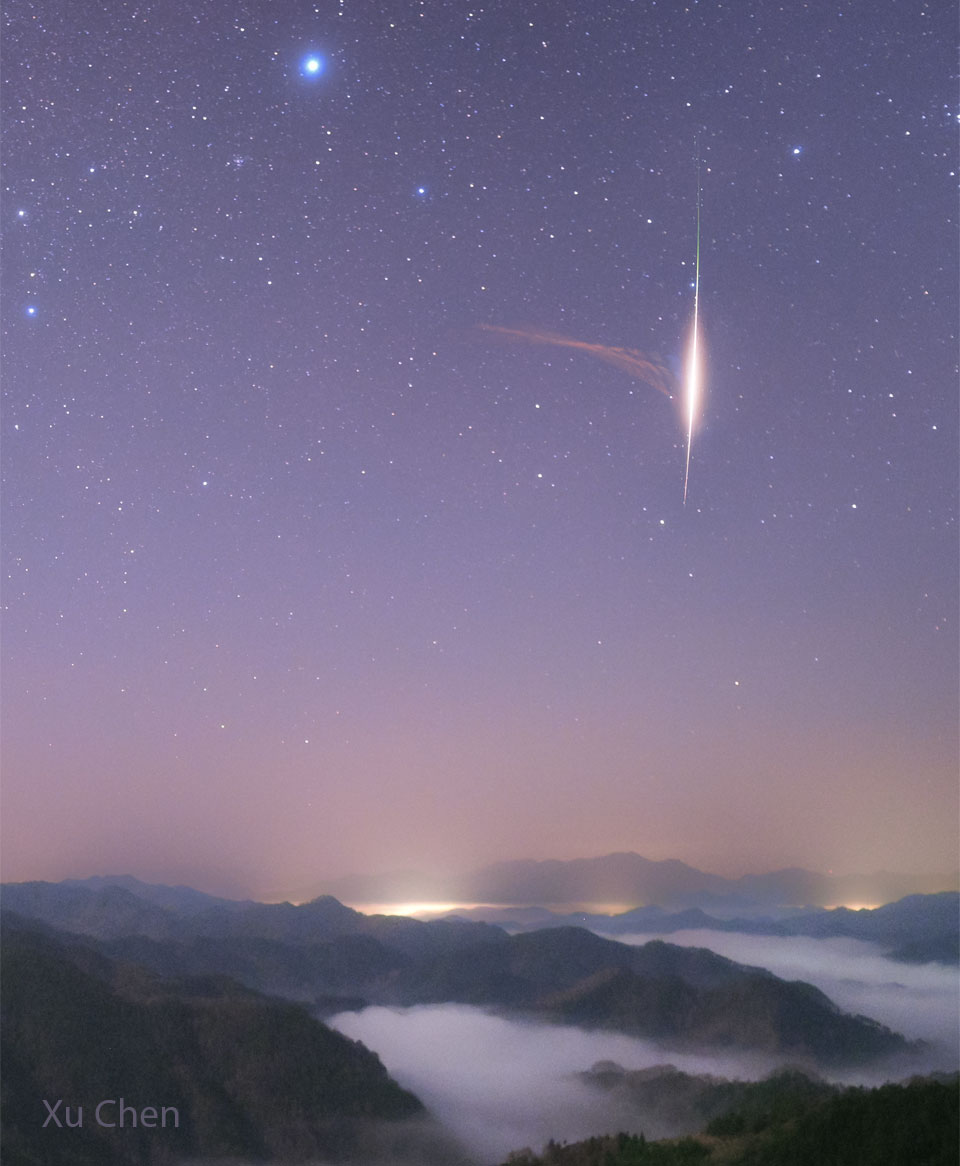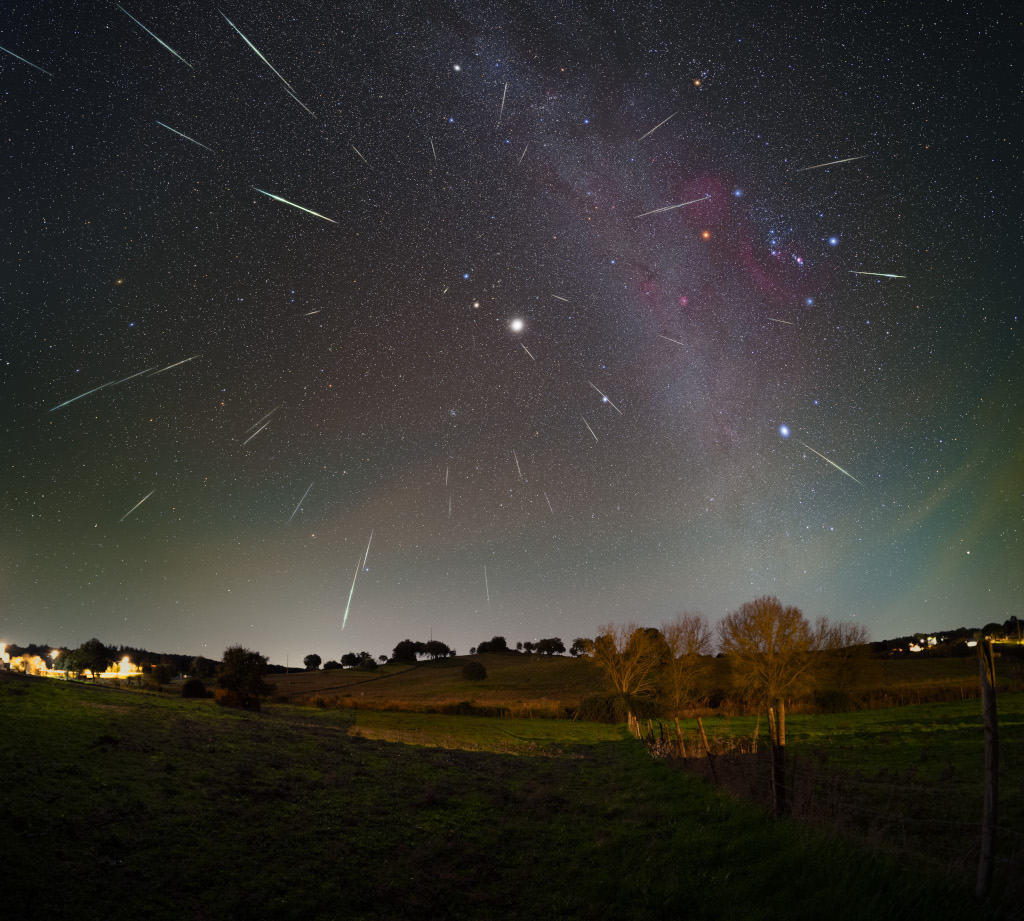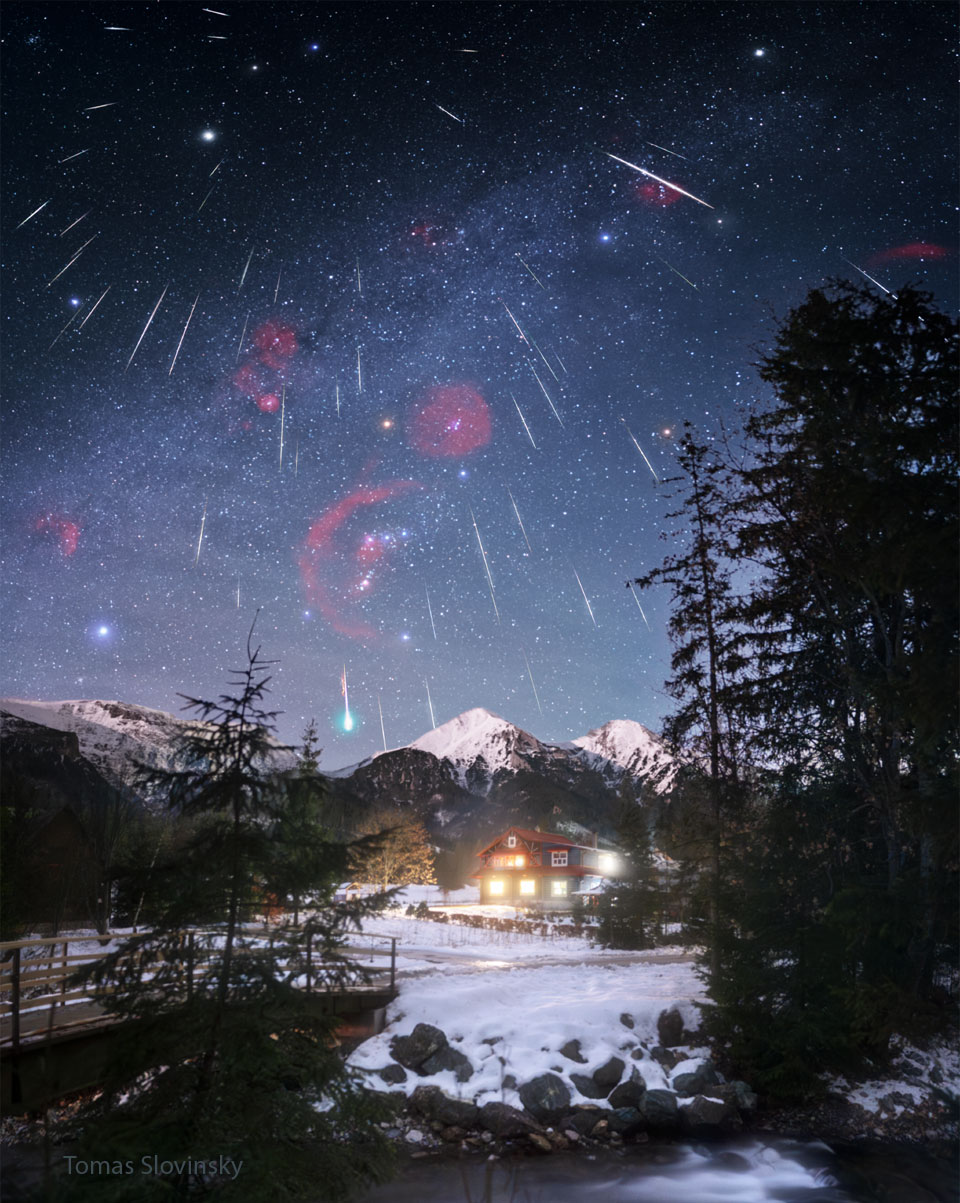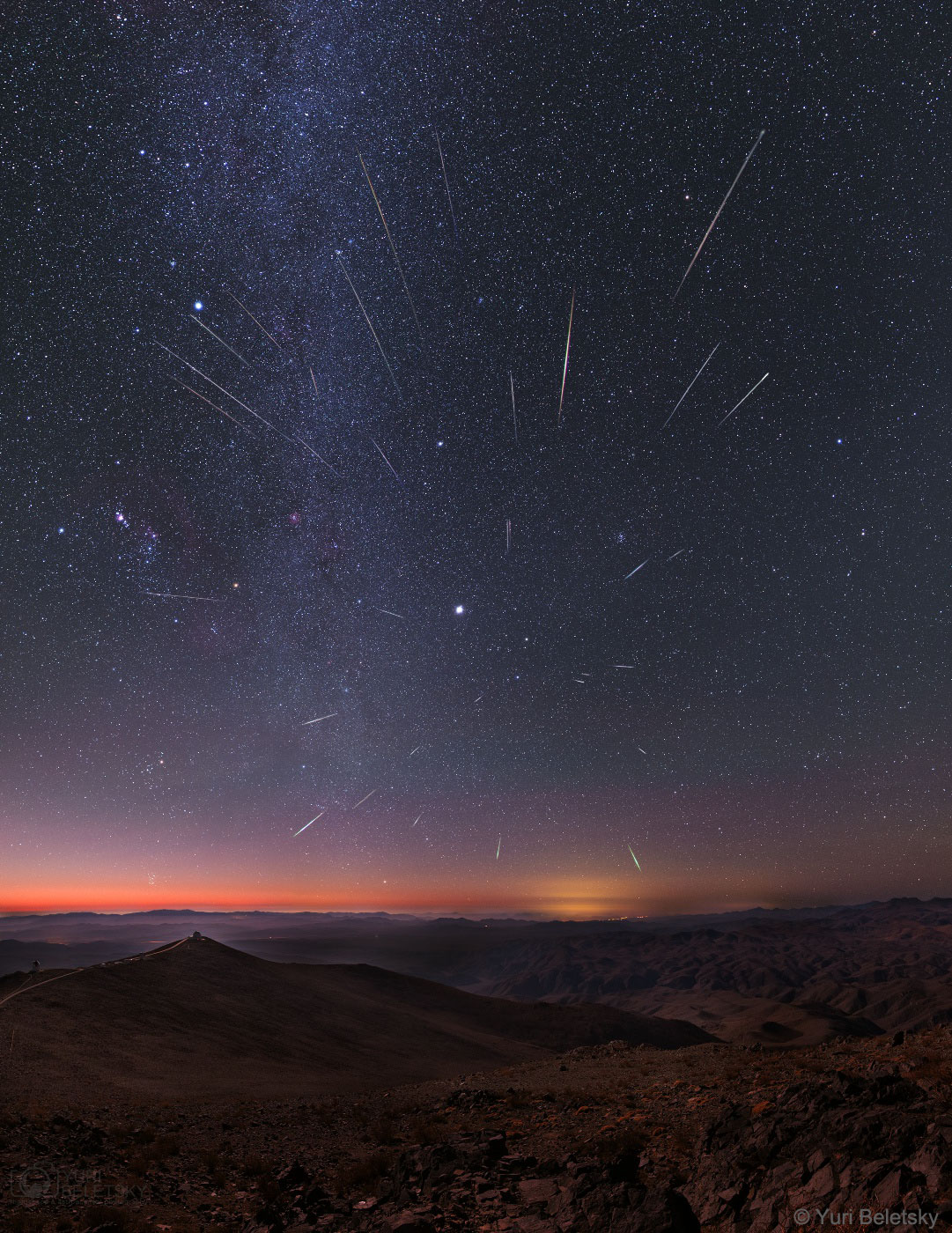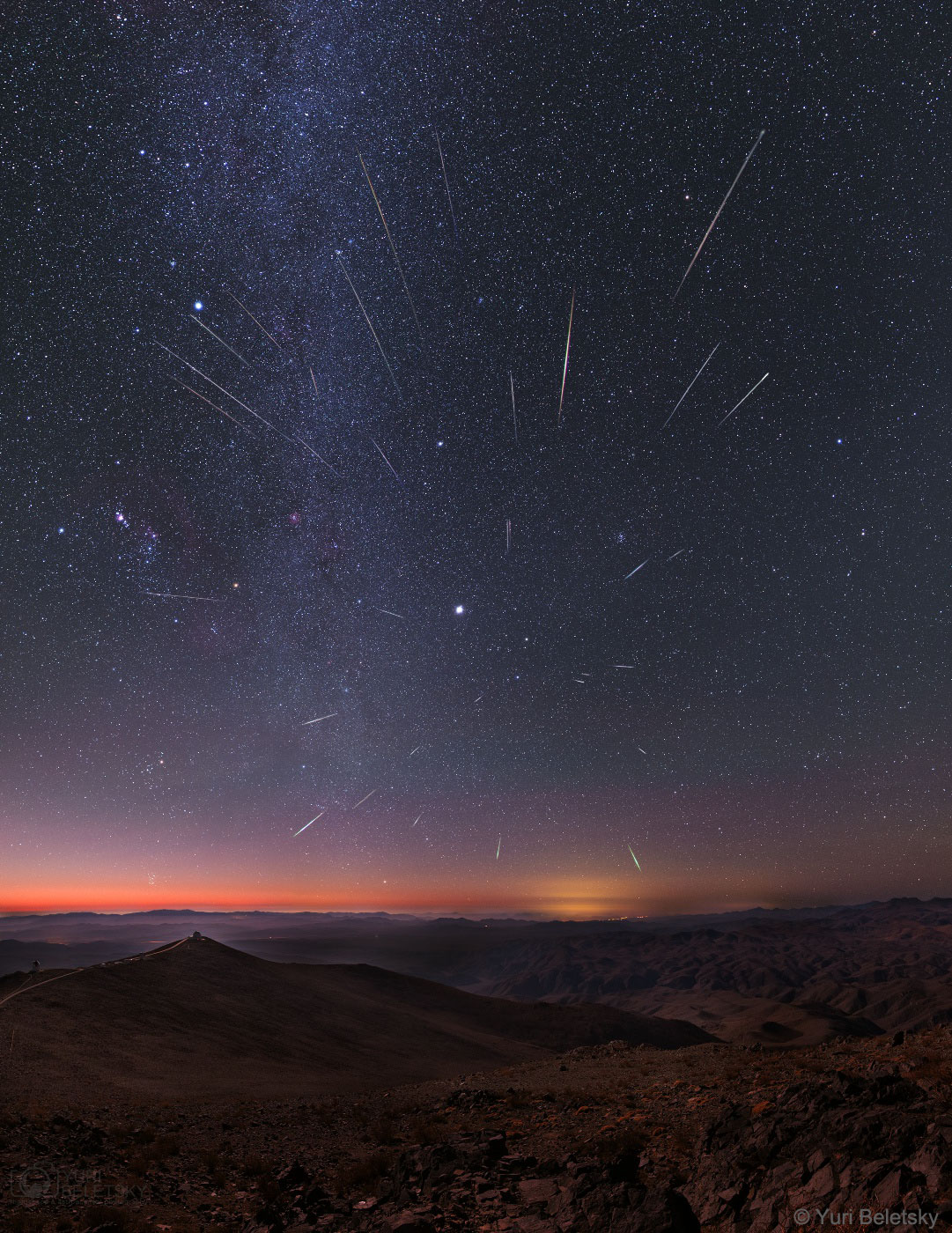
From a radiant point in the constellation of the Twins, the annual Geminid meteor shower rained down on planet Earth over the past few weeks. Recorded near the shower's peak over the night of December 13 and 14, the above skyscape captures Gemini's shooting stars in a four-hour composite from the dark skies of the Las Campanas Observatory in Chile. In the foreground the 2.5-meter du Pont Telescope is visible as well as the 1-meter SWOPE telescope. The skies beyond the meteors are highlighted by Jupiter, seen as the bright spot near the image center, the central band of our Milky Way Galaxy, seen vertically on the image left, and the pinkish Orion Nebula on the far left. Dust swept up from the orbit of active asteroid 3200 Phaethon, Gemini's meteors enter the atmosphere traveling at about 22 kilometers per second. Free lecture: APOD editor to speak in New York City on Jan. 3
Desde un punto de radiación en la constelación de los Gemelos, la lluvia de meteoros anual de las Géminidas cayó sobre la Tierra durante las últimas semanas. Capturado durante la noche del 13 al 14 de diciembre, en el pico de la lluvia, el paisaje celeste mostrado arriba captura las estrellas fugaces de Géminidas en una composición de cuatro horas tomada desde los cielos oscuros del Observatorio Las Campanas en Chile. En primer plano se puede ver el telescopio du Pont de 2,5 metros, así como el telescopio SWOPE de 1 metro. El cielo más allá de los meteoros se destaca por Júpiter, visible como el punto brillante cerca del centro de la imagen, la banda central de nuestra Galaxia de la Vía Láctea, visible verticalmente a la izquierda de la imagen, y la nebulosa de Orión de tonalidad rosada en el extremo izquierdo. El polvo recogido de la órbita del asteroide activo 3200 Phaethon, los meteoros de Géminidas entran a la atmósfera viajando a aproximadamente 22 kilómetros por segundo.