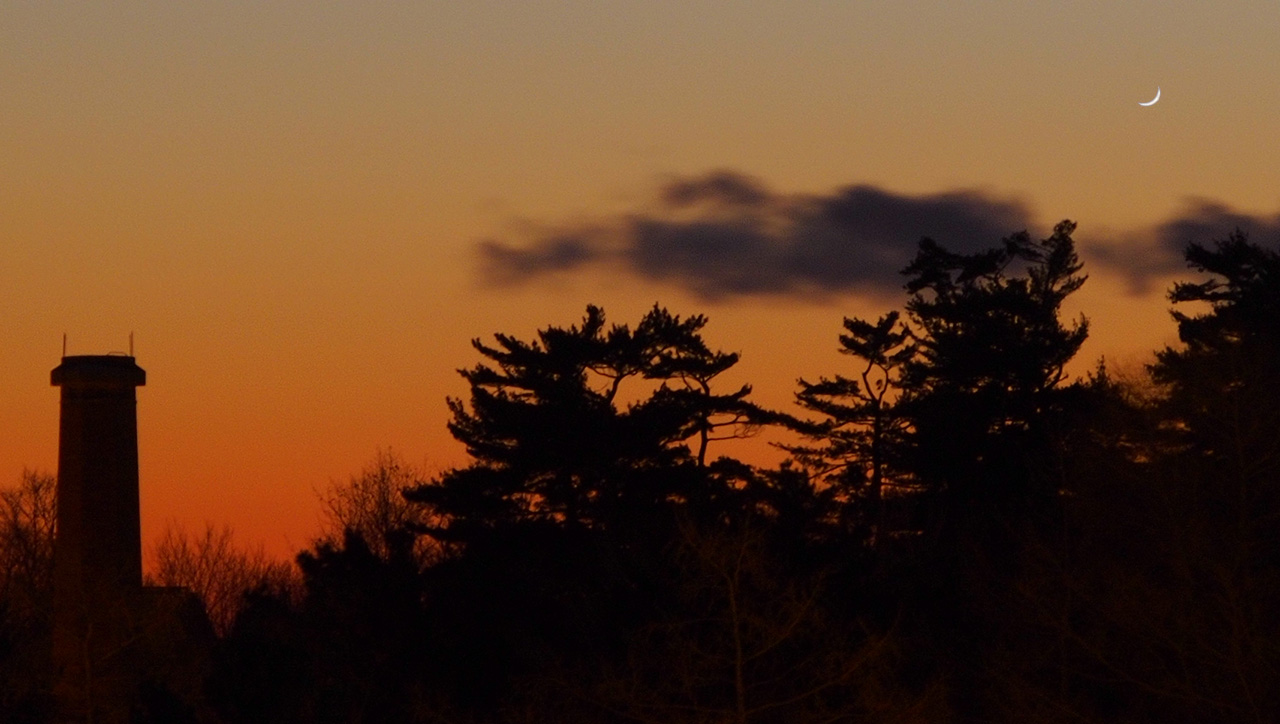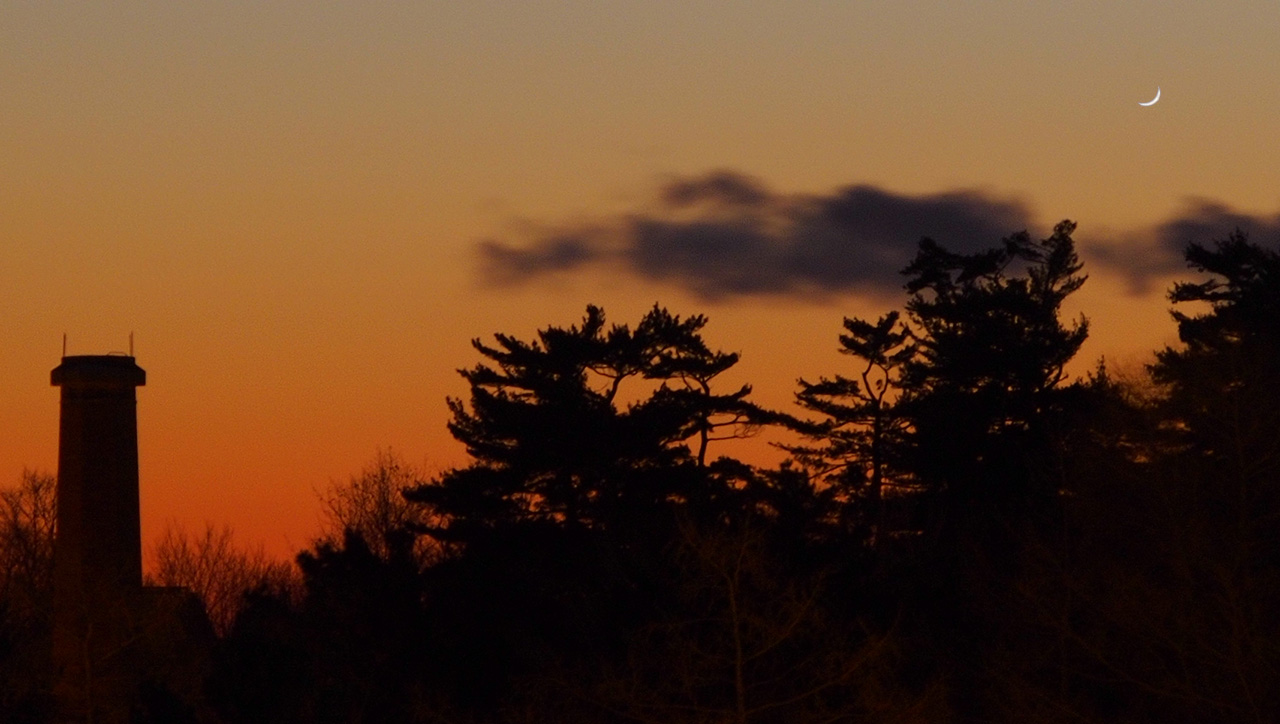
That's not the young crescent Moon poised above the western horizon at sunset. Instead it's Venus in a crescent phase, captured with a long telephoto lens from Quebec City, Canada, planet Earth on a chilly December 30th evening. The very bright celestial beacon is dropping lower into the evening twilight every day. But it also grows larger in apparent size and becomes a steadily thinner crescent in binocular views as it heads toward an inferior conjunction, positioned between the Earth and the Sun on January 11. The next few evenings will see a young crescent Moon join the crescent Venus in the western twilight, though. Historically, the first observations of the phases of Venus were made by Galileo with his telescope in 1610, evidence consistent with the Copernican model of the Solar System, but not the Ptolemaic system.
Esa no es la joven luna creciente que se encuentra sobre el horizonte occidental al atardecer. En cambio, es Venus en fase creciente, capturado con un teleobjetivo de gran alcance desde la ciudad de Quebec, Canadá, en la Tierra, durante una fría noche del 30 de diciembre. El brillante faro celeste está descendiendo cada día más hacia el crepúsculo vespertino. Sin embargo, también aumenta su tamaño aparente y se vuelve un creciente cada vez más delgado en vistas con binoculares, a medida que se acerca a una conjunción inferior, posicionándose entre la Tierra y el Sol el 11 de enero. En los próximos días, un joven cuarto creciente de la Luna se unirá al creciente de Venus en el crepúsculo occidental. Históricamente, las primeras observaciones de las fases de Venus fueron realizadas por Galileo con su telescopio en 1610, evidencia coherente con el modelo copernicano del Sistema Solar, pero no con el sistema ptolomeico.