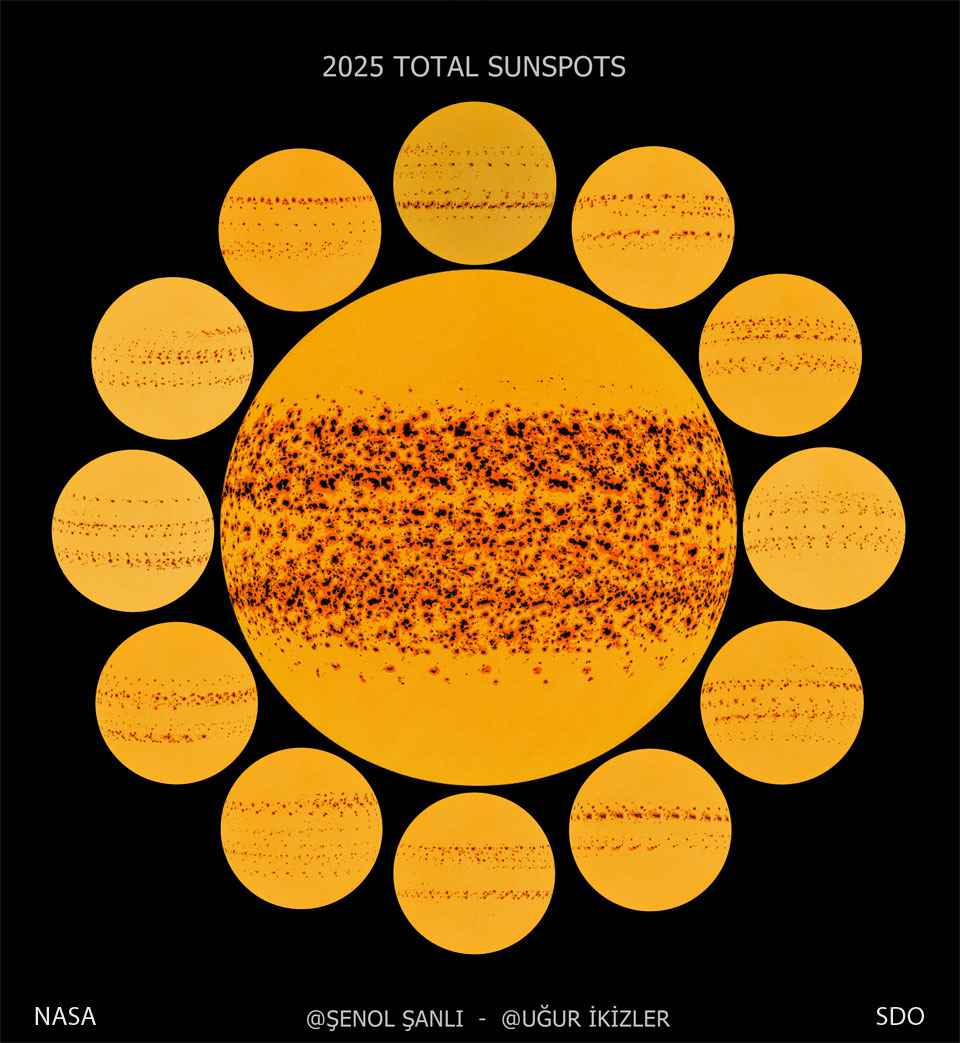
Does the Sun change as it rotates? Yes, and the changes can vary from subtle to dramatic. In the above time-lapse sequences, our Sun -- as imaged by NASA's Solar Dynamics Observatory -- is shown rotating though the entire month of January. In the large image on the left, the solar chromosphere is depicted in ultraviolet light, while the smaller and lighter image to its upper right simultaneously shows the more familiar solar photosphere in visible light. The rest of the inset six Sun images highlight X-ray emission by relatively rare iron atoms located at different heights of the corona, all false-colored to accentuate differences. The Sun takes just under a month to rotate completely -- rotating fastest at the equator. A large and active sunspot region rotates into view soon after the video starts. Subtle effects include changes in surface texture and the shapes of active regions. Dramatic effects include numerous flashes in active regions, and fluttering and erupting prominences visible all around the Sun's edge. This year our Sun is near its Solar maximum activity of its 11-year magnetic cycle. As the video ends, the same large and active sunspot region previously mentioned rotates back into view, this time looking different.
¿El Sol cambia al girar? Sí, y esos cambios pueden variar desde sutiles hasta dramáticos. En las secuencias de imágenes en tiempo acelerado mostradas arriba, nuestro Sol — tal como lo capturó la Observatorio de Dinámica Solar de NASA — se muestra girando durante todo el mes de enero. En la imagen grande de la izquierda, se representa la cromosfera solar en luz ultravioleta, mientras que la imagen más pequeña y clara de su parte superior derecha muestra simultáneamente la más familiar fotosfera solar en luz visible. El resto de las seis imágenes insertadas resaltan la emisión en rayos X producida por átomos de hierro relativamente raros ubicados a diferentes alturas de la corona, todos false-colorados para resaltar diferencias. El Sol tarda apenas un mes en completar una rotación — rotando más rápido en el ecuador. Una gran y activa región de manchas solares entra en vista poco después de que comienza el video. Los efectos sutiles incluyen cambios en la textura de la superficie y las formas de las regiones activas. Los efectos dramáticos incluyen numerosas chispas en las regiones activas, y prominencias que se mueven y estallan visibles alrededor del borde del Sol. Este año, el Sol se encuentra cerca del máximo de actividad de su ciclo magnético de 11 años. Al finalizar el video, la misma gran y activa región de manchas solares mencionada anteriormente vuelve a entrar en vista, esta vez luciendo diferente.