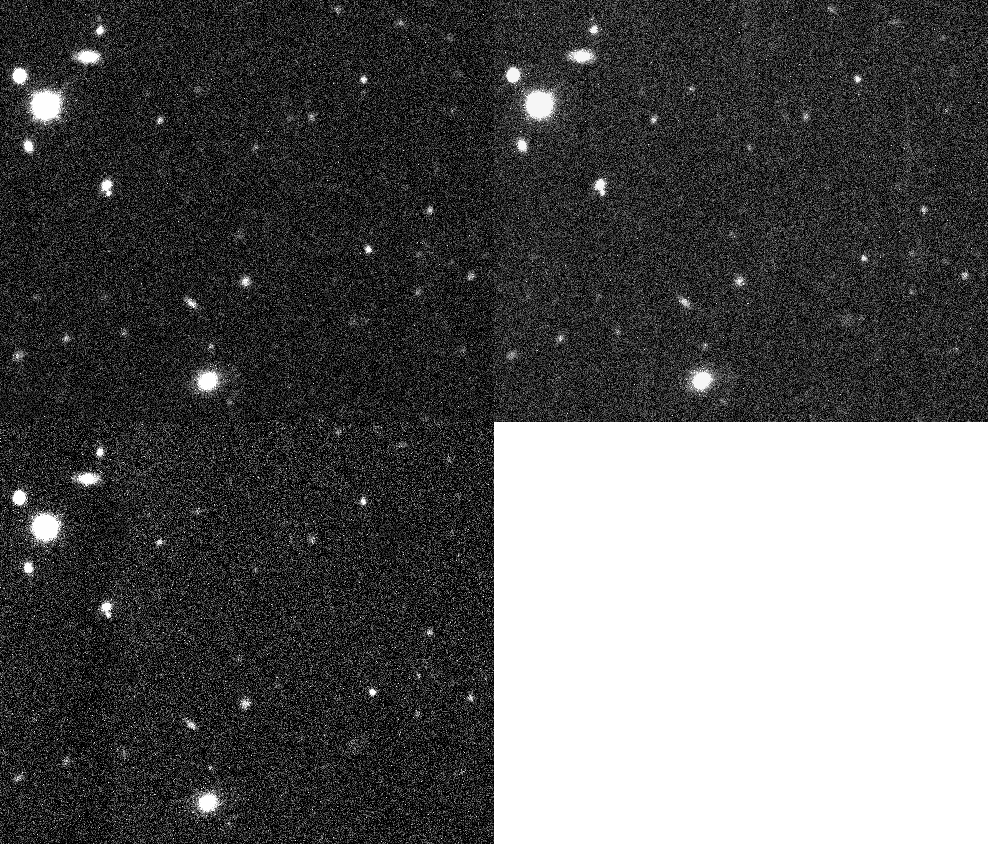
What object has the furthest known orbit in our Solar System? In terms of how close it will ever get to the Sun, the new answer is 2012 VP113, an object currently over twice the distance of Pluto from the Sun. Pictured above is a series of discovery images taken with the Dark Energy Camera attached to the NOAO's Blanco 4-meter Telescope in Chile in 2012 and released last week. The distant object, seen moving on the lower right, is thought to be a dwarf planet like Pluto. Previously, the furthest known dwarf planet was Sedna, discovered in 2003. Given how little of the sky was searched, it is likely that as many as 1,000 more objects like 2012 VP113 exist in the outer Solar System. 2012 VP113 is currently near its closest approach to the Sun, in about 2,000 years it will be over five times further. Some scientists hypothesize that the reason why objects like Sedna and 2012 VP113 have their present orbits is because they were gravitationally scattered there by a much larger object -- possibly a very distant undiscovered planet.
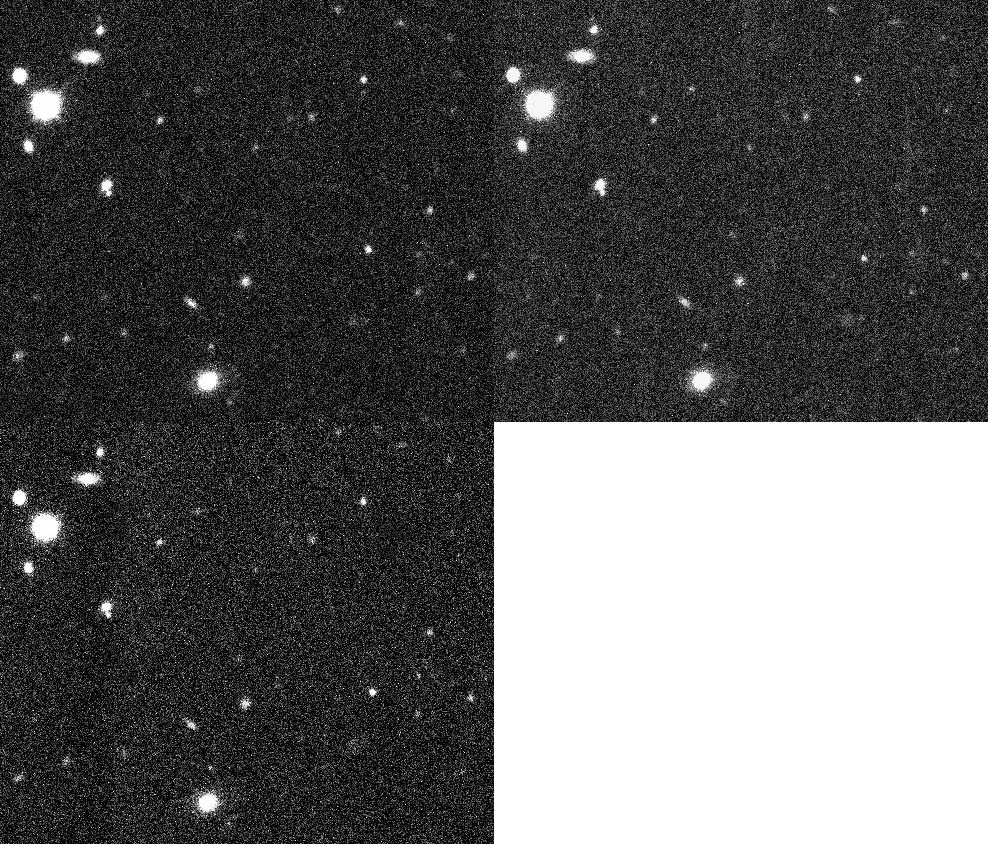
¿Qué objeto tiene la órbita más alejada conocida en nuestro Sistema Solar? En términos de cuán cerca llegará alguna vez al Sol, la nueva respuesta es 2012 VP113, un objeto actualmente ubicado a más del doble de la distancia de Plutón respecto al Sol. La imagen mostrada es una serie de imágenes de descubrimiento tomadas con la Cámara de Energía Oscura, adjunta al Telescopio Blanco de 4 metros de la NOAO en Chile en 2012 y liberadas la semana pasada. El objeto distante, visible moviéndose en la parte inferior derecha, se cree que es un planeta enano similar a Plutón. Antes, el planeta enano más alejado conocido era Sedna, descubierto en 2003. Dado cuán poco del cielo se ha explorado, es probable que existan hasta 1000 objetos más como 2012 VP113 en el Sistema Solar exterior. Actualmente, 2012 VP113 está cerca de su acercamiento más cercano al Sol, pero en aproximadamente 2000 años estará más de cinco veces más lejos. Algunos científicos hipotetizan que la razón por la cual objetos como Sedna y 2012 VP113 tienen sus órbitas actuales es porque fueron dispersados gravitacionalmente allí por un objeto mucho más grande — posiblemente un planeta muy distante aún no descubierto.