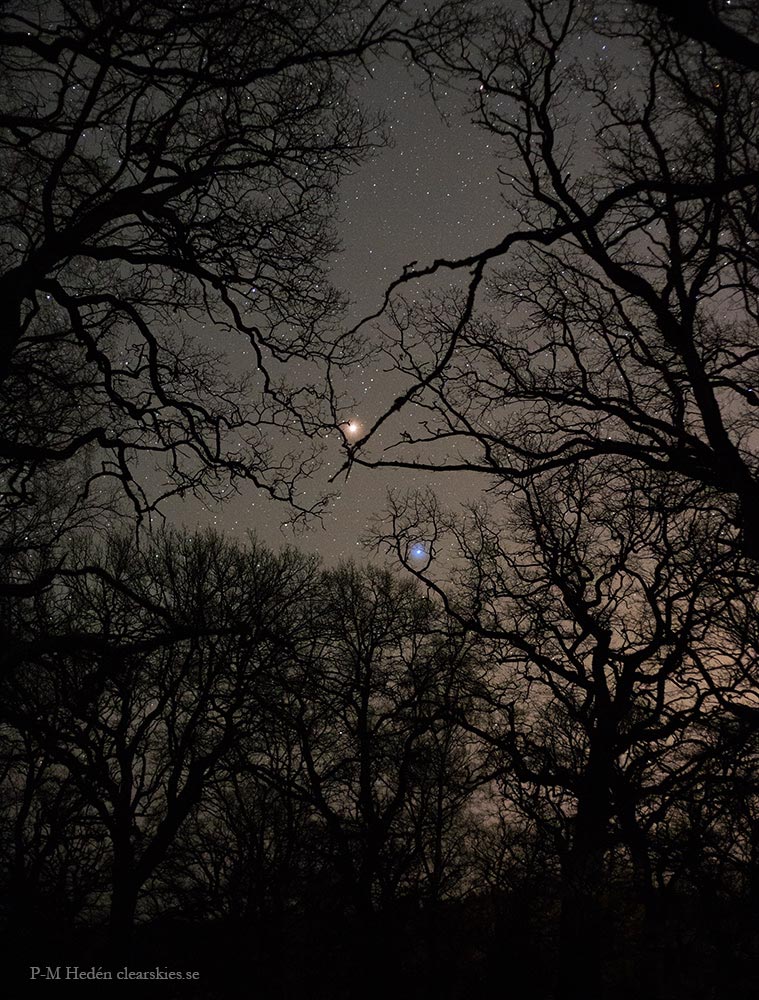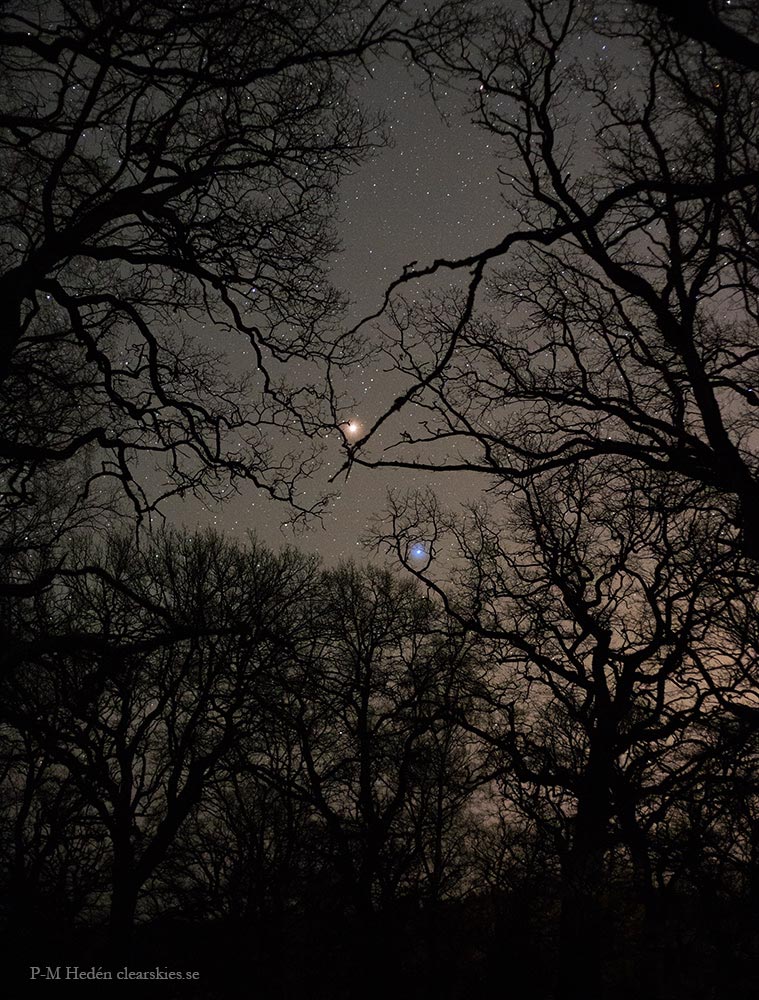
A bright pair of sky objects will be visible together during the next few months. Mars will shine brightly in its familiar rusty hue as it reaches its brightest of 2014 next week. The reason that Mars appears so bright is that Earth and Mars are close to each other in their long orbits around the Sun. Spica, on the other hand, shines constantly as one of the brightest blue stars in the night sky. Pronounced "spy-kah", the blue-hued star has been visible throughout human history and the sounds that identify it today date back to ancient times. Pictured above, the planet and the star were photographed rising together toward the southeast after sunset last week through old oak trees in Sweden. Click Hyperspace: Random APOD Generator
Un par brillante de objetos celestes estarán visibles juntos durante los próximos meses. Marte brillará intensamente con su tono rojizo familiar cuando alcance su máxima luminosidad de 2014 la próxima semana. La razón por la que Marte aparece tan brillante es que la Tierra y Marte están cercanos entre sí en sus largas órbitas alrededor del Sol. Por otro lado, Spica brilla constantemente como una de las estrellas azules más brillantes del cielo nocturno. Pronunciada 'spy-kah', la estrella de tono azulado ha sido visible a lo largo de toda la historia humana, y los sonidos que la identifican hoy datan de tiempos antiguos. En la imagen superior, el planeta y la estrella fueron fotografiados apareciendo juntos hacia el sureste tras el atardecer de la semana pasada a través de viejos árboles de roble en Suecia.