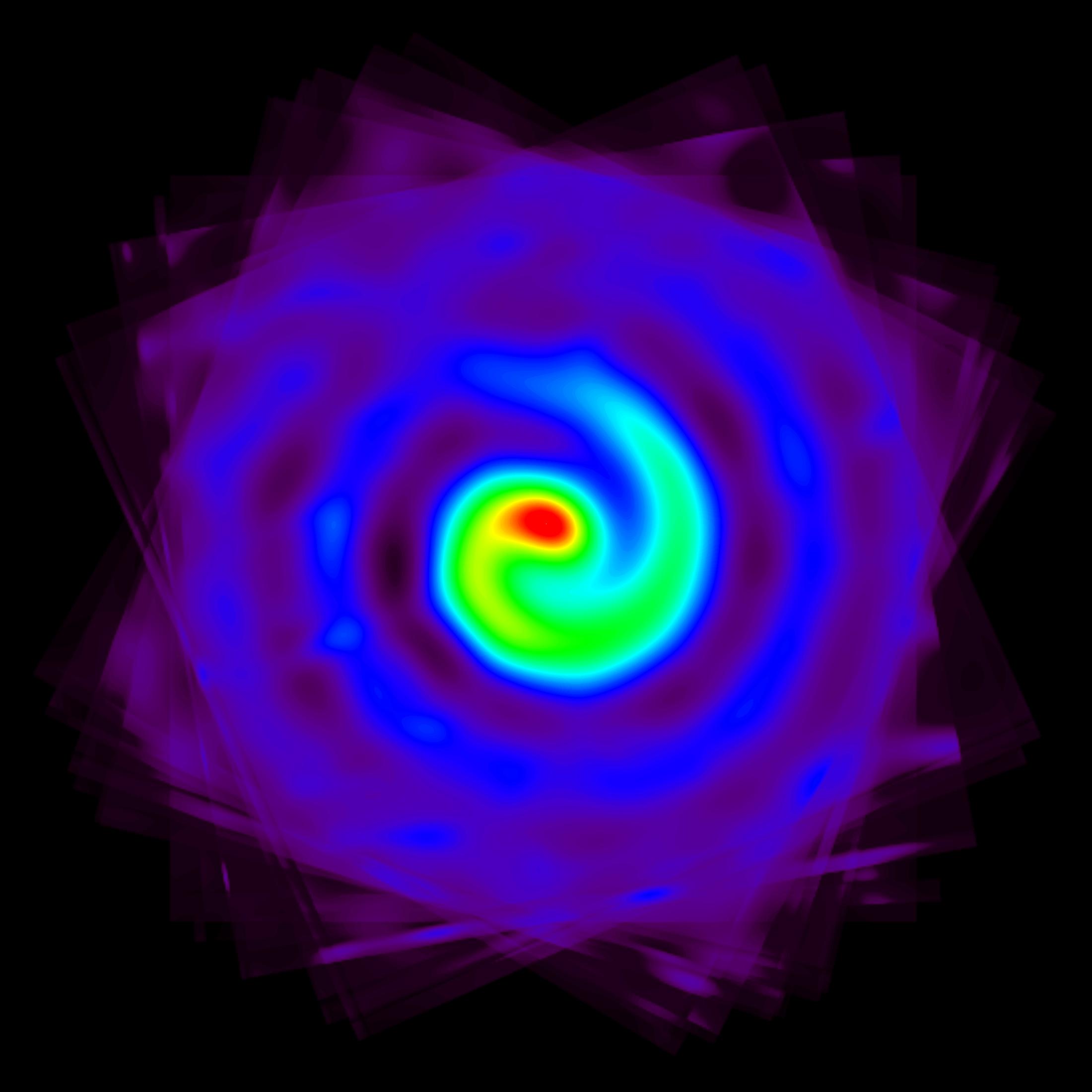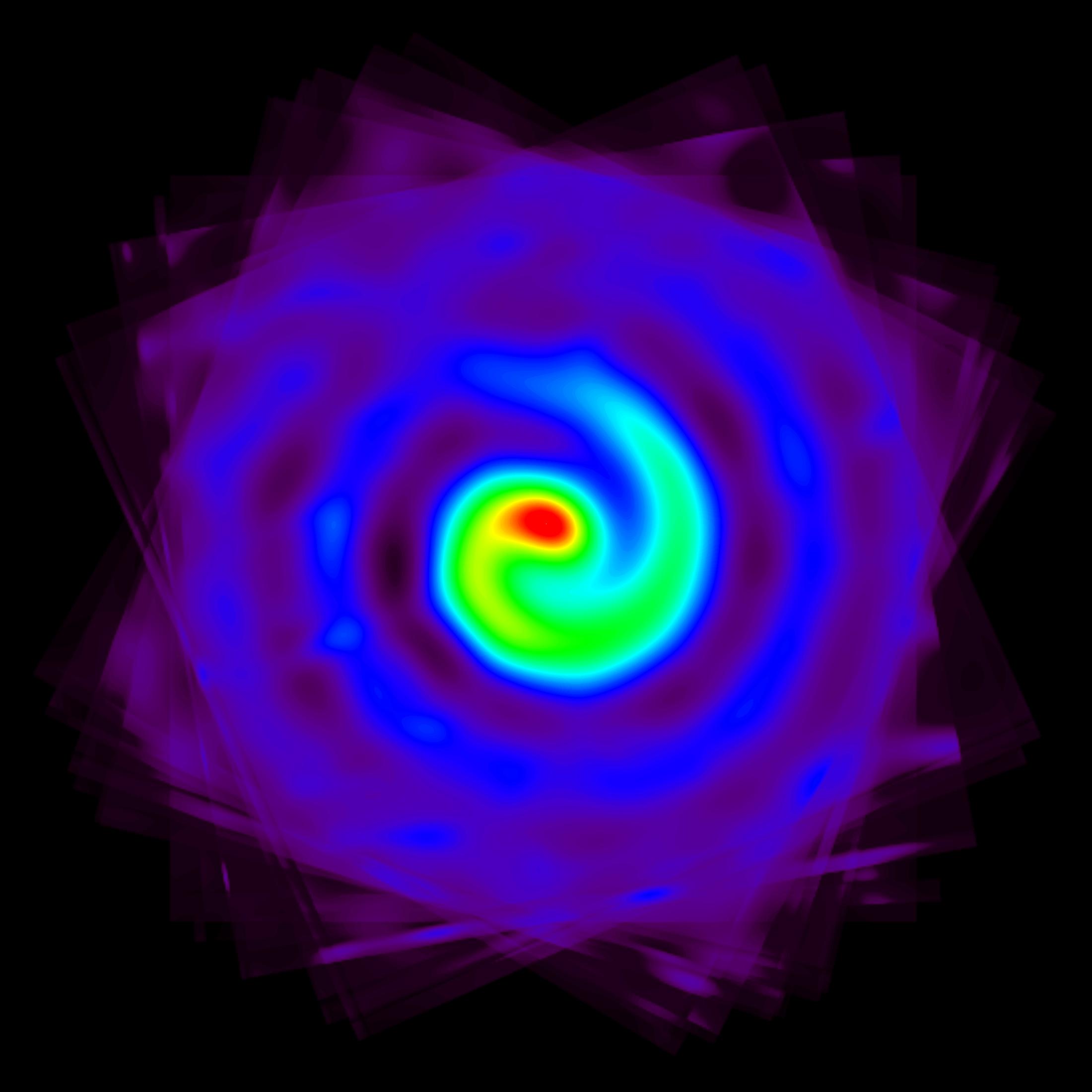
Might this giant pinwheel one-day destroy us? Probably not, but investigation of the unusual star system Wolf-Rayet 104 has turned up an unexpected threat. The unusual pinwheel pattern has been found to be created by energetic winds of gas and dust that are expelled and intertwine as two massive stars orbit each other. One system component is a Wolf-Rayet star, a tumultuous orb in the last stage of evolution before it explodes in a supernova -- an event possible anytime in the next million years. Research into the spiral pattern of the emitted dust, however, indicates the we are looking nearly straight down the spin axis of the system -- possibly the same axis along which a powerful jet would emerge were the supernova accompanied by a gamma-ray burst. Now the WR 104 supernova itself will likely be an impressive but harmless spectacle. Conversely, were Earth really near the center of the powerful GRB beam, even the explosion's 8,000 light year distance might not be far enough to protect us. Currently, neither WR 104 nor GRB beams are understood well enough to know the real level of danger. Best space images: Free APOD Lecture in Paris on June 17
¿Podría este gigantesco volante destruirnos algún día? Probablemente no, pero la investigación del sistema estelar inusual Wolf-Rayet 104 ha revelado una amenaza inesperada. El patrón inusual en forma de volante se ha descubierto que es creado por vientos energéticos de gas y polvo que son expulsados y se entrelazan mientras dos estrellas masivas orbitan entre sí. Uno de los componentes del sistema es una estrella Wolf-Rayet, una esfera tumultuosa en la última etapa de su evolución antes de explotar en una supernova, un evento posible en cualquier momento durante los próximos millones de años. Sin embargo, la investigación del patrón espiral del polvo emitido indica que estamos mirando casi directamente a lo largo del eje de rotación del sistema — posiblemente el mismo eje a lo largo del cual surgiría un chorro poderoso si la supernova estuviera acompañada por un haz de rayos gamma. La supernova de WR 104 probablemente será un espectáculo impresionante pero inofensivo. Por el contrario, si la Tierra estuviera realmente en el centro del poderoso haz de rayos gamma, incluso la distancia de 8,000 años luz de la explosión podría no ser suficiente para protegernos. Actualmente, ni WR 104 ni los haces de rayos gamma se comprenden lo suficiente como para conocer el nivel real de peligro.