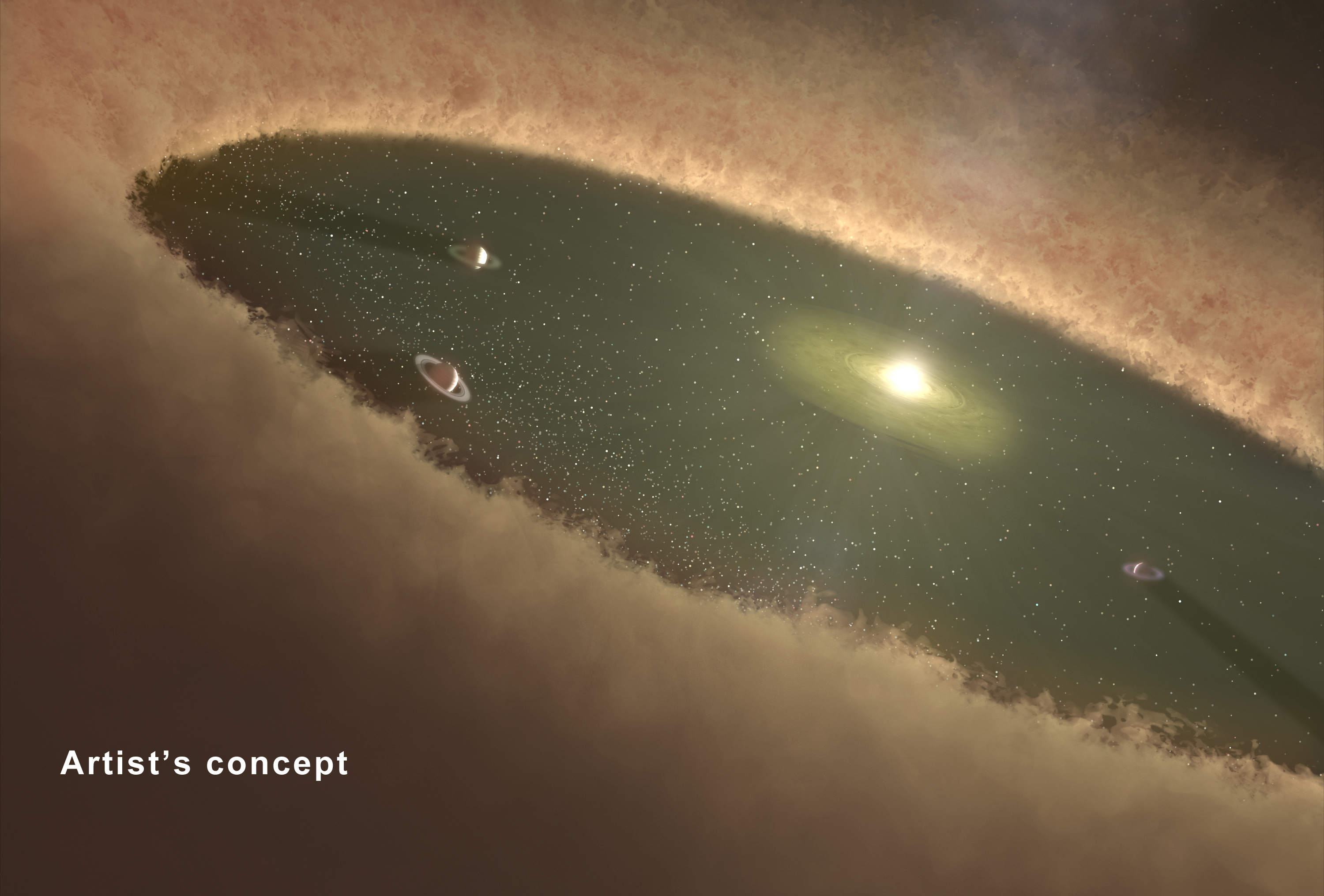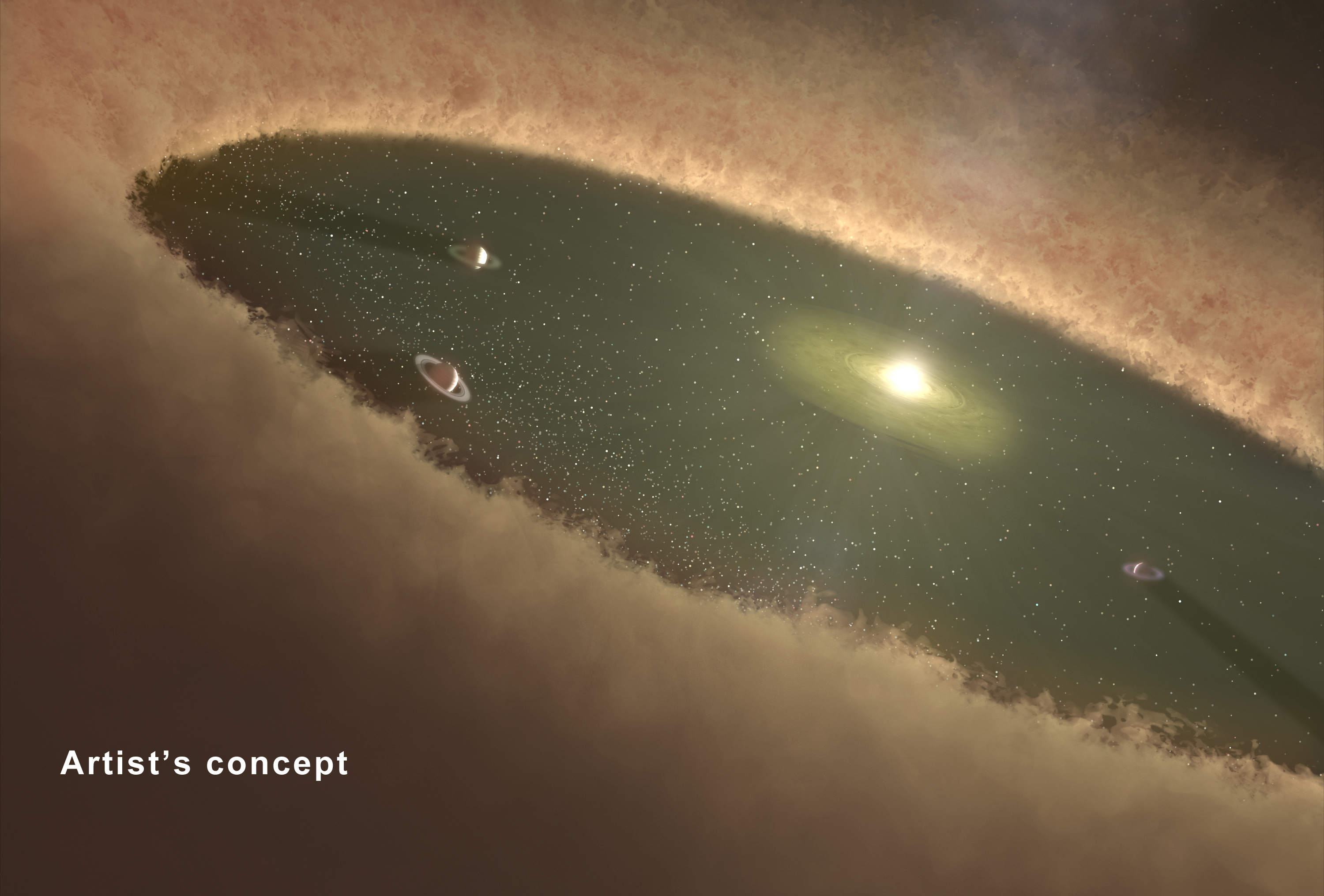
What do other star systems look like? To help find out, astronomers are carrying out detailed observations of nearby stars in infrared light to see which have dust disks that might be forming planets. Observations by NASA's Spitzer Space Telescope and ESA's Herschel Space Observatory have found that planetary system HD 95086 has two dust disks: a hot one near the parent star and a cooler one farther out. An artist's illustration of how the system might appear is featured here, including hypothetical planets with large rings that orbit between the disks. The planets may have created the large gap between the disks by absorbing and deflecting dust with their gravity. HD 95086 is a blue star about 60 percent more massive than our Sun that lies about 300 light years from Earth and is visible with binoculars toward the constellation of Carina. Studying the HD 95086 system may help astronomers better understand the formation and evolution of our own Solar System as well as the Earth. New Mirror Site: APOD is now available from Serbia in Serbian.
¿Cómo lucen otros sistemas estelares? Para ayudar a descubrirlo, los astrónomos están realizando observaciones detalladas de estrellas cercanas en luz infrarroja para identificar aquellas que tienen discos de polvo que podrían estar formando planetas. Las observaciones realizadas por el Telescopio Espacial Spitzer de NASA y la Observatorio Espacial Herschel de ESA han revelado que el sistema planetario HD 95086 posee dos discos de polvo: uno caliente cerca de la estrella madre y otro más frío, ubicado más alejado. Una ilustración artística de cómo podría lucir el sistema se muestra aquí, incluyendo planetas hipotéticos con grandes anillos que orbitan entre los discos. Es posible que los planetas hayan creado el gran espacio entre los discos al absorber y desviar el polvo con su gravedad. HD 95086 es una estrella azul aproximadamente un 60 por ciento más masiva que nuestro Sol, ubicada a unos 300 años luz de la Tierra y visible con binoculares hacia la constelación de Carina. Estudiar el sistema HD 95086 puede ayudar a los astrónomos a comprender mejor la formación y evolución de nuestro propio Sistema Solar así como la Tierra.