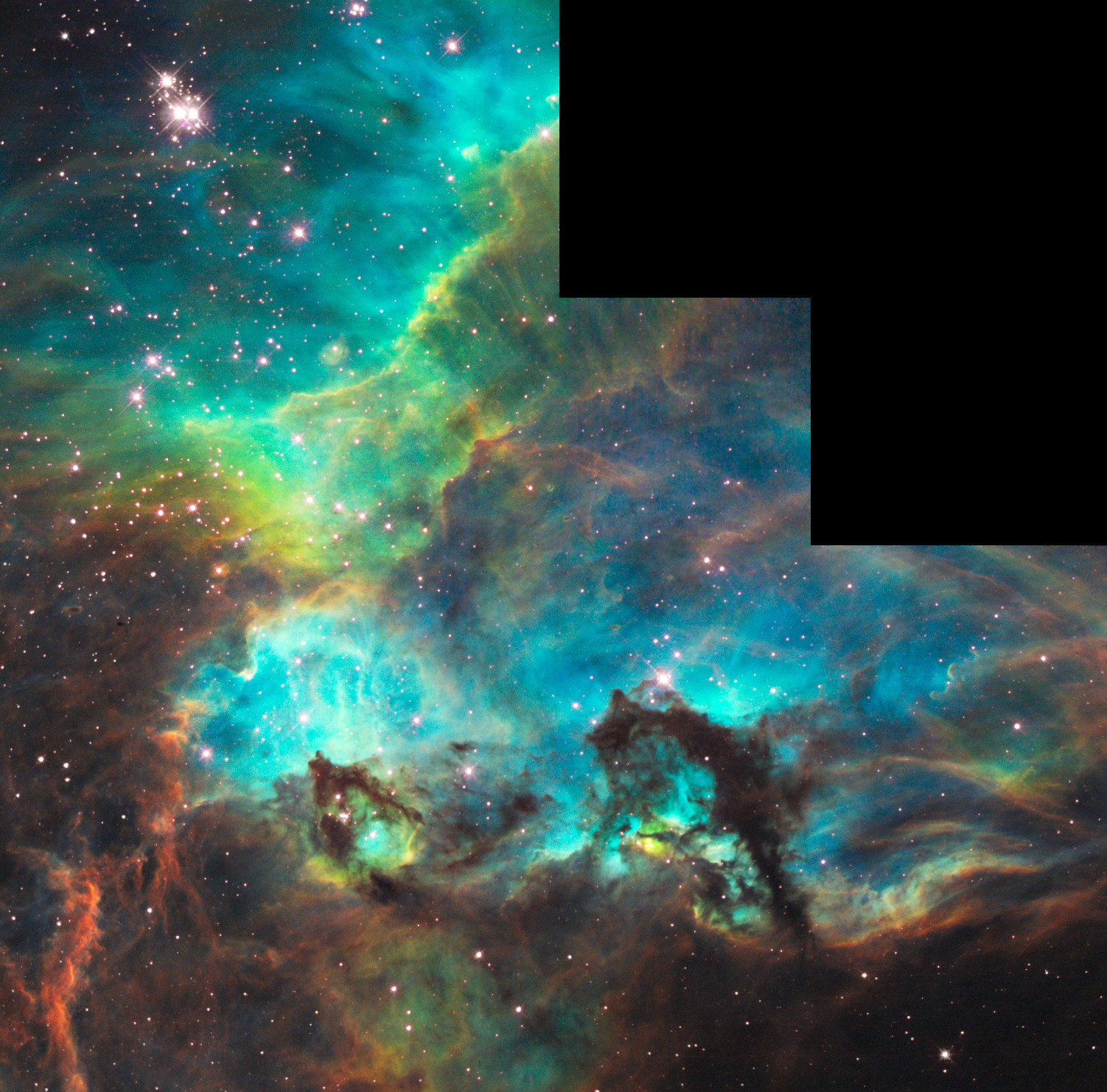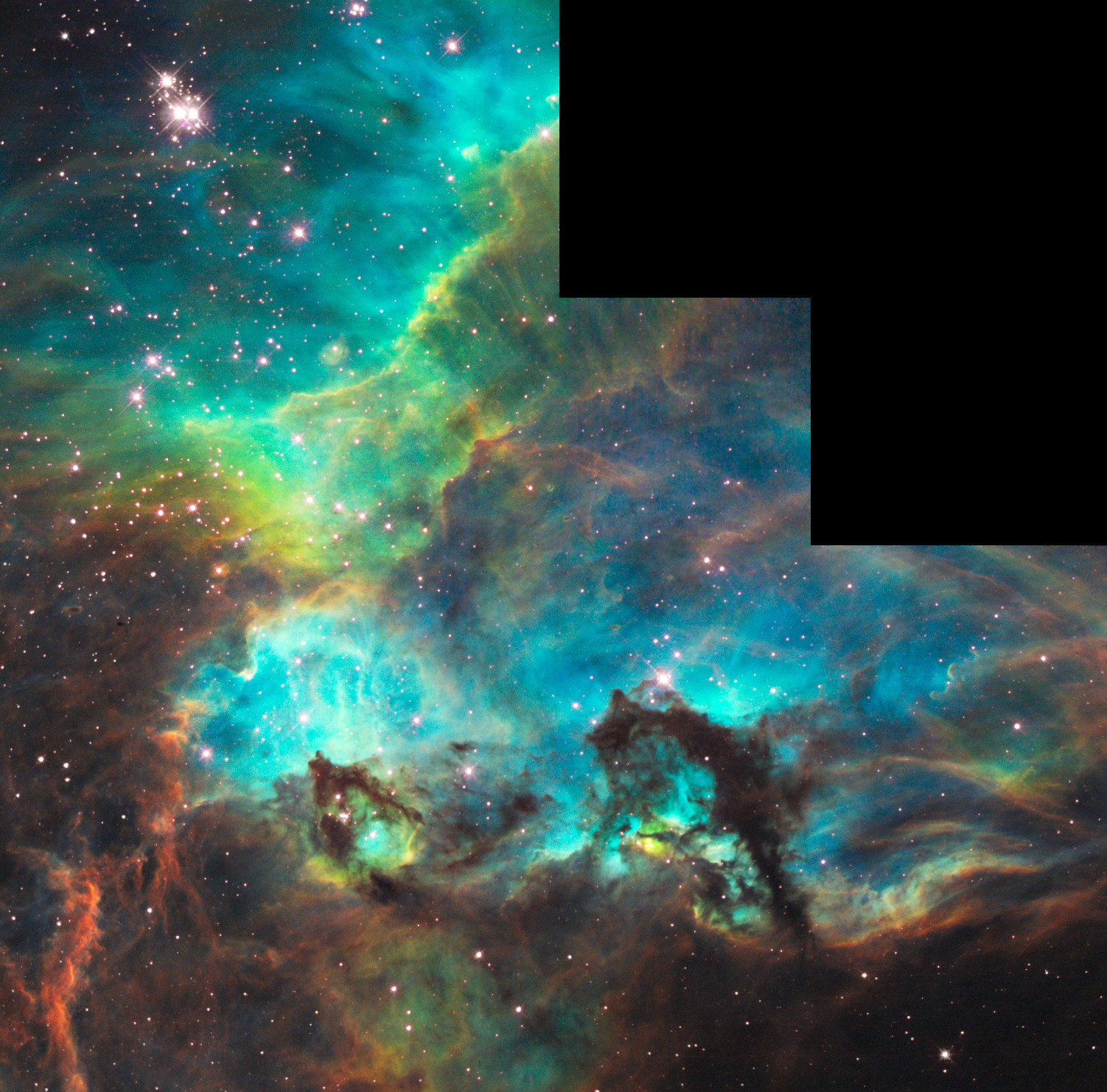
It may look like a grazing seahorse, but the dark object toward the image right is actually a pillar of smoky dust about 20 light years long. The curiously-shaped dust structure occurs in our neighboring Large Magellanic Cloud, in a star forming region very near the expansive Tarantula Nebula. The energetic nebula is creating a star cluster, NGC 2074, whose center is visible just off the top of the image in the direction of the neck of the seahorse. The representative color image was taken in 2008 by the Hubble Space Telescope's Wide Field Planetary Camera 2 in honor of Hubble's 100,000th trip around the Earth. As young stars in the cluster form, their light and winds will slowly erode the dust pillars away over the next million years. Now Available: APOD 2015 Wall Calendars
Aunque parezca un caballito de mar que se alimenta, el objeto oscuro hacia la derecha de la imagen es en realidad un pilar de polvo denso de aproximadamente 20 años luz de longitud. Esta estructura curiosamente forma de polvo se encuentra en nuestra vecina Nube Magallánica Grande, en una región de formación estelar muy cercana a la extensa Nebulosa Tarántula. La energética nebulosa está creando un cúmulo estelar, NGC 2074, cuyo centro es visible justo fuera de la parte superior de la imagen, en la dirección del cuello del caballito de mar. La imagen en color representativa fue tomada en 2008 por la Cámara Planetaria de Campo Amplio 2 del Telescopio Espacial Hubble, en honor al millonésimo viaje de la Tierra del Hubble. A medida que las estrellas jóvenes del cúmulo se forman, su luz y vientos erosionarán lentamente los pilares de polvo durante los próximos millones de años.