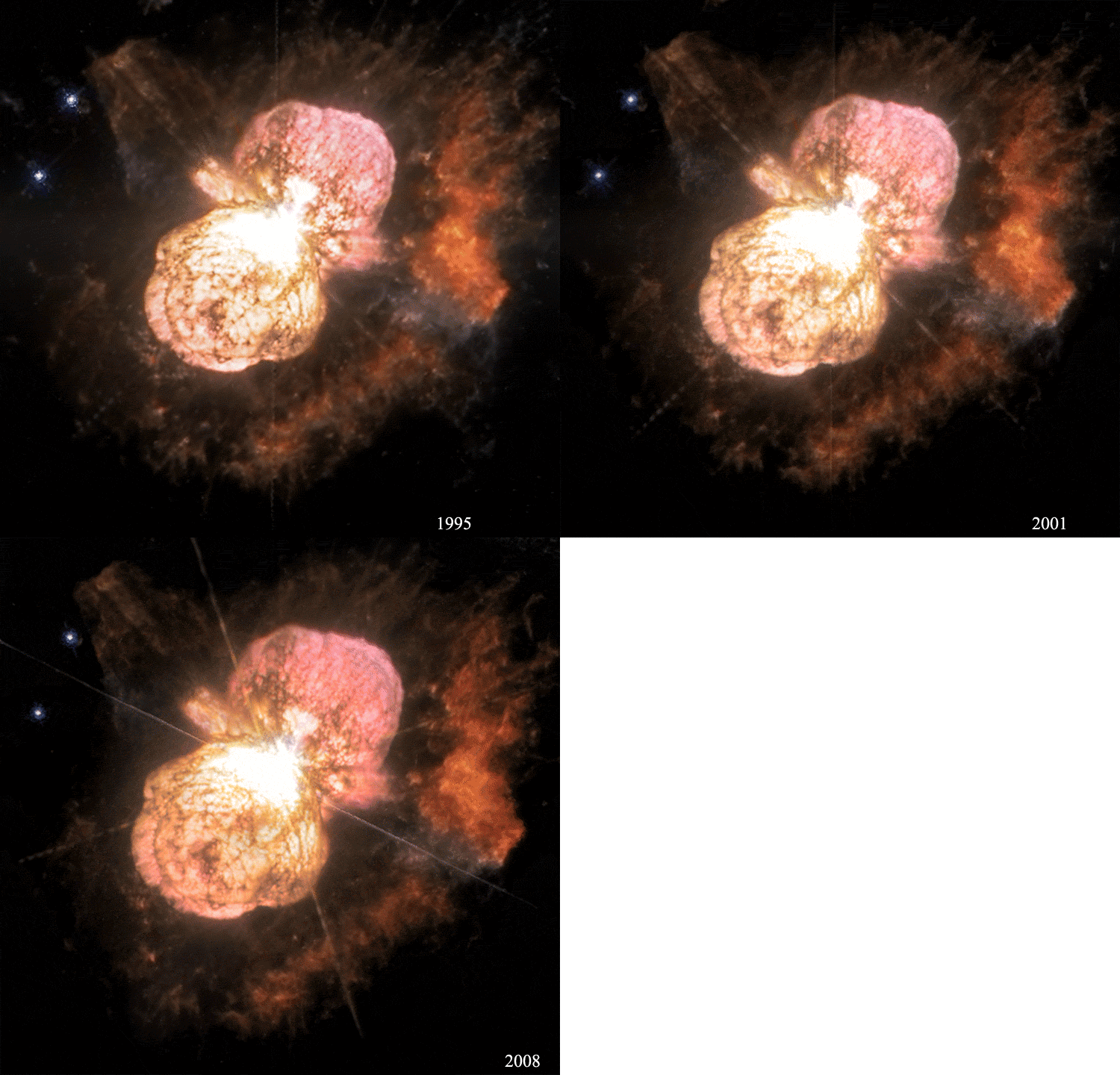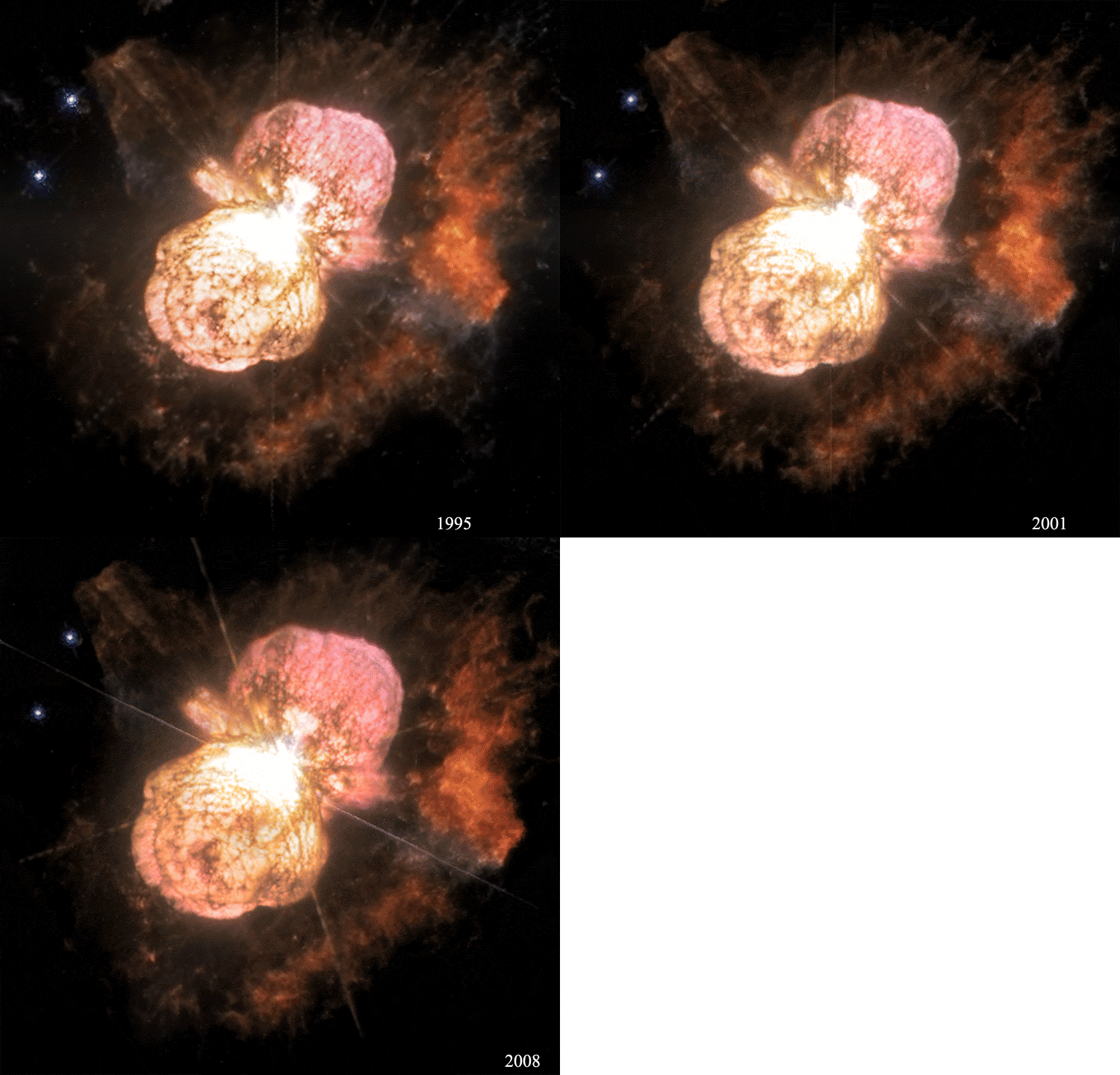
How did the Eta Carinae star system create this unusual expanding nebula? No one knows for sure. About 170 years ago, the southern star system Eta Carinae (Eta Car) mysteriously became the second brightest star system in the night sky. Twenty years later, after ejecting more mass than our Sun, Eta Car unexpectedly faded. Somehow, this outburst appears to have created the Homunculus Nebula. The three-frame video features images of the nebula taken by the Hubble Space Telescope in 1995, 2001, and 2008. The Homunculus nebula's center is lit by light from a bright central star, while the surrounding regions are expanding lobes of gas laced with filaments of dark dust. Jets bisect the lobes emanating from the central stars. Expanding debris includes streaming whiskers and bow shocks caused by collisions with previously existing material. Eta Car still undergoes unexpected outbursts, and its high mass and volatility make it a candidate to explode in a spectacular supernova sometime in the next few million years.
¿Cómo creó el sistema estelar Eta Carinae esta nebulosa expansiva tan inusual? Nadie lo sabe con certeza. Hace aproximadamente 170 años, el sistema estelar del sur Eta Carinae (Eta Car) misteriosamente se convirtió en el segundo sistema estelar más brillante del cielo nocturno. Veinte años más tarde, tras expulsar más masa que nuestro Sol, Eta Car se apagó inesperadamente. De alguna manera, este estallido parece haber creado la Nebulosa Homúnculo. El video de tres imágenes muestra imágenes de la nebulosa tomadas por el Telescopio Espacial Hubble en 1995, 2001 y 2008. El centro de la nebulosa Homúnculo está iluminado por la luz de una estrella central brillante, mientras que las regiones circundantes son lobos expansivos de gas entrelazados con filamentos de polvo oscuro. Chorros atraviesan los lobos, emanando de las estrellas centrales. Los escombros en expansión incluyen mechones que se deslizan y choques en forma de arco causados por colisiones con material previamente existente. Eta Car aún experimenta erupciones inesperadas, y su alta masa y volatilidad lo convierten en un candidato para explotar en una espectacular supernova en algún momento dentro de los próximos millones de años.