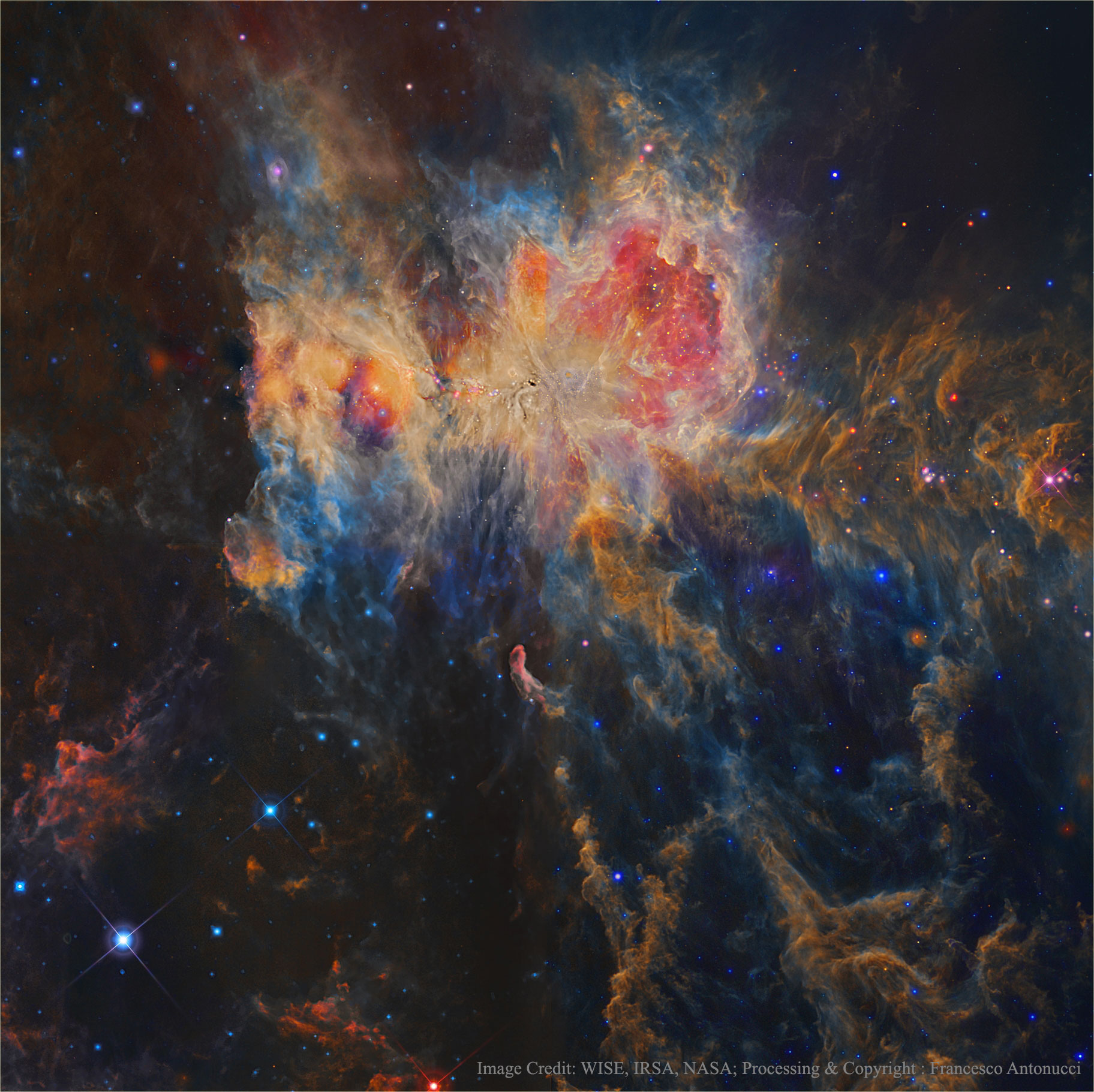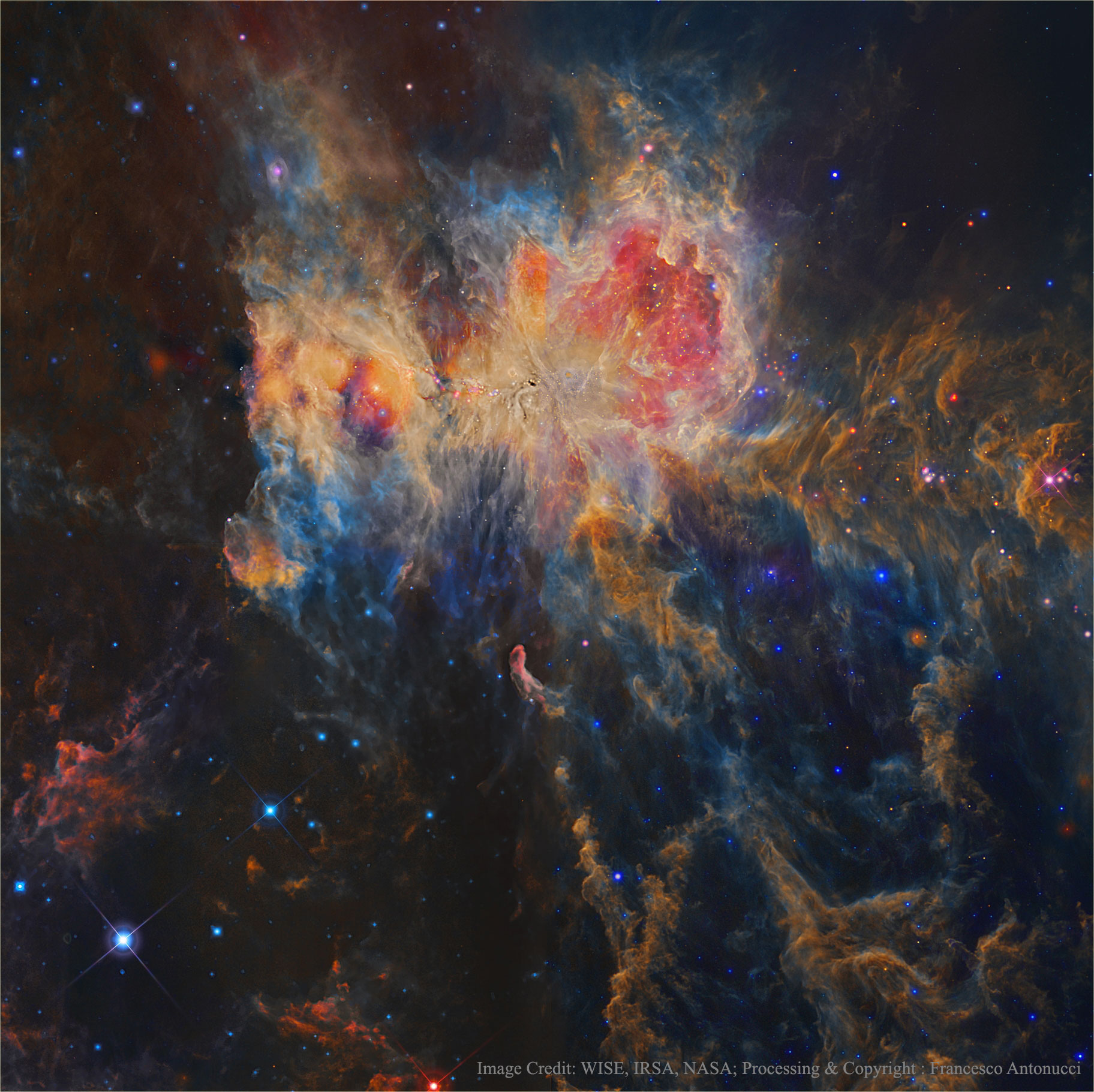
The Great Nebula in Orion is an intriguing place. Visible to the unaided eye, it appears as a small fuzzy patch in the constellation of Orion. But this image, an illusory-color four-panel mosaic taken in different bands of infrared light with the Earth orbiting WISE observatory, shows the Orion Nebula to be a bustling neighborhood of recently formed stars, hot gas, and dark dust. The power behind much of the Orion Nebula (M42) is the stars of the Trapezium star cluster, seen near the center of the above wide field image. The orange glow surrounding the bright stars pictured here is their own starlight reflected by intricate dust filaments that cover much of the region. The current Orion Nebula cloud complex, which includes the Horsehead Nebula, will slowly disperse over the next 100,000 years. Now Available: APOD 2015 Wall Calendars
La Gran Nebulosa de Orión es un lugar fascinante. Visible a simple vista, aparece como un pequeño parche difuso en la constelación de Orión. Pero esta imagen, un mosaico de cuatro paneles en colores ilusorios tomado en diferentes bandas de luz infrarroja con el observatorio WISE en órbita terrestre, muestra la Nebulosa de Orión como un bullicioso vecindario de estrellas recién formadas, gas caliente y polvo oscuro. La energía detrás de gran parte de la Nebulosa de Orión (M42) proviene de las estrellas del cúmulo estelar Trapecio, visibles cerca del centro de la imagen de amplio campo mostrada arriba. El brillo naranja que rodea las estrellas brillantes mostradas aquí es su propia luz estelar reflejada por delicadas filamentos de polvo que cubren gran parte de la región. La compleja nube actual de la Nebulosa de Orión, que incluye la Nebulosa del Caballo de Tiro, se dispersará lentamente durante los próximos 100.000 años.