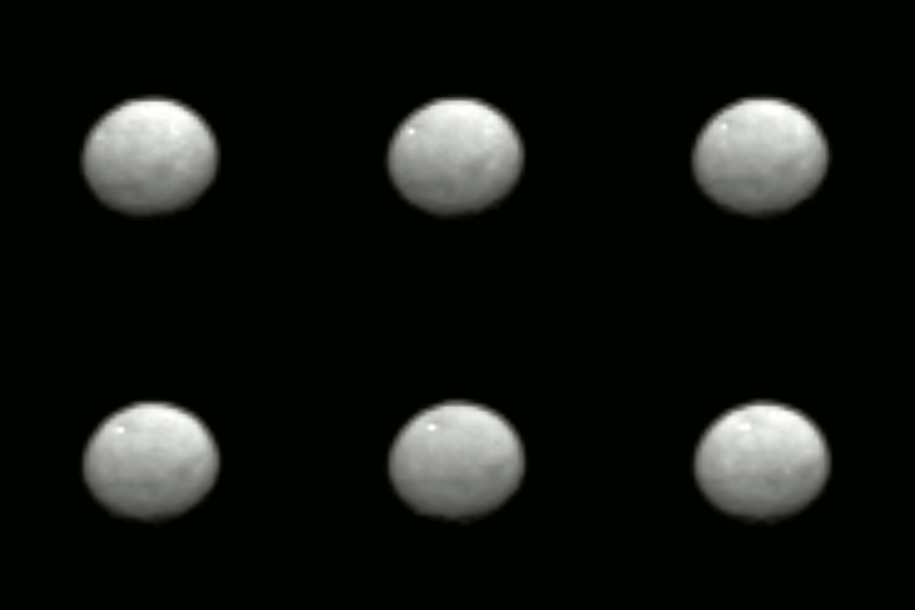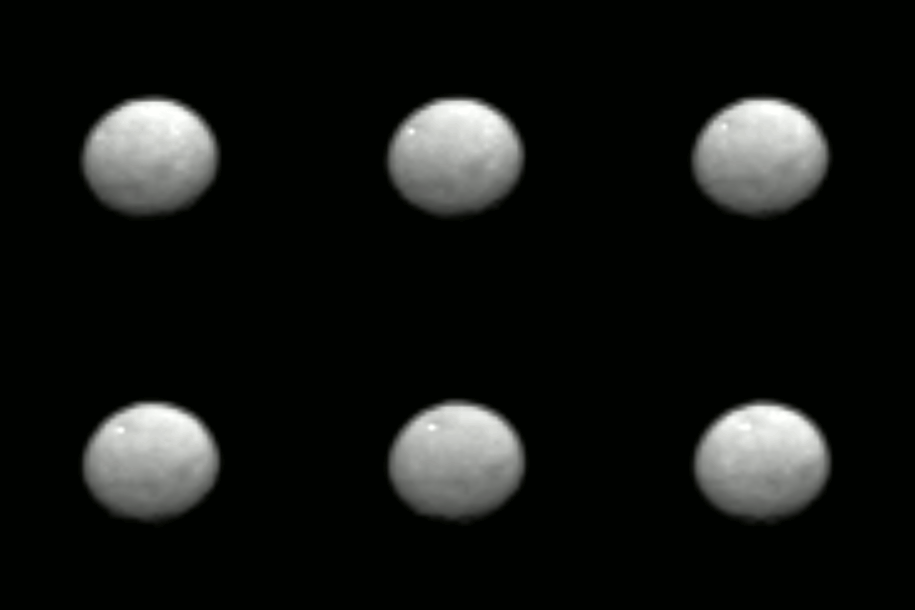
It is the largest asteroid in the asteroid belt -- what secrets does it hold? To find out, NASA has sent the robotic Dawn spacecraft to explore and map this cryptic 1,000-kilometer wide world: Ceres. Orbiting between Mars and Jupiter, Ceres is officially categorized as a dwarf planet but has never been imaged in detail. Featured here is a 20-frame video taken a week ago of Dawn's approach that now rivals even the best images of Ceres ever taken by the Hubble Space Telescope. The video shows enough surface definition to discern its 9-hour rotation period. On target to reach Ceres in early March, Dawn will match speeds and attempt to orbit this previously unexplored body, taking images and data that may help humanity better understand not only the nature and history of Ceres but also the early history of our entire Solar System.
Es el asteroide más grande del cinturón de asteroides — ¿qué secretos guarda? Para descubrirlo, la NASA ha enviado la nave espacial robótica Dawn a explorar y mapear este misterioso mundo de 1.000 kilómetros de ancho: Ceres. Orbitando entre Marte y Júpiter, Ceres se clasifica oficialmente como planeta enano, pero nunca ha sido capturado en detalle. En esta imagen se muestra un video de 20 imágenes tomado hace una semana de la aproximación de Dawn, que ahora compite con las mejores imágenes de Ceres jamás tomadas por el Telescopio Espacial Hubble. El video muestra suficiente definición de la superficie para discernir su período de rotación de 9 horas. En ruta para llegar a Ceres a principios de marzo, Dawn igualará velocidades y tratará de orbitar este cuerpo aún no explorado, tomando imágenes y datos que podrían ayudar a la humanidad a comprender mejor no solo la naturaleza y la historia de Ceres, sino también la historia temprana de todo nuestro Sistema Solar.