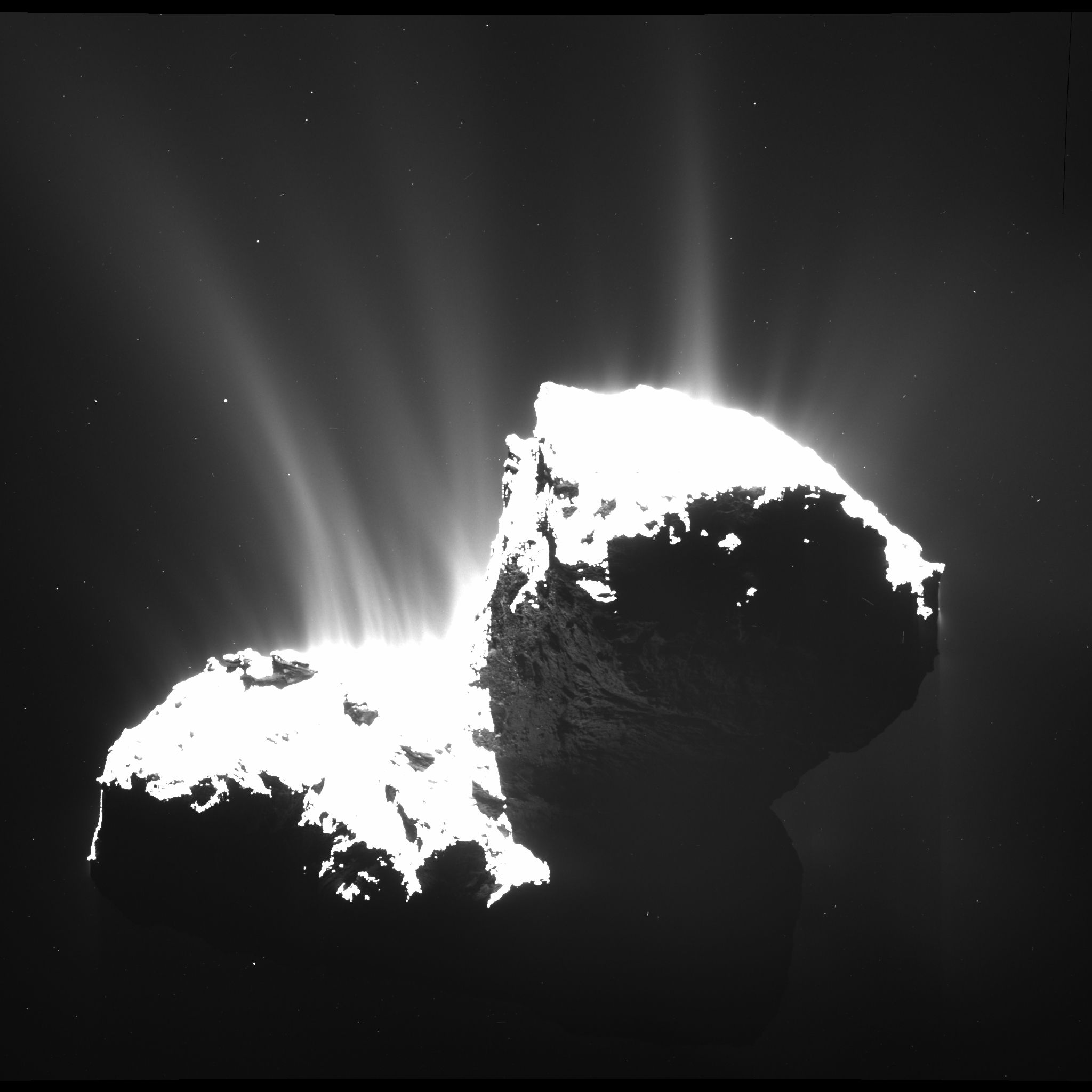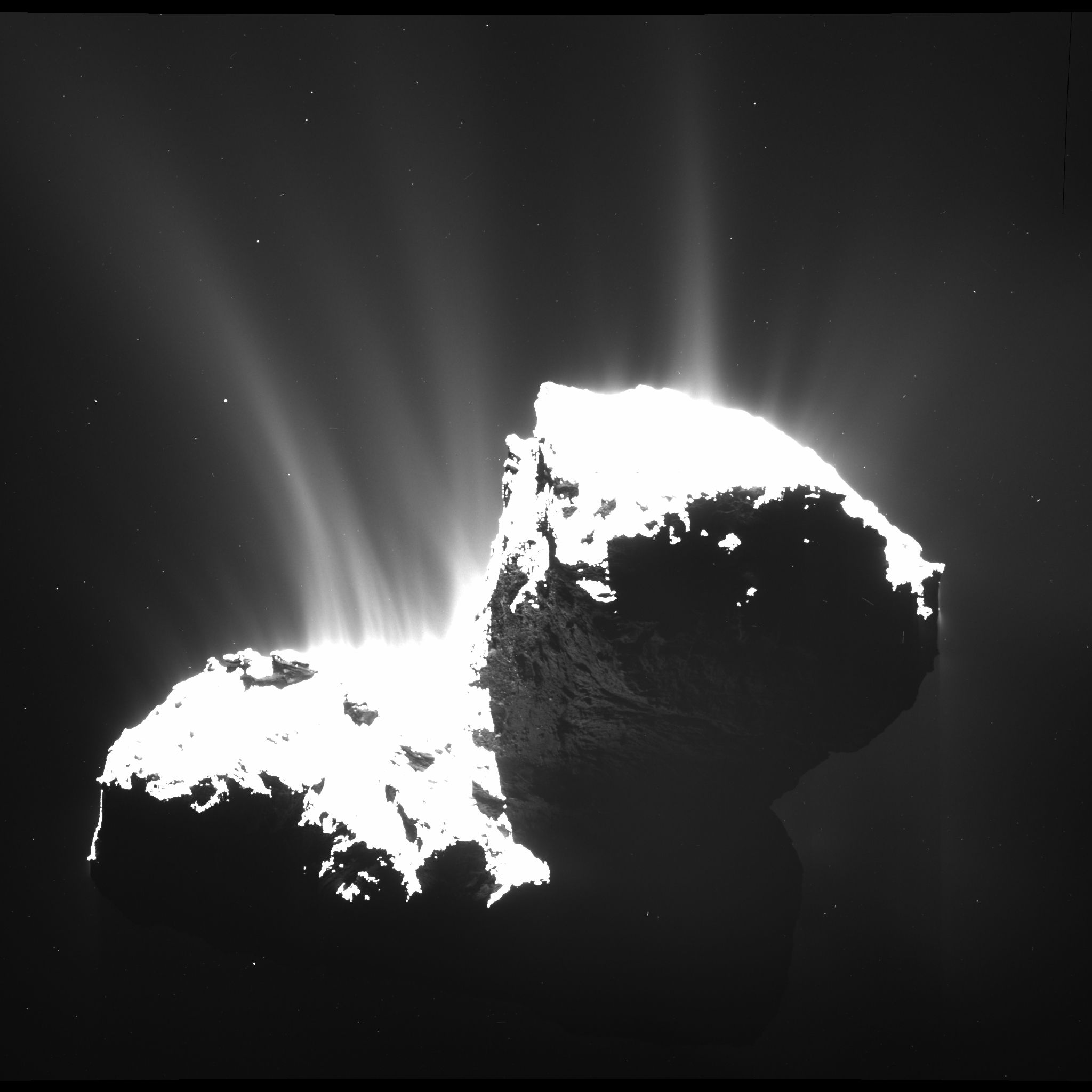
Where do comet tails come from? Although it is common knowledge that comet tails and comas originate from comet nuclei, exactly how that happens is an active topic of research. One of the best images yet of emerging jets is shown in the featured image, taken last November by the robotic Rosetta spacecraft in orbit around the Comet 67P/Churyumov-Gerasimenko (Comet CG), and released last month. The overexposed picture shows plumes of gas and dust escaping numerous places from the Comet CG's nucleus as it nears the Sun and heats up. Although Comet CG is currently further out from the Sun than Mars, its orbit will take it almost as close as the Earth this coming August, at which time its jet activity is expected to increase by a factor of about 100. You've likely seen some debris from comet nuclei before but in another form -- when sand-sized bits end their journey through the Solar System by impacting the atmosphere of Earth as meteors. Almost Hyperspace: Random APOD Generator
¿De dónde provienen las colas de los cometas? Aunque es conocido que las colas y las comas de los cometas provienen de sus núcleos, exactamente cómo ocurre esto sigue siendo un tema activo de investigación. Una de las mejores imágenes obtenidas hasta ahora de chorros emergentes se muestra en la imagen destacada, tomada el mes pasado por la nave espacial robótica Rosetta, que orbita alrededor del cometa 67P/Churyumov-Gerasimenko (cometa CG), y liberada el mes anterior. La imagen sobrealimentada muestra chorros de gas y polvo escapando de múltiples lugares del núcleo del cometa CG a medida que se acerca al Sol y se calienta. Aunque el cometa CG actualmente se encuentra más lejos del Sol que Marte, su órbita lo llevará casi tan cerca de la Tierra como la Tierra misma en agosto próximo, en ese momento se espera que su actividad de chorros aumente aproximadamente en un factor de 100. Probablemente has visto antes algunos fragmentos de núcleos de cometas, pero en otra forma: cuando partículas del tamaño de granos de arena terminan su trayectoria a través del Sistema Solar al impactar la atmósfera terrestre como meteoros.