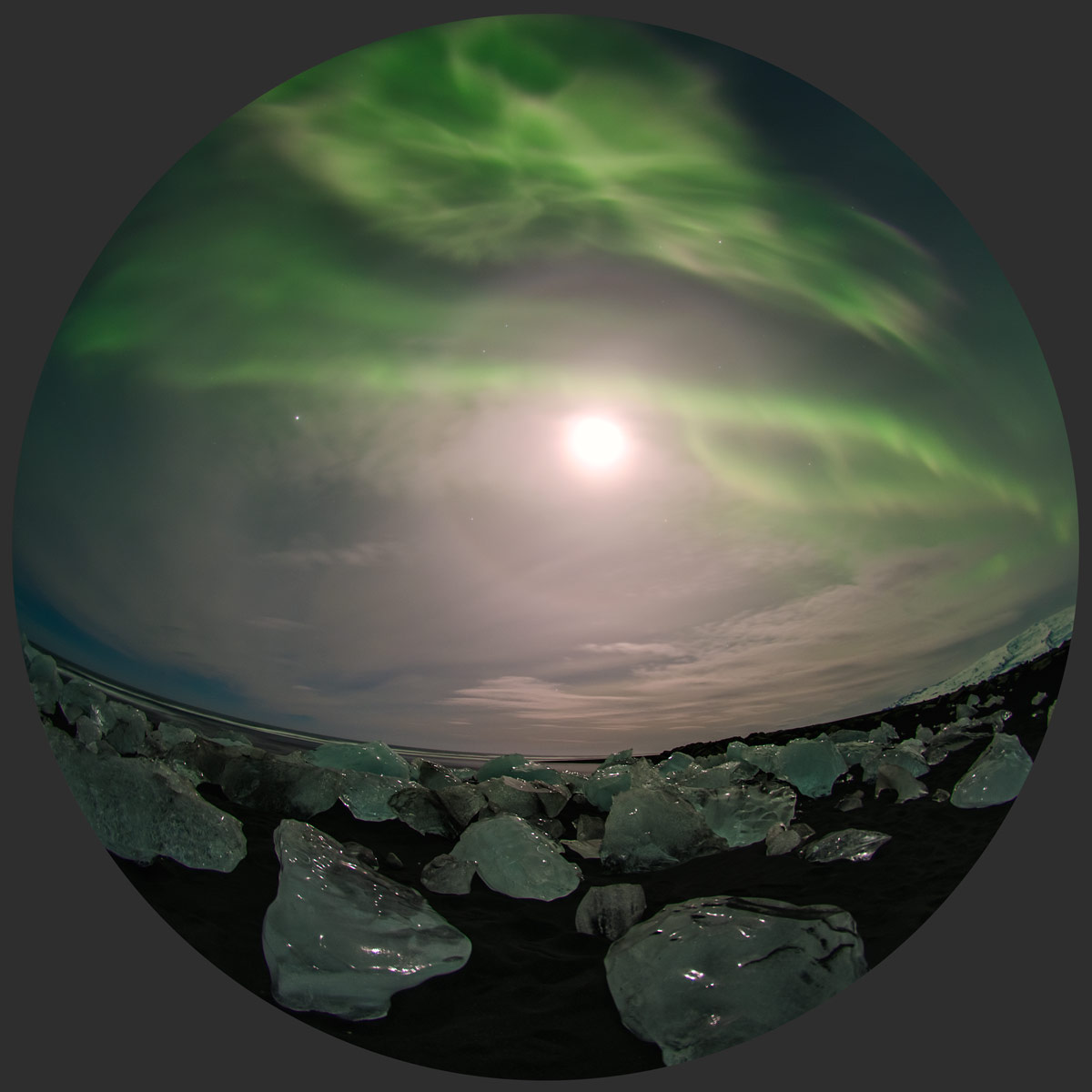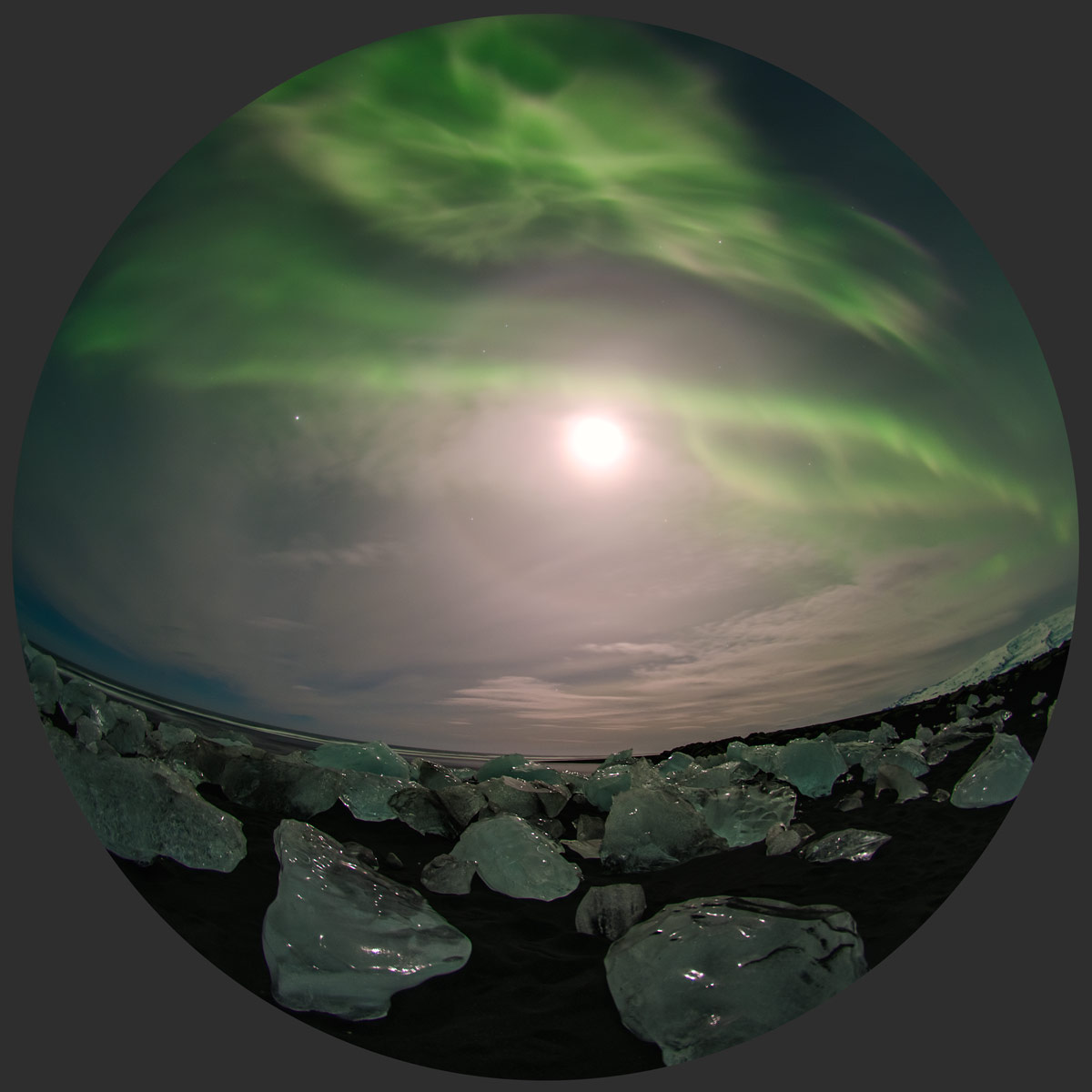
Not from a snowglobe, this expansive fisheye view of ice and sky was captured on February 1, from Jökulsárlón Beach, southeast Iceland, planet Earth. Chunks of glacial ice on the black sand beach glisten in the light of a nearly full moon surrounded by a shining halo. The 22 degree lunar halo itself is created by ice crystals in high, thin clouds refracting the moonlight. Despite the bright moonlight, curtains of aurora still dance through the surreal scene. In early February, their activity was triggered by Earth's restless magnetosphere and the energetic wind from a coronal hole near the Sun's south pole. Bright Jupiter, also near opposition, is visible at the left, beyond the icy lunar halo.
No proviene de una bola de nieve, esta extensa vista en forma de pez de hielo y cielo fue capturada el 1 de febrero desde la playa de Jökulsárlón, sureste de Islandia, en la Tierra. Bloques de hielo glacial en la playa de arena negra brillan bajo la luz de una luna casi llena rodeada por un resplandeciente halo. El halo lunar de 22 grados en sí mismo es creado por cristales de hielo en nubes altas y delgadas que refractan la luz lunar. A pesar de la intensa luz lunar, cortinas de aurora aún bailan a través de la escena surrealista. A principios de febrero, su actividad fue provocada por la magnetosfera inquieta de la Tierra y el viento energético de un agujero coronal cerca del polo sur del Sol. Júpiter brillante, también cerca de la oposición, es visible a la izquierda, más allá del halo lunar helado.